Trump Orders Criminal Probe Into CNN Iran Victory Report
President Trump ordered authorities to investigate CNN for publishing Iran's official victory claim after ceasefire talks, escalating his administration's confrontation with media over wartime coverage.
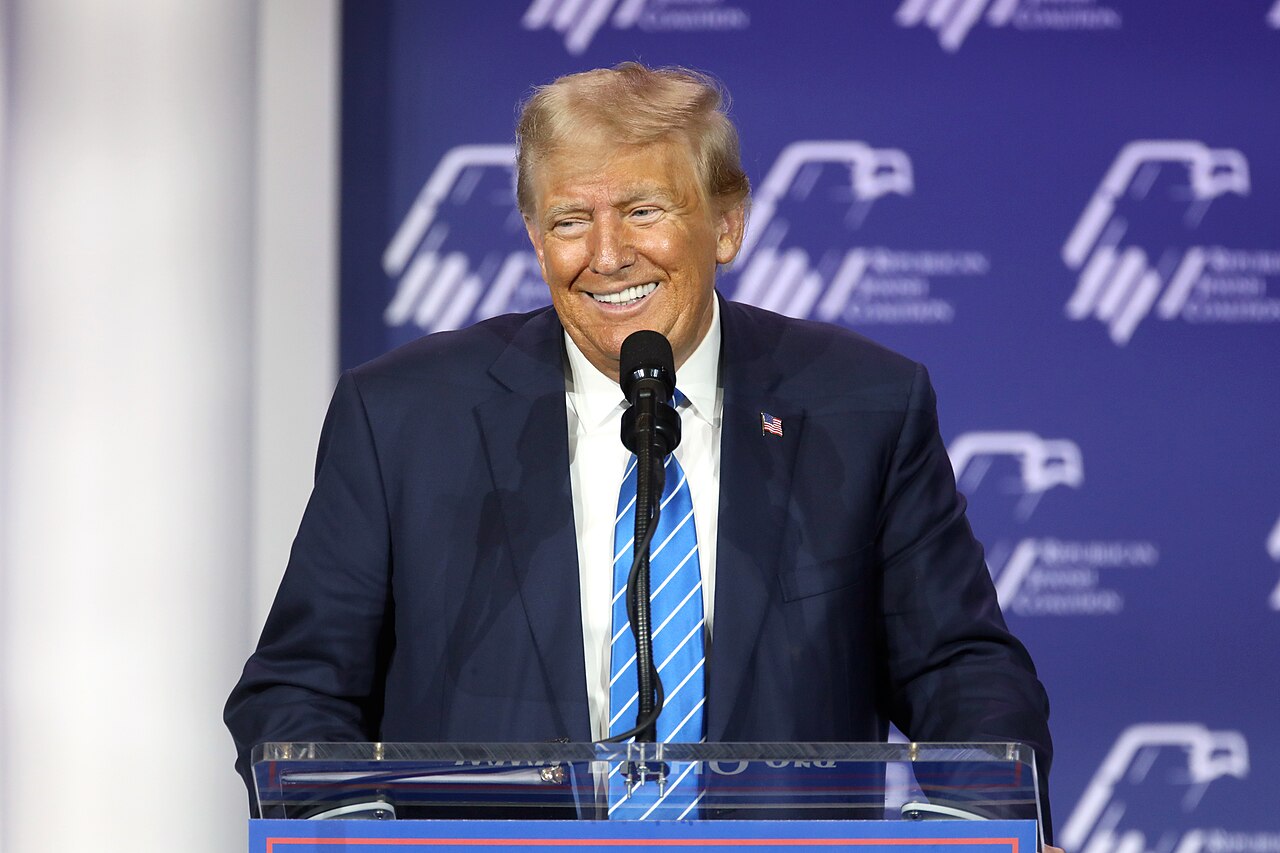
President Trump ordered authorities to investigate whether CNN committed a crime by publishing a story carrying Iran's official victory claim following ceasefire negotiations — a dramatic escalation in the administration's confrontation with media organizations over wartime coverage.
Trump announced the probe through Truth Social posts on April 7, asking: "Authorities are looking to determine whether or not a crime was committed on the issuance of the Fake CNN World Statement, or was it a sick rogue player?" He did not specify which authorities would conduct the investigation or what crime CNN allegedly committed.
The probe stems from CNN's April 7 live blog headline: "Iran claims victory, says it forced US to accept 10-point plan." The network cited a statement from Iran's Supreme National Security Council declaring "The enemy, in its unfair, unlawful, and criminal war against the Iranian nation, has suffered an undeniable, historic, and crushing defeat." CNN said it obtained the statement directly from Iranian officials and that Iranian state media had also reported it.
The dispute forces a constitutional reckoning over whether reporting verified statements from foreign government officials during active conflict constitutes criminal conduct — and tests the limits of executive branch power over news organizations. First Amendment scholars point to the Supreme Court's 2012 United States v. Alvarez ruling, which protects even knowingly false speech unless it causes specific harms such as fraud or defamation.
CNN correspondent Matthew Chance told Anderson Cooper he verified the document's authenticity directly with Iranian authorities. "When President Trump posted on Truth Social that he objected to that report, to that document, he said it was fake," Chance said. "I followed up with the Iranian foreign ministry and they sent me the document themselves, which is exactly the same as the document we originally had."
Multiple news organizations — including the New York Times and PBS — reported similar victory language from Iran's National Security Council, raising pointed questions about why CNN alone faces investigation. The Times' live blog carried the same "crushing defeat" language from Iranian officials hours before Trump's Truth Social posts.
Trump alleged CNN's report was "linked to a Fake News site (from Nigeria)" and described it as "knowingly false and dangerous" propaganda engineered to "inflame a very delicate situation." He did not name the specific Nigerian outlet or produce evidence linking it to CNN's reporting.
"The alleged Statement put out by CNN World News is a FRAUD, as CNN well knows," Trump wrote. "The false Statement was linked to a Fake News site (from Nigeria) and, of course, immediately picked up by CNN, and blared out as a 'legitimate' headline."
CNN pushed back sharply, issuing a statement defending its journalism: "The statement in question was obtained by CNN from Iranian officials and reported on multiple Iranian state media outlets. We received the statement from specific official Iranian spokespeople who are known to us."
Confusion persists over which Iranian statement represents the official position. The Supreme National Security Council's victory-laden declaration conflicts with a more measured announcement from Foreign Minister Abbas Araghchi, who stated "If attacks against Iran are halted, our Powerful Armed Forces will cease their defensive operations" — and separately announced safe passage through the Strait of Hormuz.
FCC Chairman Brendan Carr amplified Trump's criticism, posting on X that "Fake news is bad enough for the country, but pushing out a hoax headline in such a sensitive national security moment as this requires accountability." The FCC, however, lacks regulatory authority over CNN — a cable network, not a broadcast licensee.
White House Press Secretary Karoline Leavitt framed the ceasefire as an American triumph, stating "This is a victory for the United States that President Trump and our incredible military made happen." Pakistan's Prime Minister Shehbaz Sharif and Field Marshal Asim Munir mediated the two-week ceasefire, with formal negotiations scheduled for April 10 in Islamabad.
Legal experts question the investigation's basis, noting no statute appears to criminalize news organizations for publishing statements from foreign officials. The Alvarez precedent established that the First Amendment shields false speech except in narrow categories like fraud or defamation — requiring prosecutors to prove specific harms rather than mere falsity.
The investigation unfolds against the backdrop of Paramount Skydance's pending $110 billion acquisition of Warner Bros. Discovery, CNN's parent company. The Justice Department currently reviews the merger while Paramount's controlling shareholder David Ellison maintains close ties to the Trump administration.
Trump has repeatedly clashed with CNN, filing defamation lawsuits the federal courts dismissed. Last month, an appeals court rejected his attempt to revive a $475 million defamation case against the network. Pentagon Chief Pete Hegseth recently stated, "The sooner David Ellison takes over that network, the better."
The administration's move tests constitutional boundaries separating government power from press freedom during wartime. Experts warn that even investigating news organizations for their reporting chills journalism and raises First Amendment concerns — because when the government punishes disfavored expression, every newsroom feels the cold.