Starmer Uses Royal Decree to Reimpose EU Rules Without Parliamentary Vote
Keir Starmer's government is preparing to use sweeping Henry VIII powers to impose EU regulations on Britain without full parliamentary scrutiny, bypassing the legislative amendment process in what critics call a direct betrayal of the Brexit mandate.
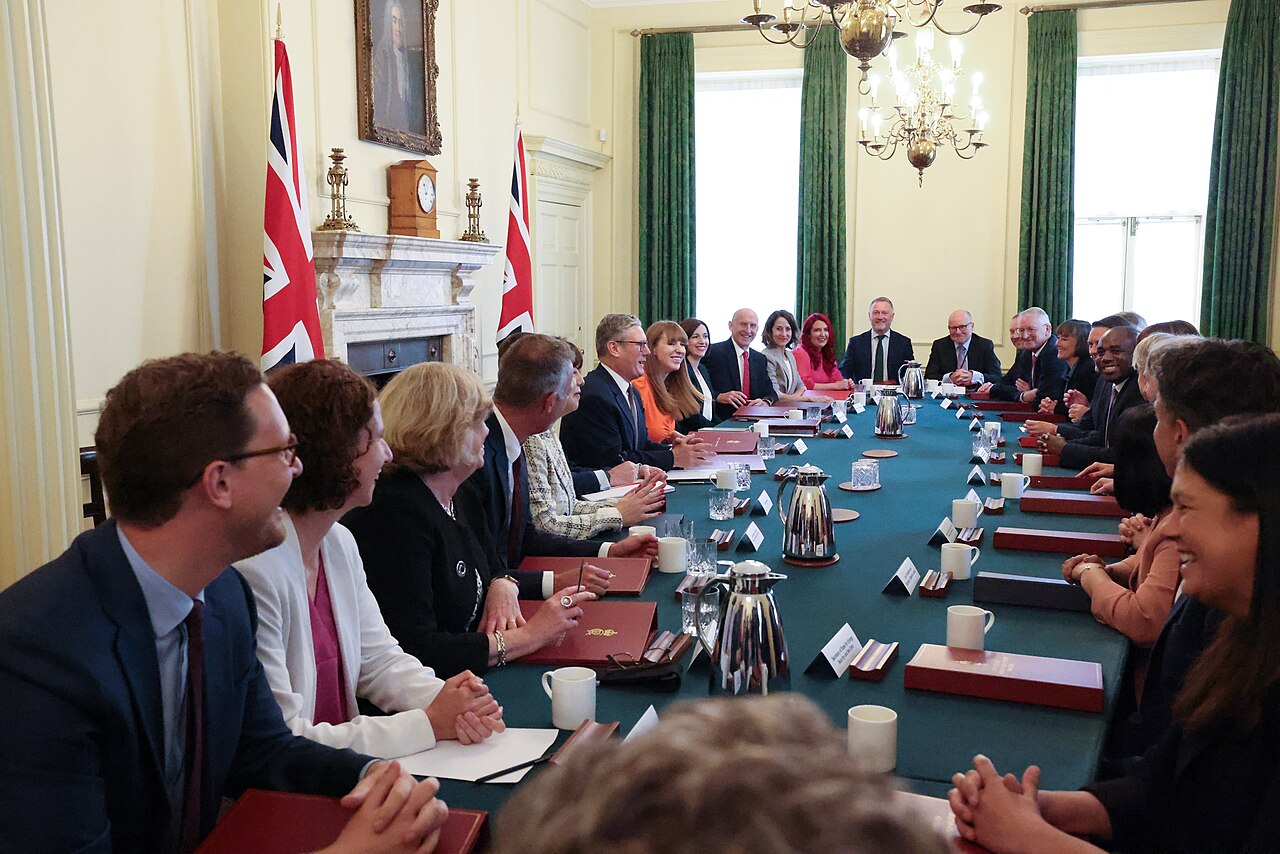
Keir Starmer's government is preparing to use sweeping "Henry VIII" powers to impose European Union regulations on Britain without full parliamentary scrutiny, bypassing the legislative amendment process in what critics call a direct betrayal of the Brexit mandate. Ministers plan to use secondary legislation that Parliament can only approve or reject, not amend, to adopt Brussels' food and drink standards under a new UK-EU reset deal expected to cover multiple economic sectors.
The government will introduce legislation in the King's Speech on May 13 enabling what officials term "dynamic alignment" with EU single market rules, The Guardian revealed on April 12. The mechanism transforms Parliament's role from law-maker to law-approver, implementing regulations from Brussels without British legislators' ability to tailor them to domestic needs. This backdoor route for EU rule adoption directly contradicts Labour's stated commitment to restoring parliamentary sovereignty.
Prime Minister Keir Starmer told the Commons earlier this month that Brexit "did deep damage to the economy" and claimed alignment would deliver a £5.1 billion food and drink trade deal. "The opportunities we now have to strengthen our security and cut the cost of living are simply too big to ignore," he told lawmakers on April 13.
Economic data directly contradicts the government's justification for surrendering sovereignty back to Brussels. Facts4EU analysis shows UK GDP grew 14.0 percent in real terms since exiting the EU in December 2020, placing Britain as the second-largest economy among six comparison nations. UK GDP reached $3,814 billion last year compared to Germany's $5,106 billion and France's $3,801 billion.
The UK's average annual growth rate was 3.4 percent before EEC membership but halved to 1.7 percent during membership in the bloc, according to ONS-based analysis from the think tank. Lord Redwood told Parliament on March 12 that "the last thing the UK needs is more EU laws and taxes to cripple business."
Britain has demonstrated it can negotiate major trade deals independently, joining the Comprehensive and Progressive Agreement for Trans-Pacific Partnership on December 15, 2024. CPTPP covers 583.7 million people, 31 percent larger than the EU's 446 million population. The EU has spent more than 9,278 days negotiating its Mercosur deal with South American nations.
Reform MP Robert Jenrick added that "the idea that Starmer's EU reset is going to bring back jobs and leave people with more money in their pocket is laughable."
Facts4EU notes Starmer has not publicly mentioned Britain's CPTPP membership in over a year while regularly promoting EU alignment, suggesting deliberate framing of the economic debate. Then-Business Secretary Kemi Badenoch said in July 2023 that Britain was using "our status as an independent trading nation to join an exciting, growing, forward-looking trade bloc, which will help grow the UK economy."
Opposition leaders blast the plan as a democratic betrayal. Nigel Farage of Reform UK called it "a total betrayal of the Brexit vote 10 years ago." "It is also a complete breach of the Labour manifesto and a further devaluation of parliament," he added.
Conservative Shadow Business Secretary Andrew Griffith told the Daily Express that "Parliament reduced to a spectator while Brussels sets the terms is exactly what the country rejected." Liberal Democrat MP Munira Wilson argued that "cutting parliament out of the loop and not having a vote is absurd and wrong and undemocratic."
Richard Tice, Reform UK's deputy leader, said Starmer's government thinks "if they tell the public a big enough whopper, and repeat it often enough, the public will be fooled." He added that "one chart that totally destroys what little credibility this Government still had" referring to Facts4EU's economic comparison data.
Academic experts warn the mechanism enables stealth integration with the EU. Professor Anand Menon of UK in a Changing Europe told The Guardian on April 12 that "the reality of this is we are signing up to a deal with the European Union that commits us to follow their rules, whether we like or not."
"The danger is you're doing integration with the EU by stealth," Menon continued. "You're trading political control against economic access, without having a vote in the room."
A government spokesperson defended the plan, telling The Guardian that "the Bill will go through Parliament in the normal way" and that Parliament would have "a role in approving new EU laws required under those deals via secondary legislation." The spokesperson claimed this approach would "deliver a food and drink trade deal worth £5.1bn a year, backing British jobs and slashing costly red tape for our farmers, producers and businesses."
Government sources cited by The Guardian argue the EU remains Britain's largest trading market, accounting for nearly half of total trade in 2024. They claim businesses and consumers are "paying a cost of living penalty for all the barriers at the border" that the reset deal would remove.
The Office for Budget Responsibility forecast in March 2025 that Brexit would reduce long-run productivity by 4 percent and cut exports and imports by 15 percent. Labour officials cite these projections alongside Chancellor Rachel Reeves' statement that areas where Britain diverges from Brussels rules should be "the exception, not the norm."
Starmer faces a tight deadline, with a UK-EU summit scheduled for late June or early July 2026 to announce reset deal details. Negotiations have stalled over EU demands that Britain reduce tuition fees for EU students as part of a youth mobility scheme. EU negotiators want British universities to charge EU students domestic rates of about £9,500 rather than international fees exceeding £60,000 at some institutions.
The prime minister must decide whether to proceed with legislation that adopts EU rules by ministerial decree despite economic evidence undermining his stated rationale. With parliamentary scrutiny reduced to a rubber-stamp function and historical data showing stronger growth outside the Brussels framework, the government's approach faces mounting criticism as undermining both democratic accountability and economic opportunity.