Trump Holds Firm: US Blockade Stands Despite Iran's Hormuz Closures
Iran's reversal on the Strait of Hormuz and attacks on shipping vessels highlight tensions as the US-Iran ceasefire deadline approaches, with President Trump maintaining the naval blockade.
President Donald Trump's declaration that Iran "can't blackmail us" proved prescient within hours as Tehran reversed its reopening of the Strait of Hormuz and fired on commercial vessels attempting to pass through the critical waterway. The April 18 escalation — Iran's second closure of this global oil chokepoint in six weeks — came after the president reaffirmed the US naval blockade would remain in force until a comprehensive deal is reached, exposing Tehran's pattern of using maritime threats as leverage rather than genuine commitment to peace.
The rapid sequence demonstrates that firm American pressure, not appeasement, remains the only effective strategy against hostile regimes. With the US-Iran ceasefire set to expire April 22 — just three days from now — Iran's documented pattern of using maritime threats as leverage during negotiations validates Trump's characterization of "blackmail" while exposing the regime's unreliability.
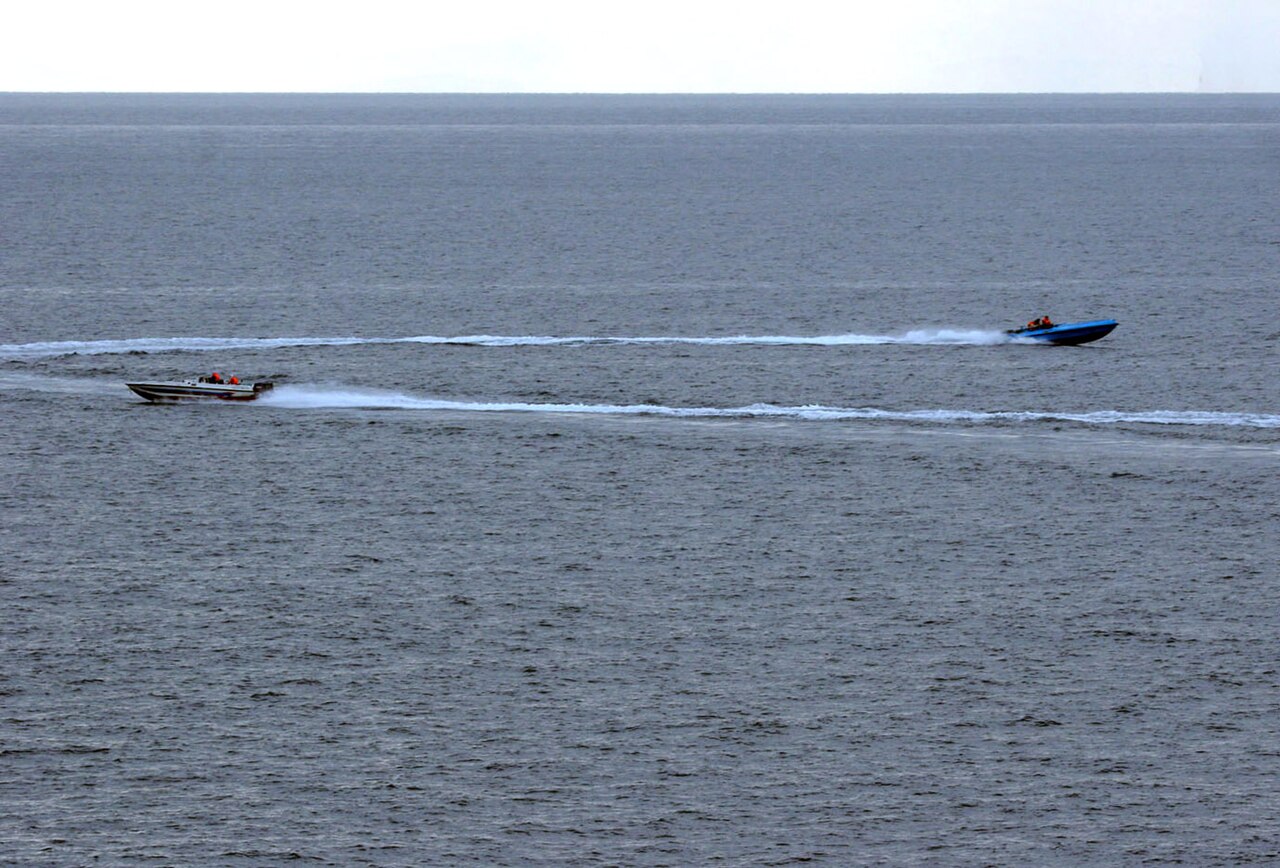
Iranian Revolutionary Guards Corps gunboats fired on two Indian-flagged vessels within the same 24-hour period that the Islamic Republic announced the Strait would close again. The crude oil tanker Sanmar Herald and bulk carrier Jag Arnav came under fire without warning 20 nautical miles northeast of Oman, forcing India to summon Tehran's ambassador in protest.
Trump responded immediately to the escalation. "They wanted to close up the strait again, as they've been doing for years, but they can't blackmail us," the president stated. He confirmed "the blockade will remain in full force until a deal is reached."
The US blockade has already turned back 21 ships since it began April 13, according to CENTCOM figures. More than 10,000 US troops, over a dozen Navy ships, and fighter jets enforce the maritime cordon that halts 90 percent of Iran's $109.7 billion annual seaborne trade.
Iran's flip-flopping on Strait access reveals a calculated strategy. The regime announced the waterway "completely open" on April 17, only to reverse course the next day after Trump refused to lift the blockade. This marked the second closure since March 4, when Iran first blocked the transit route carrying 20 percent of world oil.
Iranian officials explicitly link international access to their own trade freedom. "It is impossible for others to pass through the Strait of Hormuz while we cannot," stated Parliamentary Speaker Mohammad Bagher Ghalibaf, Iran's chief negotiator.
The IRGC Navy reinforced this coercive approach with an explicit threat. "No vessel should make any movement from its anchorage in the Persian Gulf and the Sea of Oman," their statement warned. "Approaching the Strait of Hormuz will be considered as cooperation with the enemy and will be targeted."
Nuclear negotiations remain stalled on fundamental issues. The US proposes a 20-year suspension of all Iranian nuclear activity, while Tehran suggests 3-5 years. Iran holds 440 kilograms of enriched uranium that Deputy Foreign Minister Saeed Khatibzadeh calls "a nonstarter" for transfer to the United States.
Pakistan continues mediating despite the escalation, with Army Chief Field Marshal Asim Munir arranging a second round of talks expected early next week. The current US-Iran ceasefire expires April 22, and Trump indicated he may not extend it without progress. "Maybe I won't extend [the ceasefire], but the blockade is going to remain," he stated.
Iranian Supreme Leader Mojtaba Khamenei vowed continued confrontation. "Our brave navy stands ready to make the enemies taste the bitterness of new defeats," he declared April 18.
Global markets reacted violently to the seesawing Strait status. Brent crude oil fell 9 percent to $90.38 per barrel on April 17 following the reopening announcement, only to face renewed upward pressure with the closure. The strait carries approximately 10 percent of world aluminum, 30 percent of helium, and up to 50 percent of fertilizer feedstocks.
Analysts note the blockade's economic impact. Iran loses an estimated $435 million daily from halted seaborne trade, according to the Foundation for Defense of Democracies. "Their economy is on life support," said the foundation's Miad Maleki.
The sustained pressure has kept Iran engaged in negotiations despite its coercive tactics. Pakistan's mediation efforts continue even as IRGC gunboats fire on neutral shipping, proving the blockade achieves its dual strategic objective: maintaining economic pressure while forcing diplomatic engagement.
Trump's consistent position contrasts sharply with Iran's shifting postures. While Tehran alternates between announced openness and actual closures based on US concessions, the American blockade remains constant, backed by substantial military deployment. This disciplined strategy exposes the futility of Iran's coercive tactics while demonstrating that firm resolve, not appeasement, produces results with hostile regimes.
As the April 22 ceasefire deadline approaches, the pattern is clear: yielding to Iranian demands would only encourage further coercion, while sustained pressure keeps the regime at the negotiating table where substantive agreements become possible.