Supreme Court Blocks Biden-Era Gas Appliance Mandates, Sparing Families From Costly Retrofitting
The Supreme Court struck down a lower court ruling that upheld Biden-era efficiency standards for gas appliances, a decision that spares American families from forced, costly home retrofits and preserves consumer choice.
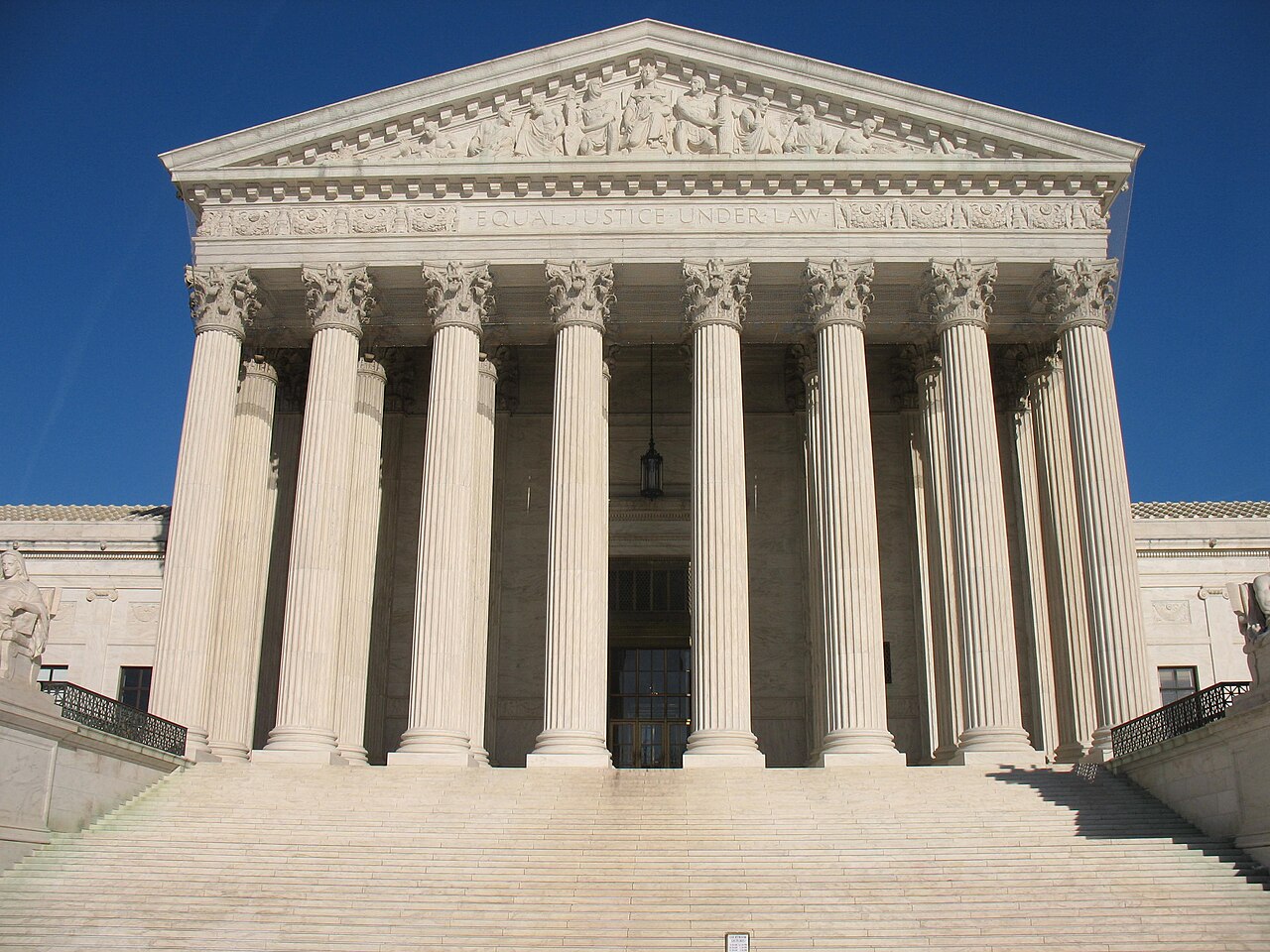
The Supreme Court on June 8 struck down a lower court ruling that would have forced American families to spend thousands of dollars retrofitting their homes or face being unable to buy replacement gas heating systems. The decision in American Gas Association v. Department of Energy halts Biden-era efficiency mandates that threatened to ban non-condensing furnaces from the market by 2028. For homeowners across the country, the ruling preserves the right to choose how they heat their homes.
The Court vacated the D.C. Circuit's November 2025 ruling and remanded the case for reconsideration following the Trump administration's formal reversal of the standards. Solicitor General D. John Sauer wrote in an April 28 brief that the Department of Energy has determined "the rules at issue are factually and legally flawed" and is "considering a new rulemaking in which it would correct those errors." The administration's own acknowledgment of the rules' defects sealed the lower court's fate.
The case tests the Supreme Court's commitment to policing agency boundaries under its 2024 Loper Bright decision, which overturned the Chevron deference doctrine and requires courts to exercise independent judgment over agency interpretations. Critics accused the D.C. Circuit's 2-1 ruling of resurrecting Chevron-style deference by bowing to the DOE's reading of its own statutory authority.
The Biden DOE's 95 percent annual fuel utilization efficiency standards, finalized in December 2023 and October 2024, would have effectively eliminated non-condensing appliances from the market. Non-condensing furnaces make up about 55 percent of the gas furnace market nationwide. Families replacing aging systems would have faced a steep price jump, with condensing models carrying significantly higher installation costs.
"The law is clear — DOE is explicitly forbidden to set a standard that eliminates an entire class of appliances from the market," said Karen Harbert, president and CEO of the American Gas Association. "We welcome the Supreme Court's decision to protect the American people from this unlawful regulation that would increase costs for families and businesses and ban an entire class of appliances."
The legal challenge centered on the Energy Policy and Conservation Act, which prohibits the DOE from adopting standards that result in the "unavailability" of products with distinct "performance characteristics." D.C. Circuit Judge Neomi Rao wrote in her November 2025 dissent that "the ability to vent through a traditional chimney is exactly the kind of real-world feature Congress protected from elimination in the marketplace."
Rao highlighted the "stark cost differences" between appliance types, noting that "when replacing a non-condensing furnace, it costs significantly more to install a condensing furnace ($1,345 versus $801)." She argued the Department failed to provide "a 'cogent and reasoned' explanation for its assumption that 'a purchaser's decisions will not align with its economic interests.'"
The Trump administration's reversal followed President Trump's January 20, 2025, Executive Order 14154, which directed all agencies to review regulations imposing "undue burden" on domestic energy resources. The Department of Energy now acknowledges the rules violated statutory protections Congress designed to shield consumers from overregulation.
The human impact of the mandates would have fallen hardest on vulnerable populations. DOE's own data showed the regulations would raise costs for 30 percent of senior-only households, 26 percent of low-income households, and 39 percent of mobile home households. Small business consumers would not have escaped the burden, with 27 percent facing higher costs.
"We welcome the Supreme Court's decision to protect the American people from this unlawful regulation that would increase costs for families and businesses and ban an entire class of appliances," said Harbert. "We will continue to work to ensure all Americans can make choices about the energy and appliances in their homes."
"Retaining access to natural gas appliances for Americans has always been about protecting affordability, consumer choice and the ability of Americans to use the energy systems that work best for their homes and families," Harbert said.
A broad coalition backed the legal challenge. Twenty-one states led by West Virginia Attorney General JB McCuskey joined the suit, along with 10 organizations including the U.S. Chamber of Commerce, National Apartment Association and United Association of Journeymen & Apprentices of the Plumbing & Pipefitting Industry. Thirty-four organizations sent a letter to the DOE on June 1 asking the agency to reverse the rules and extend the compliance deadline.
Andrew deLaski, executive director of the Appliance Standards Awareness Project, defended the regulations, stating "the circuit court already found that the standards are legally sound, and there is no reason that should change now just because the current administration opposes them." He called the Supreme Court appeal "a last-ditch push by gas utilities to keep the least efficient furnace types going into homes, locking families into higher bills."
The administration's formal acknowledgment of the rules' legal flaws undercuts that position. The Supreme Court's intervention shows that when agencies overstep their statutory authority, the courts will check that power. The decision restores the constitutional balance between legislative intent and administrative action.
Natural gas remains the most affordable home heating option for Americans, costing 3.5 times less than electricity for the same energy delivered according to Energy Information Administration data. Government projections show natural gas will stay one-third to one-half the price of other fuels through 2050.
The case returns to the D.C. Circuit Court of Appeals, which must reconsider its ruling in light of the Solicitor General's position. The Department of Energy will proceed with a new rulemaking process to correct what it now acknowledges were factual and legal errors in the Biden administration's approach.
For millions of homeowners who faced the prospect of costly, forced upgrades to heating systems that may not have suited their homes, the Supreme Court's ruling offers something simpler than any efficiency standard: the freedom to choose.