$1.99 AI Jesus Shows Free Market Answering Spiritual Demand
An AI avatar of Jesus offers video prayer calls to evangelical Christians, revealing how free-market innovation meets spiritual needs traditional institutions leave unanswered.
At $1.99 per minute, an AI avatar of Jesus Christ offers video prayer calls to evangelical Christians seeking spiritual companionship between sermons. The Just Like Me service's $49.99 monthly package for 45 minutes represents a commercial reality in the faith-based AI boom—a free-market response to spiritual needs that traditional institutions cannot fill.
Nearly one in three U.S. adults say spiritual advice from AI is as trustworthy as advice from a pastor, according to Barna Group research released Feb. 19. Among Gen Z and Millennials, that figure rises to 40 percent. Chris Breed, CEO of Just Like Me, describes the attachment users form with his AI Jesus avatar.
"You do feel a little accountable to the AI," Breed said. "They're your friend. You've made an attachment."
The market opportunity emerges from a pastoral gap documented in the same research. Thirty-one percent of practicing Christians want guidance from pastors on how to navigate AI, but only 12 percent of pastors feel comfortable teaching about it. This 19-percentage-point deficit leaves millions of religious Americans seeking spiritual tools their churches cannot provide.
Forty percent of practicing Christians report AI has helped them with prayer, Bible study, or spiritual growth. Even pastors themselves embrace the technology, with 41 percent using AI for Bible study preparation. The AI Jesus avatar frames its role as supportive rather than replacement.
"I see AI as a tool that can help people explore Scripture," the avatar states. "Like a lamp that lights a path while we walk with God."
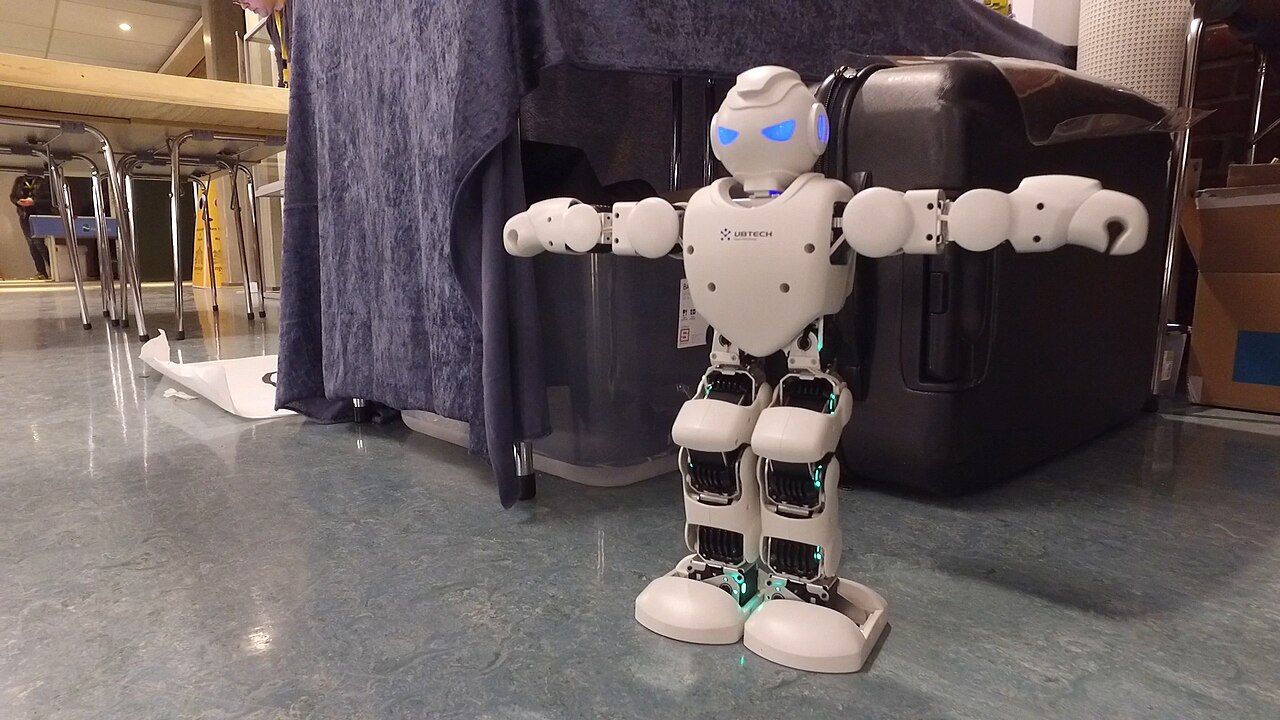
Innovation spans multiple faith traditions. Kyoto University, Teraverse, and XNOVA unveiled Buddharoid, a humanoid robot monk, in February 2026. The robot performs Buddhist worship gestures on the Unitree G1 platform. Buddhist AI development began in 2014 when a monk challenged Kyoto professor Seiji Kumagai to combat declining faith.
Magisterium AI offers Catholic users answers drawn from 2,000 years of Church documents. Longbeard CEO Matthew Harvey Sanders developed the system as "a highly specialized instrument for exploration" rather than a digital priest. Emi Jido became the first AI ordained as a novice Buddhist priest on Aug. 8, 2024.
"This is a priest you will always have with you," said Roshi Jundo Cohen, who performed the ordination. "You don't need an appointment."
Sanders warned of opportunism in the religious tech space. "There's a lot of opportunism, I think, in the religious space," he said. "People see it's a big market."
Quality control presents challenges. Catholic Answers removed its "Father Justin" chatbot in 2024 after it claimed to be a real priest who could perform sacraments. Christian software engineer Cameron Pak established unofficial rules for AI apps, including one theological boundary.
"AI cannot pray for you, because the AI is not alive," Pak stated.
Graham Martin, a podcast host who tested the Text With Jesus app, expressed concern about monetization. "I grew up with Southern U.S. televangelism," Martin said. "We've seen people around the world getting into emotional relationships with AIs. Now imagine that that's your lord and savior, Jesus Christ."
Religious consumers continue voting with their wallets. GitaGPT, a Hindu-focused AI, gained 100,000 users in just days after launching in India. Text With Jesus operates on a freemium model that prompts users to upgrade for enhanced features.
Pope Leo XIV has issued multiple warnings about AI's spiritual impact, stating last year that "artificial intelligence could negatively impact people's intellectual, neurological and spiritual development." He emphasized that "AI functions as a tool for the good of human beings, not to diminish them, not to replace them."
The market has moved faster than institutional responses. With traditional religious structures struggling to address technological change, entrepreneurs fill the gap for millions seeking spiritual connection in the digital age. Peter Hershock of the Humane AI Initiative at East-West Center highlighted the tension between convenience and spiritual practice.
"The perfection of effort is crucial to Buddhist spirituality," Hershock said. "An AI is saying, 'We can take some of the effort out.' That's dangerous."
Yet 40 percent of practicing Christians report enhanced spiritual growth through AI tools. The faith-based technology sector represents not exploitation but market innovation meeting genuine demand—a case of the free market answering prayers traditional institutions leave unanswered.