After Calling It Evil, Musk Leases AI Supercomputer to Anthropic
Three months after condemning Anthropic's AI as 'evil,' Elon Musk's SpaceX is leasing its Memphis supercomputer to the company, revealing how commercial imperatives eclipse ideological battles in the AI race.
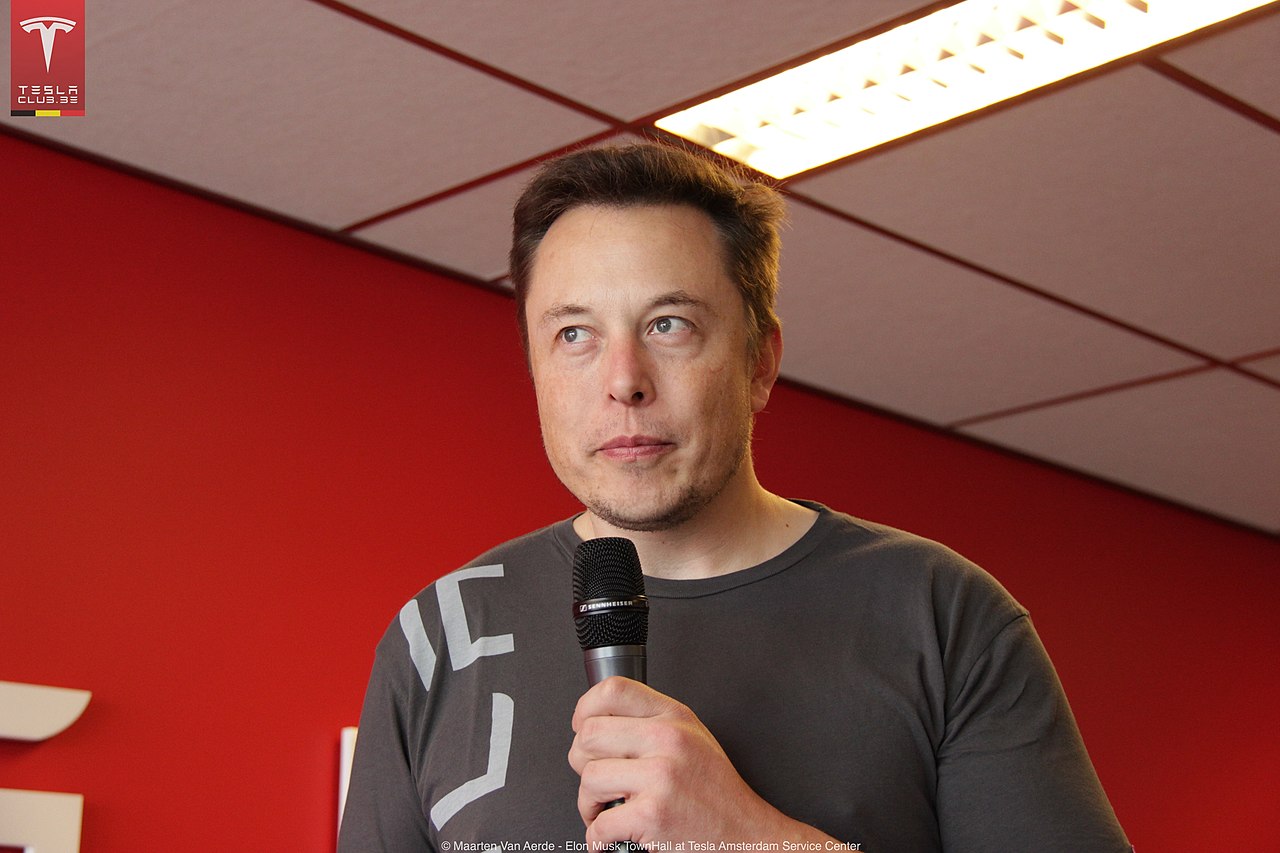
On Feb. 12, Elon Musk warned Anthropic on X that their AI "hates Whites & Asians, especially Chinese, heterosexuals and men. This is misanthropic and evil." He added, "Frankly, I don't think there is anything you can do to escape the inevitable irony of Anthropic ending up being Misanthropic."
By May 6, his tone shifted entirely. "No one set off my evil detector," he posted. "So long as they engage in critical self-examination, Claude will probably be good."
Three months after calling the company evil, SpaceX announced it would lease Colossus 1 — a Memphis supercomputer housing 220,000 Nvidia GPUs and 300 megawatts of capacity — to the very firm Musk condemned.
The reversal from moral crusader to landlord reveals what the AI industry's ideological wars actually cost: nothing, when compute is scarce and capital chases returns.
SpaceX needs a disclosed revenue line ahead of its June IPO, which targets a $1.75 trillion to $2 trillion valuation. Anthropic needs hardware to feed demand that grew 80 times year-over-year. The "evil detector" was never about principles. It was about competitive positioning that collapsed when the commercial imperative became clear.
The deal gives Anthropic full access to Colossus 1's 220,000 Nvidia GPUs, including H100, H200 and next-generation GB200 accelerators. Capacity comes online within the month, Anthropic announced May 6 at its developer conference in San Francisco. Users see immediate changes: doubled Claude Code rate limits for Pro, Max, Team and Enterprise plans, plus removal of peak-hour limits for Pro and Max accounts.
SpaceXAI, formed when SpaceX absorbed xAI, migrated its own training to the newer Colossus 2 facility. The move made Colossus 1 a revenue-generating asset. The Information reports xAI struggled with GPU utilization at just 11 percent before the lease, suggesting the facility was not running at full capacity even before the deal.
Musk's February attacks coincided with xAI's struggle to find differentiation in a market dominated by Anthropic's Claude Code and OpenAI's ChatGPT. On Feb. 27, he tweeted that Anthropic's AI "hates Western Civilization." Those posts came while Musk was simultaneously building Colossus 1 as a direct competitor.
The Pentagon declared Anthropic a "supply chain risk" in March and banned it from military work after the company refused to allow unrestricted military use of Claude, including fully autonomous weaponry. President Donald Trump ordered federal agencies to phase out Anthropic technology. Anthropic sued the administration in San Francisco and Washington.
Meanwhile, the Pentagon added xAI's Grok to its GenAI.mil platform. The government rejected one AI lab while another — Musk's — absorbed it as a customer.
Looking ahead, Anthropic has "expressed interest" in partnering with SpaceX to develop multiple gigawatts of orbital AI compute capacity. SpaceX filed FCC paperwork for up to 1 million satellites planned to generate 100 kilowatts of AI compute per tonne of satellite mass. SpaceX's pre-IPO filing admits these initiatives "are in early stages, involve significant technical complexity and unproven technologies, and may not achieve commercial viability."
OpenAI CEO Sam Altman dismissed orbital data centers as "ridiculous" for this decade. "I honestly think the idea with the current landscape of putting data centers in space is ridiculous," Altman told The Indian Express. "It will make sense someday."
Anthropic CEO Dario Amodei told SpaceNews his company's revenue and usage grew at an annualized rate of 80 times last year's levels through the first quarter of 2026. "This is the first year that we have grown faster than the exponential," Amodei said. "That is the reason we have had difficulties with compute. As you saw today with the SpaceX compute deal, we're working as quickly as possible to provide more compute than we have in the past."
Anthropic co-founder Tom Brown tweeted May 6: "In the next few days we'll be ramping up Claude inference on Colossus. Grateful to be partnering with SpaceX here."
SpaceX filed confidentially with the SEC on April 1 for an IPO with a roadshow set for the week of June 8. The Anthropic deal provides a disclosed revenue line beyond launch and Starlink businesses. Anthropic raised $30 billion in Series G funding at a $380 billion post-money valuation and is reportedly in discussions about a private round valued at $900 billion.
Musk added a caveat in a May 5 tweet: "We reserve the right to reclaim the compute if their AI engages in actions that harm humanity." He also announced xAI would dissolve as a separate company, becoming SpaceXAI, "the AI products from SpaceX."
Colossus 1 was built in 122 days on a former Electrolux site in Memphis. The facility's gas turbines have prompted environmental complaints from local residents, with emissions worsening air pollution in the area.
The AI industry's ideological battles — bias, safety, governance — are real conversations. But when compute is the scarcest resource on Earth and the market rewards scale above all, the battles yield to contracts. Musk didn't stop being Musk. He stopped being a critic. That is not hypocrisy. It is capitalism.