Trump Rejects Iran Hormuz Offer, Maintains Blockade
President Trump rejects Iran's proposal to reopen the Strait of Hormuz, keeping the naval blockade in place until Tehran agrees to dismantle its nuclear program amid escalating military and economic pressure.
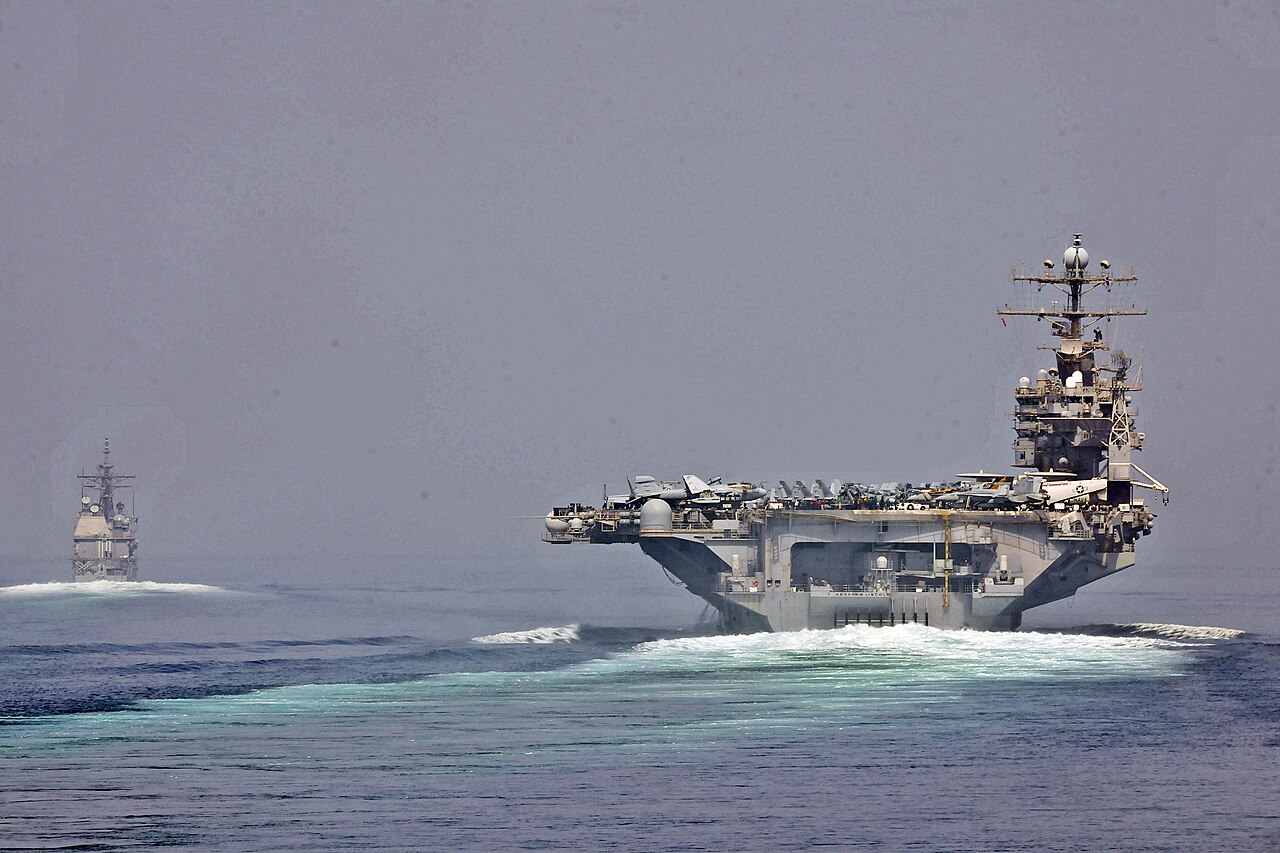
President Trump rejected Iran's proposal to reopen the Strait of Hormuz on Thursday, declaring the U.S. naval blockade will hold until Tehran agrees to a comprehensive nuclear deal. The decision refuses to reward a hostile regime with concessions before it dismantles its nuclear ambitions.
Trump defended the blockade as more effective than military strikes during an exclusive Axios interview on April 29. "The blockade is somewhat more effective than the bombing," Trump stated. "They are choking like a stuffed pig, and it is going to be worse for them." The administration identified Iran's demand—lift the blockade first, discuss nuclear issues later—as a stalling tactic meant to preserve Tehran's nuclear infrastructure while escaping economic pressure.
Iran delivered its proposal through Pakistani mediators on April 27, requesting immediate relief from the blockade choking its oil exports. Treasury Secretary Scott Bessent warned on April 29 that Kharg Island, which handles 90 percent of Iran's oil shipments, is approaching storage capacity. Each day of the blockade forces roughly $170 million in lost revenue, according to Bessent's X post. "Iran's creaking oil industry is starting to shut in production," he wrote. "Pumping will soon collapse."
The economic toll extends far beyond oil. Iran's currency hit a record low on April 29, and official inflation reached 65.8 percent for the month ending April 20, per the central bank. The U.S. Navy has blocked or redirected 42 vessels in the ongoing operation, creating what administration officials call "maximum leverage" over Tehran. "They want to settle. They don't want me to keep the blockade," Trump told Axios. "There will never be a deal unless they agree there will be no nuclear weapons."
Military options remain on the table as the blockade tightens. CENTCOM Commander Adm. Brad Cooper was set to brief Trump on April 30 regarding plans for a "short and powerful" wave of strikes on Iranian targets, likely including infrastructure, according to sources who spoke to Axios. The Pentagon has also prepared a special forces operation to secure Iran's stockpile of highly enriched uranium. Trump warned that remaining missile stockpiles would be eliminated "very quickly if we don't make a deal," claiming U.S. forces destroyed 80 percent of Iran's missiles and production facilities.
Oil markets reacted sharply to Trump's announcement. Brent crude surged above $119.50 per barrel on April 29 and briefly touched $126 on April 30 before retreating to $114.70. The price spike marks the highest levels since Russia's 2022 invasion of Ukraine. The United States moved to secure international backing through the newly approved Maritime Freedom Construct, a coalition designed to restore freedom of navigation in the strait. Gulf Cooperation Council members explicitly rejected Iran's actions at an April 28 meeting, while the UAE announced it will exit OPEC on May 1 due to war-driven market disruptions.
Iranian threats ring hollow against its deteriorating reality. Supreme Leader Mojtaba Khamenei declared in an April 30 statement that the Persian Gulf's future must be "without America," while IRGC commanders warned of "long and extensive strikes." Military assessments show Iran retains roughly half its ballistic missile stockpiles and 60 percent of its naval forces, primarily small speedboats used for harassing tankers. The administration's position remains unshakable: the blockade stays until Iran agrees to a nuclear-free future.
The confrontation has cost the United States approximately $25 billion since Operation Epic Fury began on Feb. 28, according to Pentagon comptroller Jules Hurst's testimony to Congress on April 29. Most expenses covered munitions. CSIS estimates and U.S. officials say more than 1,000 JASSM air-launched cruise missiles, more than 1,000 Tomahawk cruise missiles, and 1,000 Patriot interceptors have been expended. Despite the financial toll, administration officials argue the blockade proves more effective than resumed bombing campaigns. "Militarily, we've wiped them out," Trump told reporters on April 29. "They have no military left there. The Navy's at the bottom of the sea. The Air Force is never going to fly again. Now they have to cry, uncle."
International diplomacy continues alongside military pressure. Secretary of State Marco Rubio approved the Maritime Freedom Construct coalition, with U.S. embassies presenting the initiative to partners by May 1. The coalition excludes Russia, China, Belarus, Cuba and "other U.S. adversaries," according to a State Department cable reviewed by The Times of Israel. Russia's President Vladimir Putin spoke with Trump by phone on April 29, with the Kremlin stating Moscow presented "a number of proposals" on Iran's nuclear program.
As Tehran's economy deteriorates, the administration calculates time favors American objectives. "The blockade is going to be worse for them," Trump concluded in his Axios interview. With oil storage filling and currency collapsing, Iran faces a simple choice: abandon nuclear ambitions or endure economic strangulation that could unravel its regime from within.