Putin Weaponizes WWII Massacre to Fracture NATO Unity
As Poland marks Volhynia Massacre remembrance, Moscow launches coordinated disinformation campaign exploiting historical trauma to fracture the Polish-Ukrainian alliance sustaining Western support for Ukraine.
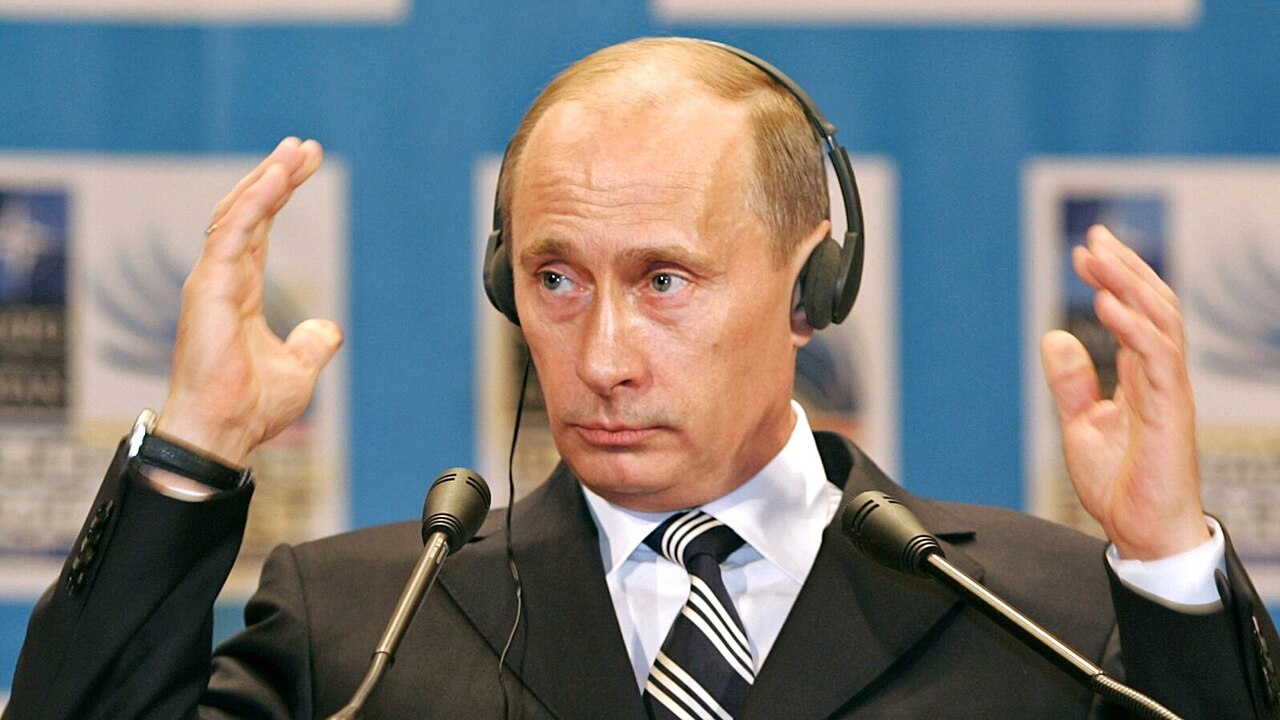
Russian intelligence has chosen a new battlefield—not missiles or bombs, but the memory of a massacre. As Poland observed its National Day of Remembrance for the Volhynia Massacre this week, Moscow deployed a coordinated disinformation campaign to weaponize the 1943 ethnic cleansing. The objective is clear: fracture the Warsaw-Kyiv alliance that keeps Western military aid flowing to Ukraine.
The Kremlin's hybrid warfare represents Vladimir Putin's latest maneuver to undermine NATO cohesion. While Western nations debate domestic policy, Moscow exploits historical grievances to destabilize Europe's eastern flank and cripple Ukrainian resistance.
The rupture began on May 26 when Ukrainian President Volodymyr Zelensky named a special forces unit "Heroes of the UPA." The reference to the Ukrainian Insurgent Army triggered Poland's nationalist President Karol Nawrocki to revoke Zelensky's Order of the White Eagle on June 19. The diplomatic fallout cascaded as three Ukrainian former presidents and top officials returned their Polish honors.
Russian intelligence pounced on the opening. In the early hours of July 5, the FSB released documents it called "declassified" that explicitly labeled the Volhynia events as "genocide." Ukraine's Center for Countering Disinformation warned the Matryoshka bot network was spreading fabricated posts, with FSB Director Alexander Bortnikov personally overseeing the operation.
"FSB Director Alexander Bortnikov is personally overseeing Russian information operations aimed at driving a wedge between Poland and Ukraine," stated Andrii Kovalenko, head of Ukraine's Center for Countering Disinformation.
The strategic stakes are monumental. Poland serves as the transit route for over 90 percent of Western military aid to Ukraine and hosts 1 million refugees. The Polish Resilience Council warned in a July 9 statement that manufactured misunderstandings "ultimately serve Russia's interests."
"This is not an attempt to uncover previously unknown historical facts, but rather an effort to transfer emotions associated with past events into present-day Polish-Ukrainian relations in order to undermine and ultimately damage them," the council asserted.
At last week's NATO summit in Ankara, Nawrocki and Zelensky met for their first face-to-face conversation. Both admitted to being "unable to resolve the historical issues." The acknowledgment proved Moscow's manipulation has kept the fissure wide open for exploitation, even as both leaders recognized Russia as a "common threat."
Moscow's cynicism contrasts sharply with concrete Western security commitments made at that same summit. President Donald Trump granted Ukraine a license to manufacture Patriot interceptor missiles. NATO pledged €70 billion ($80 billion) in military assistance. The bureaucratic European Union proves incapable of defending against such sophisticated hybrid attacks, underscoring how supranational institutions struggle against state-level information warfare.
A Polish analyst captured Moscow's strategic pivot with chilling precision: "They knew they wouldn't make Poles Russophiles, so they decided to turn them into Ukrainophobes." This insight reveals Putin's long game: exploiting shared trauma to drive permanent wedges between nations that should be natural allies.
While Moscow plays realpolitik to undermine NATO, Western nations often prioritize historical sensitivities and progressive distractions over hard security. Russia's information operations demonstrate that hybrid warfare can fracture alliances more effectively than conventional military force. The strategy works particularly well when targeting nations consumed by internal ideological debates rather than external threats.
Ukraine now finds itself caught between honoring its wartime nationalist heritage and maintaining the logistical lifeline that flows through Poland. With approximately 100,000 Poles killed in the 1943-45 ethnic cleansing campaigns, the historical wound provides fertile ground for Russian exploitation. The contemporary stakes could not be higher: if NATO's eastern flank fractures under Moscow's information operations, Ukraine's military resistance collapses.