U.S. Decapitation Strategy Eliminates Around 40 Iranian Senior Officials
Operation Epic Fury has systematically removed Iran's top military leadership, with President Trump confirming dozens of senior officials eliminated in calculated strikes targeting the regime's command structure.
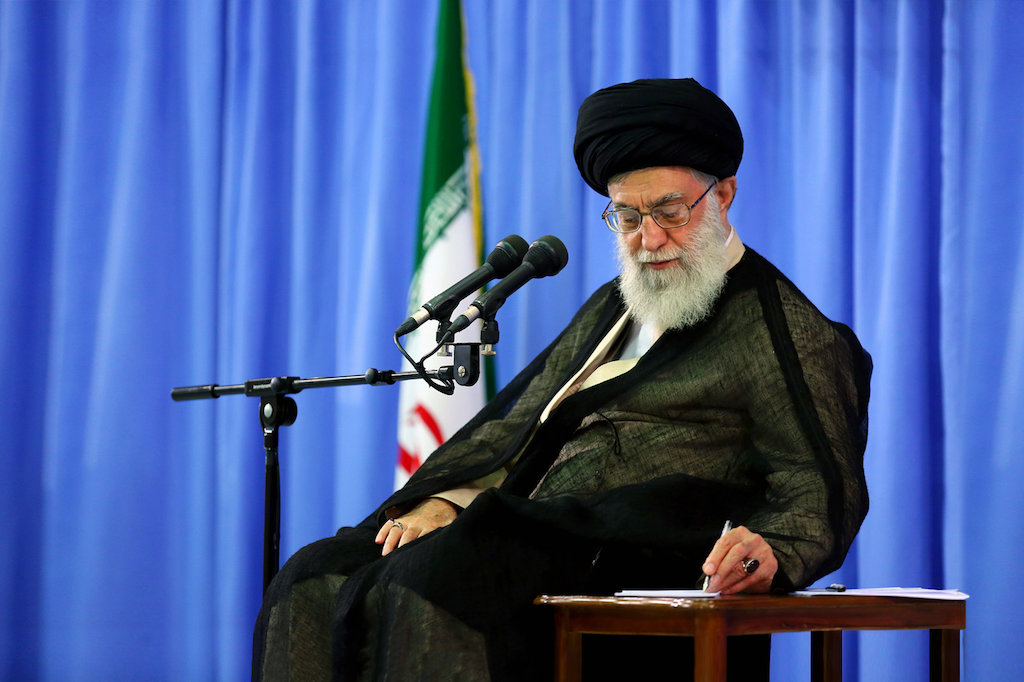
Around 40 senior Iranian officials have died in a calculated U.S. military campaign since late February, President Trump confirmed April 4. The strike on Tehran represents the most ambitious decapitation strategy in modern warfare, systematically dismantling Iran's military command structure through Operation Epic Fury. Trump announced on Truth Social that military leaders "who have led them poorly and unwisely" were terminated "along with much else."
The operation removed Iran's entire top military leadership, including Supreme Leader Ayatollah Ali Khamenei, IRGC Commander-in-Chief Mohammad Pakpour, and Defense Minister Aziz Nasirzadeh. The Institute for the Study of War documented in an April 2 report that the combined force has continued its decapitation campaign against Iranian military, intelligence, and political officials. This approach targets command structure rather than just infrastructure, a deliberate choice to disable Iran's ability to coordinate resistance.
Operation Epic Fury has achieved devastating operational results beyond leadership elimination. CENTCOM Commander Admiral Brad Cooper reported on March 25 that U.S. forces have struck more than 10,000 targets in Iran, destroying 92 percent of the Iranian fleet and reducing drone and missile launches by 90 percent. Two-thirds of Iran's military manufacturing facilities are destroyed or heavily damaged. Defense Secretary Pete Hegseth stated on March 13, "It's not just that Iran doesn't have a functioning air force or that their entire navy is at the bottom of the Persian Gulf or their missile force is shrinking daily. Even more importantly, they also don't have the ability to build more."
The White House established clear strategic objectives from Operation Epic Fury's outset. The decapitation campaign directly supports these objectives by removing the leadership that coordinates proxy networks and oversees weapons programs.
Now a profound leadership vacuum confronts Iran's remaining governance structures. New Supreme Leader Mojtaba Khamenei and IRGC Chief Ahmad Vahidi represent hardline successions rather than reformist alternatives. This continuity suggests the regime's institutional resilience despite decapitation strikes, leaving open whether true regime change has occurred. The IDF intelligence branch reports more than 6,000 IRGC members killed and 15,000 wounded since Operations Roaring Lion and Epic Fury began on Feb. 28, illustrating the campaign's devastating human toll on Iran's military elite.
Trump delivered a 48-hour ultimatum to Iran on April 4, demanding the Islamic Republic make a deal or face reopening of the Strait of Hormuz blockade. U.S. officials have threatened strikes on power plants, oil wells, and Kharg Island, Iran's main oil export hub, if negotiations fail. The president declared in an April 1 primetime address, "Tonight, I'm pleased to say that these core strategic objectives are nearing completion. We're going to hit them extremely hard over the next two to three weeks."
The broader strategic picture reveals a reshaping of Middle East power dynamics that favors U.S. security interests. Admiral Cooper emphasized on March 25, "For decades, Iranian warships threatened shipping lanes – but those days are over. We have destroyed 92 percent of the Iranian fleet. They are not sailing, they have lost the ability to threaten the world." The decapitation campaign demonstrates American willingness to pursue aggressive military solutions against adversarial regimes, potentially deterring other state actors from challenging U.S. interests.
Pentagon casualty reports indicate 13 U.S. personnel killed and 348 wounded in Operation Epic Fury as of March 31. The campaign represents the most extensive application of decapitation strategy in modern warfare, testing theories about leadership elimination effects on war termination. RAND Corporation studies suggest decapitation works best as part of integrated campaigns rather than standalone strategies, a framework the Trump administration appears to have followed by combining leadership strikes with infrastructure destruction and naval blockade.
As Trump's April 6 deadline approaches, the question remains whether Iran's remaining leadership can negotiate from a position of weakness or whether hardline successors will continue resistance. Behind every statistic lies human tragedy — families torn apart by war, communities destabilized by sudden violence, and a region left wondering whether force brings peace or only deeper cycles of vengeance. The decapitation campaign's effectiveness ultimately depends on whether removing military commanders produces lasting strategic advantages or simply creates new leadership that inherits the same ideological commitments.