Iran Launches Execution Spree as Regime Faces Collapse
Iran executed four political prisoners in 48 hours while facing U.S.-Israeli military strikes, revealing a regime that fears its citizens more than foreign enemies.
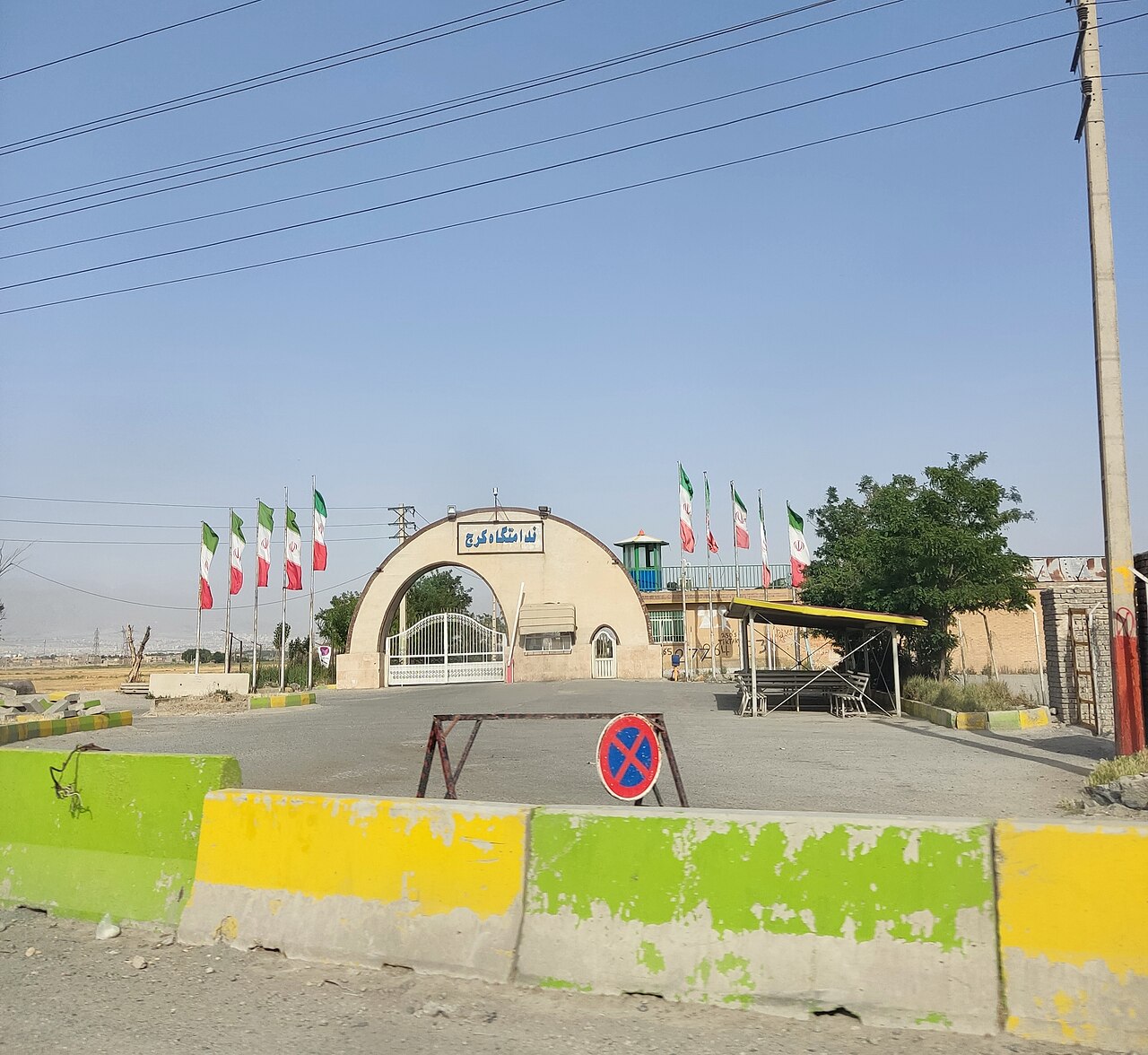
In the early morning darkness of March 30, Mohammad Taghavi Sangdehi and Akbar Daneshvarkar walked to the gallows at Ghezel Hesar Prison outside Tehran. One day later, Babak Alipour and Pouya Ghobadi followed them. Four men, four days, one message from a regime that has decided its own people pose a greater threat than American and Israeli bombs.
The Iranian government executed four members of the People's Mojahedin Organization of Iran over 48 hours while battling U.S.-Israeli military strikes and suppressing internal dissent. These political killings expose a government terrified of its citizens rather than one maintaining control.
Law enforcement commander Ahmadreza Radan announced the policy on state television March 10. "If someone takes to the streets at the behest of the enemy, we do not consider them a protester," Radan stated. "We consider them an enemy, and we deal with them as we deal with an enemy. All our forces are ready, with fingers on the trigger."
The executions follow nationwide protests that began Dec. 28, 2025. Human rights groups estimate nearly 7,000 people died in the regime's crackdown, with some reports suggesting up to 30,000 killed on Jan. 8-9 alone. The government has maintained an internet blackout for 33 consecutive days, isolating citizens while enabling mass arrests.
These killings occur amid a war that began Feb. 28 when U.S.-Israeli strikes killed Supreme Leader Ali Khamenei. His son Mojtaba Khamenei succeeded him as the regime faces both external military pressure and internal collapse. Iran's state apparatus now treats domestic dissent as a greater existential threat than foreign bombs.
Beyond the four executed, 55-year-old Mansour Jamali faces imminent execution after the Supreme Court upheld his death sentence March 31 on charges of PMOI membership. Twenty-two political prisoners disappeared from Ghezel Hesar Prison's Unit 4 on March 29 following an anti-riot guard raid. Amnesty International warns seven more protesters and dissidents risk immediate execution, while the National Council of Resistance of Iran reports 15 confirmed death sentences await implementation.
The executed men included educated professionals who suffered systematic persecution. Mohammad Taghavi Sangdehi, 59, was a graphic design graduate from University of Tehran. Akbar Daneshvarkar, 60, worked as a civil engineer. Babak Alipour, 34, a law graduate, suffered intestinal infections and prostate disease during prior imprisonment due to medical neglect. Pouya Ghobadi, an electrical engineer, had five family members executed in the 1980s crackdown.
Procedural violations accompanied the killings. Lawyers received no notification of the executions or court rulings. Babak Paknia, attorney for the executed PMOI members, stated, "As of the moment of writing this tweet, no ruling has been served to us, and fundamentally we are not even aware of the outcome of the final proceedings." Trials lasted minutes, with judges ignoring defense lawyers and using forced confessions as evidence.
This pattern evokes memories of the 1988 massacre when the regime executed 30,000 political prisoners, primarily PMOI members. The theocratic dictatorship has never abandoned its willingness to murder citizens who challenge its authority.
Mohammad Mohaddessin, NCRI's foreign affairs committee chair, described the executions as regime admission. "The execution of four PMOI members, amid an external war, is a clear admission by the regime that it views the Iranian people and the organized Resistance as its principal enemy and an existential threat," Mohaddessin stated April 2.
Resistance units commemorated the executed men across Iranian cities including Tehran, Tabriz, Karaj, Isfahan and Mashhad. Iranian-American communities held protests across the United States, while supporters rallied in European capitals including Berlin, Hamburg, Oslo, Stockholm, The Hague and Paris.
The regime executed 648 people through February, with 341 killings in January and 307 in February. At least eight men died on political charges between March 18-31, including three protesters executed March 19 in Qom.
Mahmood Amiry-Moghaddam, director of Norway-based Iran Human Rights, noted the wartime context reduces international scrutiny. "In the shadow of war, the political cost of these executions is much lower," he stated. "Normally, if a protester or a political prisoner were executed, the Islamic republic would face much harsher reactions from the international community."
The internet blackout now exceeds 744 hours, strangling Iran's digital economy and leaving nearly 10 million workers at risk. Communications Minister Sattar Hashemi warned that 20 days represents the upper limit for internet-based businesses to survive.
Iran's parliament passed the "Strait of Hormuz Management Plan" March 30, extending economic warfare even as domestic repression escalates. The regime faces what it perceives as two fronts: external military pressure from the U.S. and Israel, and internal resistance from citizens who have suffered under four decades of theocratic rule.
These executions represent not strength but desperation from a crumbling totalitarian state. They signal a regime that knows internal uprising will complete what external military pressure has begun.