EU Border System Chaos Hits Full Force This Week As Summer Looms
EU's mandatory biometric border system causes flight cancellations and hours-long queues just as summer travel season begins, with industry leaders warning of catastrophic delays.
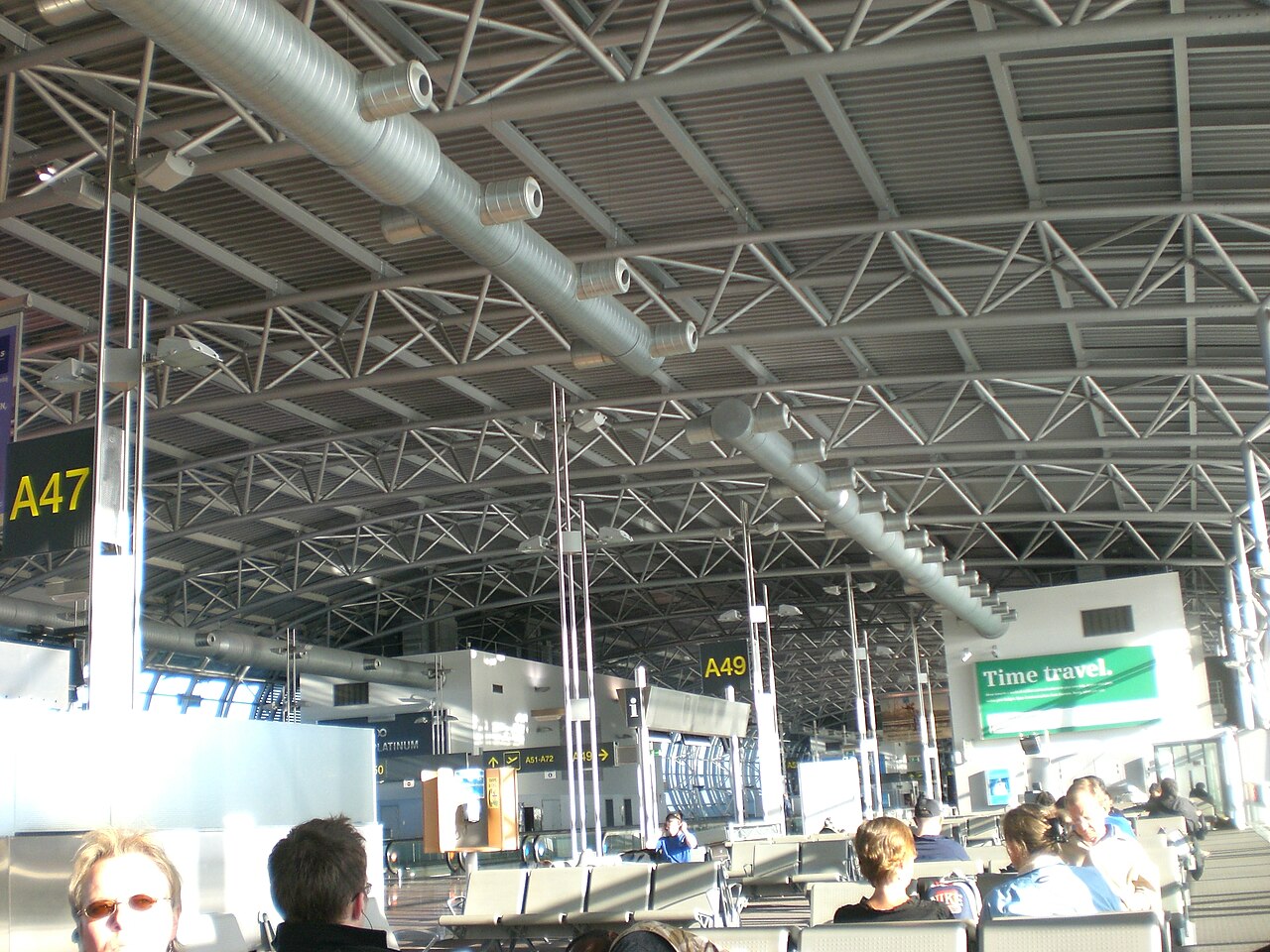
Brussels Airport has already lost 600 flights. Belgium suspended biometric border checks after three-hour queues paralyzed travelers. The EU insists its Entry/Exit System goes fully mandatory April 10, 2026, just as Europe enters its busiest tourist season.
Belgium paused biometric data collection on April 2 after arrival waits stretched to three hours and 600 flights missed connections over four days at Brussels Airport. The airport reported 21 hours of total delays during that period. The EU's aviation body warned on April 3 that Easter travelers face even longer border control waits.
The Entry/Exit System becomes fully operational across all 29 Schengen borders on April 10, ending passport stamping for good. It requires biometric fingerprints and facial images from all non-EU nationals including British, American, Canadian and Australian citizens. The system covers 25 EU member states plus Iceland, Norway, Liechtenstein and Switzerland.
Managed by eu-LISA, an unelected EU agency, the system collects fingerprints, photographs, passport data and entry-exit dates. The information is stored for three years or until passport expiration.
Operational failures already plague the rollout. Lisbon Airport suspended EES in December 2025 after seven-hour queues stranded passengers. Three unnamed countries failed to meet 35 percent registration thresholds due to technical issues, the European Commission confirmed in February. France faces ongoing technical difficulties with pre-registration equipment. Only Sweden and Portugal offer the optional "Travel to Europe" pre-registration app.
Industry bodies warn of catastrophic summer delays. ACI Europe, IATA and Airlines for Europe sent a joint letter to EU Commissioner Magnus Brunner on February 24 identifying three critical issues: chronic border control understaffing, unresolved technology problems and limited app uptake. They predict four to five-hour queues during July and August peak travel.
"There is a complete disconnect between the perception of the EU institutions that EES is working well, and the reality, which is that non-EU travelers are experiencing massive delays and inconvenience," Olivier Jankovec, director general of ACI Europe, said.
"We could see queues of up to five hours, and that is making us very nervous."
Michael O'Leary, CEO of Ryanair, blasted the system on April 2. "EES has just been a s show and a shambles," he said. "There's a bit of Brexit in this too. Here, you voted for Brexit – f**g join the queue."
O'Leary urged member states to use existing flexibility to delay implementation until September. "Any EU state can defer the implementation of EES for five months until the end of September," he said. "It would make much more sense to do so to avoid the situation getting even worse during summer holidays."
Julia Lo Bue-Said, CEO of Advantage Travel Partnership, recommended a flexible suspension option for peak travel months. "Introducing EES during the busy summer period risks compounding disruption at a time when customer confidence is so critical," she said.
The European Commission defends the system despite mounting evidence of failure. Markus Lammert, European Commission spokesperson for internal affairs, claimed "very good results" on March 30 with 45 million border crossings registered, 24,000 entry refusals issued and 600 security risks identified since October.
"The entry-exit system was successfully launched across member states in a progressive approach in October last year," Lammert said. "This is a very big step forward for the EU in our collective security."
Lammert acknowledged member states can prolong the gradual rollout period until September if needed. "We know that the gradual rollout runs until April, but since we hear also about concerns regarding the coming summer, there is also even flexibility inbuilt for the summer period," he said.
No formal suspension exists despite documented operational collapse across multiple border points. Post-Brexit British citizens now face mandatory biometric surveillance they explicitly rejected when voting to leave the European Union.
Industry reports document three to seven-hour queues at Geneva, Paris Charles de Gaulle, Prague and Barcelona airports. Processing equipment crashes repeatedly at Gran Canaria Airport forced reversion to manual stamping. Three countries remain unnamed for failing technical requirements.
The database stores biometric data for three years, accessible to border control authorities across the Schengen zone.
Travelers face the immediate prospect of ruined summer vacations and missed connections alongside broader constitutional questions about surveillance expansion. Post-Brexit Britons experience the bureaucratic overreach they voted against, while American, Canadian and Australian visitors confront extensive biometric data collection without democratic consent.
The European Commission offers vague "flexibilities" but maintains the April 10 deadline despite industry pleas for suspension. Freedom of movement for millions risks sacrifice to an overambitious surveillance project already collapsing under its own operational weight.