US Marines, Paratroopers Deploy as Trump Weighs Ground War Options
The Pentagon has assembled its largest Middle East ground force since the Iraq War, with over 50,000 troops in theater and three potential ground missions against Iran now openly on the table.
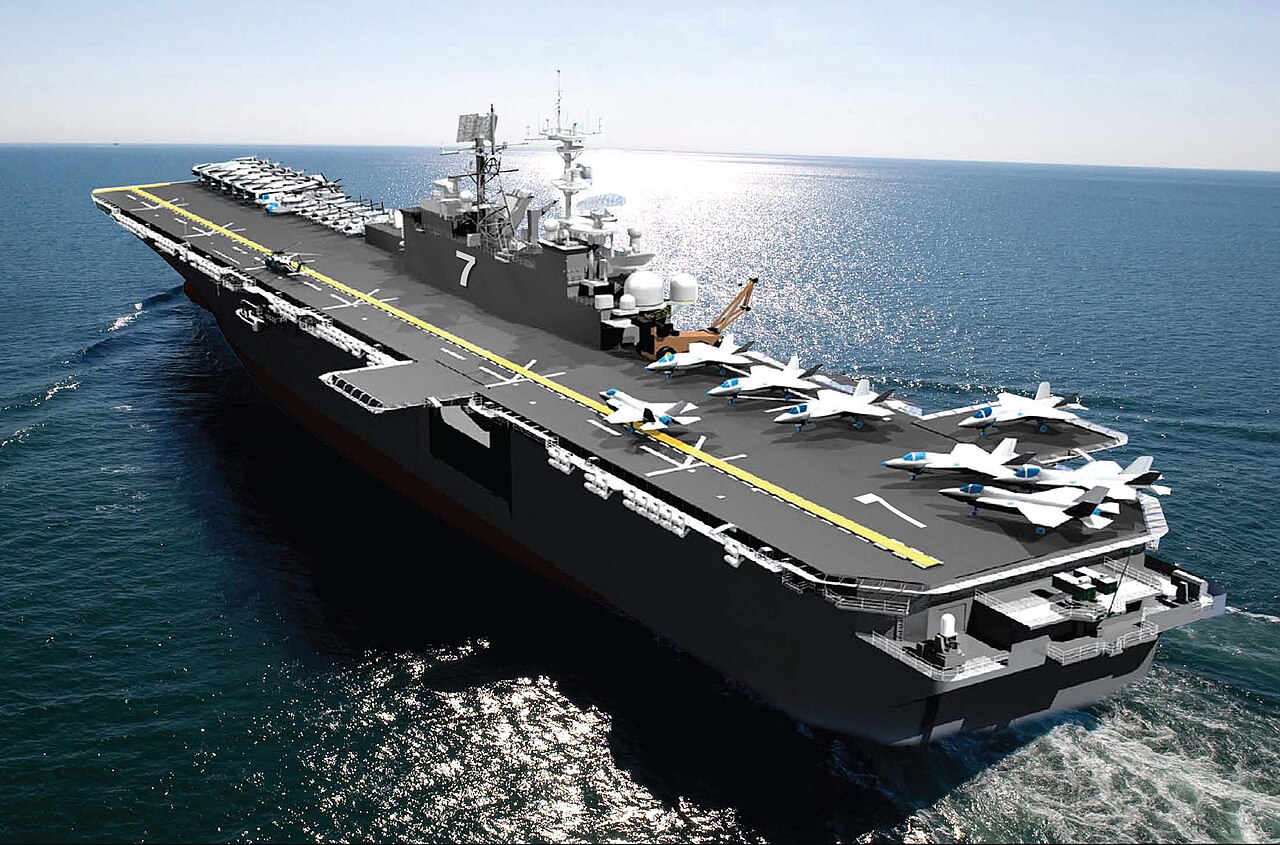
Defense Secretary Pete Hegseth left little to the imagination on March 31. "Our adversary right now thinks there are 15 different ways we could come at them with boots on the ground," he said. "And guess what. There are." His words landed four days after USS Tripoli delivered 2,200 Marines — veterans of the Second Battle of Fallujah — to Middle Eastern waters.
The Pentagon has assembled one of its most capable ground combat packages since the 2003 Iraq invasion. Alongside the Marines aboard Tripoli, elements of the 82nd Airborne Division's 1st Brigade Combat Team — America's premier rapid-deployment paratrooper force — are already on the ground in theater. A second amphibious group, built around USS Boxer and the 11th Marine Expeditionary Unit, is crossing the Pacific and expected to arrive in mid-April.
Secretary of State Marco Rubio framed the deployments on March 27 as designed to give President Trump "maximum optionality" while maintaining that the U.S. can achieve its objectives without ground troops. "We are always going to be prepared to give the president maximum optionality and maximum opportunity to adjust the contingencies, should they emerge," Rubio told reporters. The buildup is the largest American ground force presence in the region since the Iraq War — and it is still growing.
Three potential ground missions have taken shape. The first involves seizing Iranian islands at the mouth of the Strait of Hormuz to physically guarantee free shipping through the world's most critical oil corridor, a chokepoint that handles 20 percent of global oil and natural gas supply.
The second option targets Kharg Island — an eight-square-mile hub handling 90 percent of Iran's oil exports, with loading capacity for 1.3 to 1.6 million barrels per day. Trump raised the possibility in a March 29 Financial Times interview. "Maybe we take Kharg Island, maybe we don't," he said. "We have a lot of options." He added: "I don't think they have any defense. We could take it very easily."
The most operationally striking scenario is a special operations raid to retrieve highly enriched uranium from Iranian nuclear facilities struck by U.S. and Israeli forces in June 2025. Before those strikes, Iran possessed approximately 440 kilograms of 60-percent-enriched uranium — enough for 10 to 11 nuclear bombs if further enriched. The White House conspicuously declined to deny Wall Street Journal and Washington Post reports about uranium retrieval plans.
Marine veteran and national security consultant James Webb calls the nuclear retrieval mission his "leading scenario" for U.S. ground troops. "Marines or the Army's 82nd Airborne could cordon off the area around Iranian nuclear facilities and repel counterattacks while commandos infiltrate those sites to retrieve nuclear fuel therein," Webb told The Epoch Times.
Webb sees a clear political logic for the president as well. "Trump loves to make a splash. He's looking for a way to exit and declare victory on the way out, and a raid like that, if it went well, I think would fit the bill," he said.
The deployments represent a significant escalation in what analysts describe as America's largest ground force presence in the Middle East since the Iraq War. Over 50,000 U.S. troops are now in the region, with 13 service members killed in action since Operation Epic Fury began Feb. 28.
USS Tripoli's arrival March 27 brought the 31st MEU's ground combat element — 3rd Battalion, 1st Marine Regiment, veterans of the 2003 Iraq invasion and the Second Battle of Fallujah. The amphibious assault ship also carries F-35B Lightning II stealth fighter jets and MV-22 Osprey tiltrotor aircraft.
The 82nd Airborne's deployment has come with costs at home. The division canceled its annual All American Week festivities, scheduled for May 18–21, due to "competing requirements," according to Stars and Stripes. Maj. Gen. Brandon Tegtmeier, the division's commanding general, has also deployed to the region.
On April 3, Trump posted on Truth Social about the strategic possibilities: "With a little more time, we can easily OPEN THE HORMUZ STRAIT, TAKE THE OIL, & MAKE A FORTUNE. IT WOULD BE A 'GUSHER' FOR THE WORLD???" He followed on April 1 with a national address vowing, "We're going to hit them extremely hard over the next two to three weeks."
American military capability was on display April 5 when special forces rescued an F-15E crew member from behind enemy lines in Iran — what President Trump described as "one of the most daring Search and Rescue Operations in U.S. History." The mission followed Iranian assertions on April 4 that they had shot down a U.S. aircraft near Qeshm Island, a contention the Pentagon denied.
Iranian officials have answered the buildup with escalating warnings. Parliament Speaker Mohammad Bagher Ghalibaf threatened to be "waiting for the arrival of American troops on the ground to set them on fire and punish their regional partners forever." Foreign Minister Abbas Araghchi asserted on April 4 that "our nuclear facilities were attacked, and everything is under the rubble."
White House Press Secretary Karoline Leavitt was careful to draw the line between preparation and decision. "It's the job of the Pentagon to make preparations in order to give the Commander in Chief maximum optionality," she said. "It does not mean the president has made a decision."
With the USS Boxer group expected within days and another 2,500 Marines aboard, the Pentagon has positioned substantial ground force optionality across the Middle East. The deployments represent not mission creep but peak American power projection — as the administration moves into what may be the war's most consequential phase.