Austria Scrambles Fighter Jets to Block U.S. Warplanes Over Neutral Skies
Austria intercepted American military aircraft twice in two days, asserting constitutional neutrality as European nations collectively block U.S. operations in the Iran war and challenge American military overreach.
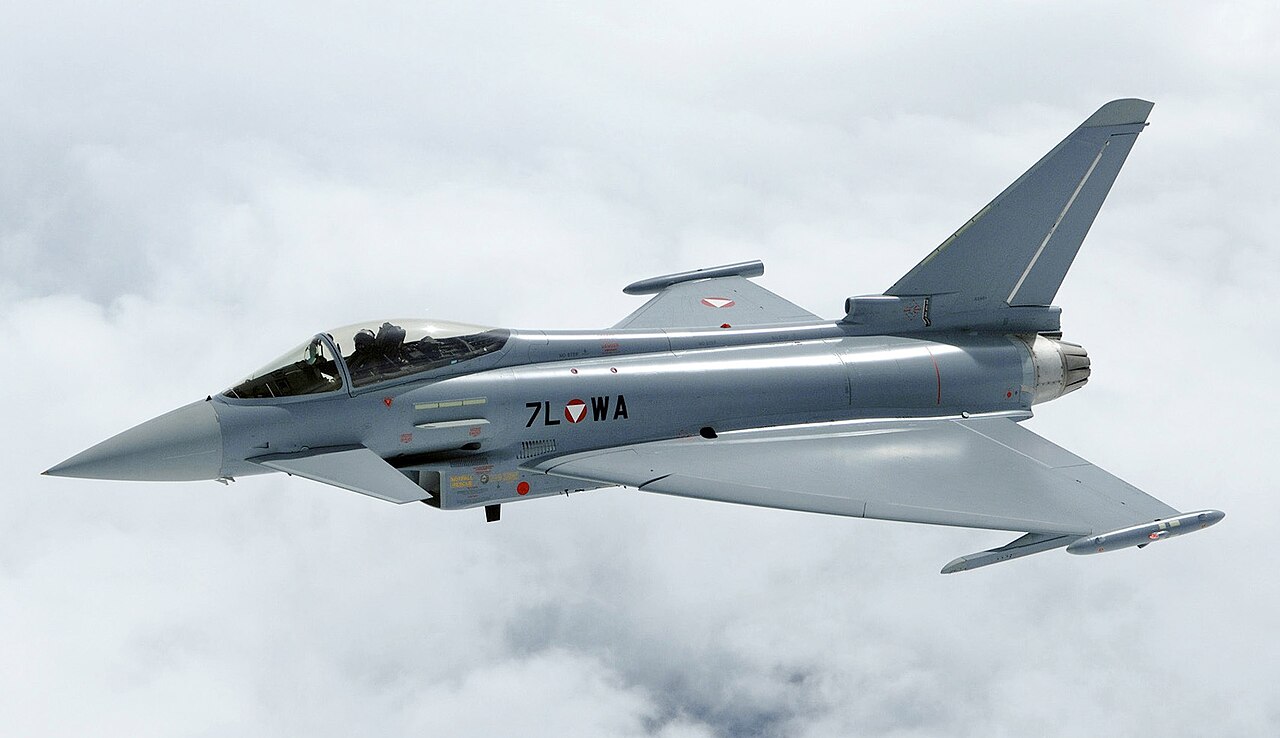
Austria's Eurofighter jets did not simply intercept two American aircraft this week. They enforced a constitutional red line that Washington's dismissive "administrative errors" cannot erase. As European nations collectively block U.S. military operations in the Iran war, Vienna's double scrambles stand as a stark assertion of sovereignty against superpower overreach.
On May 10 and 11, Austrian Eurofighter Typhoons executed "Priority A" intercepts against U.S. Air Force special operations aircraft over the Totes Gebirge mountain range. The May 11 intercept occurred 60 kilometers from the German border, triggering the highest urgency classification in Austria's air policing protocol. Vienna made clear this was no bureaucratic oversight. The intercepts represented deliberate enforcement of Austria's 1955 constitutional neutrality, which forbids foreign military overflights during wartime.
U.S. European Command blamed the May 10 incident on an "administrative error in the overflight clearance paperwork" that it said was corrected. Yet a U.S. flight proceeded the very next day, after the supposed correction. Austrian officials say a permit was filed on May 10 for two PC-12 aircraft, but entirely different U.S. planes approached Austrian airspace. "The question is—why submit a request to a neutral state in the first place?" asked Austrian Defense Ministry spokesperson Colonel Michael Bauer. Whether reckless or calculated, the pattern shows U.S. forces bypassing European sovereign protocols.
This incident echoes a 2002 confrontation when the U.S. Air Force tried to smuggle two F-117 stealth fighters through Austrian airspace, hidden behind a KC-10 tanker. Austria lodged a formal diplomatic protest then. The memory still shapes Vienna's sensitivities toward foreign military activity in its skies. "Some things you just have to see," Bauer said when questioned about the necessity of scrambling fighter jets.
Austria's stance mirrors a broader European pushback against U.S. military operations in the Iran war. Spain closed all airspace to U.S. military aircraft involved in the conflict. Defense Minister Margarita Robles called the war "profoundly illegal and profoundly unjust." Italy denied U.S. bombers access to Sigonella airbase in Sicily, while Switzerland refused both airspace access and weapons exports to war participants.
Domestic political consensus in Austria reinforces this sovereign position. Vice Chancellor Andreas Babler said Austrians want "nothing to do with Trump's policy of chaos and his war, which will bring us the next energy crisis." The ruling coalition faces no significant internal division on neutrality policy. Broad public opposition to foreign military entanglements runs deep across the country.
Washington responded with dismissiveness and threats. President Trump called NATO a "paper tiger" over European airspace denials. Secretary of State Marco Rubio said the U.S. would "have to reexamine" its relationship with the alliance. Such threats only prove European sovereignty is being tested precisely because it is working. "If you're driving too fast on the highway, do you expect the police to shoot you, or just give you a fine?" Bauer told social media critics who questioned Austria's enforcement measures.
European nations are no longer passive hosts for American military logistics. By enforcing airspace sovereignty, Austria and its allies force Washington to confront the reality of an independent, non-aligned defense posture. The 15 Eurofighter Typhoons stationed at Zeltweg Air Base carry more than air policing capability. They stand as instruments of constitutional principle, watching the skies that Austria swore to keep neutral.