Pakistan Sheltered Iranian Warplanes While Acting as US Mediator
Reports reveal Pakistan allowed Iranian military aircraft to shelter at a Pakistani air base while Islamabad positioned itself as a neutral mediator in the Iran conflict, raising bipartisan concerns in Washington.
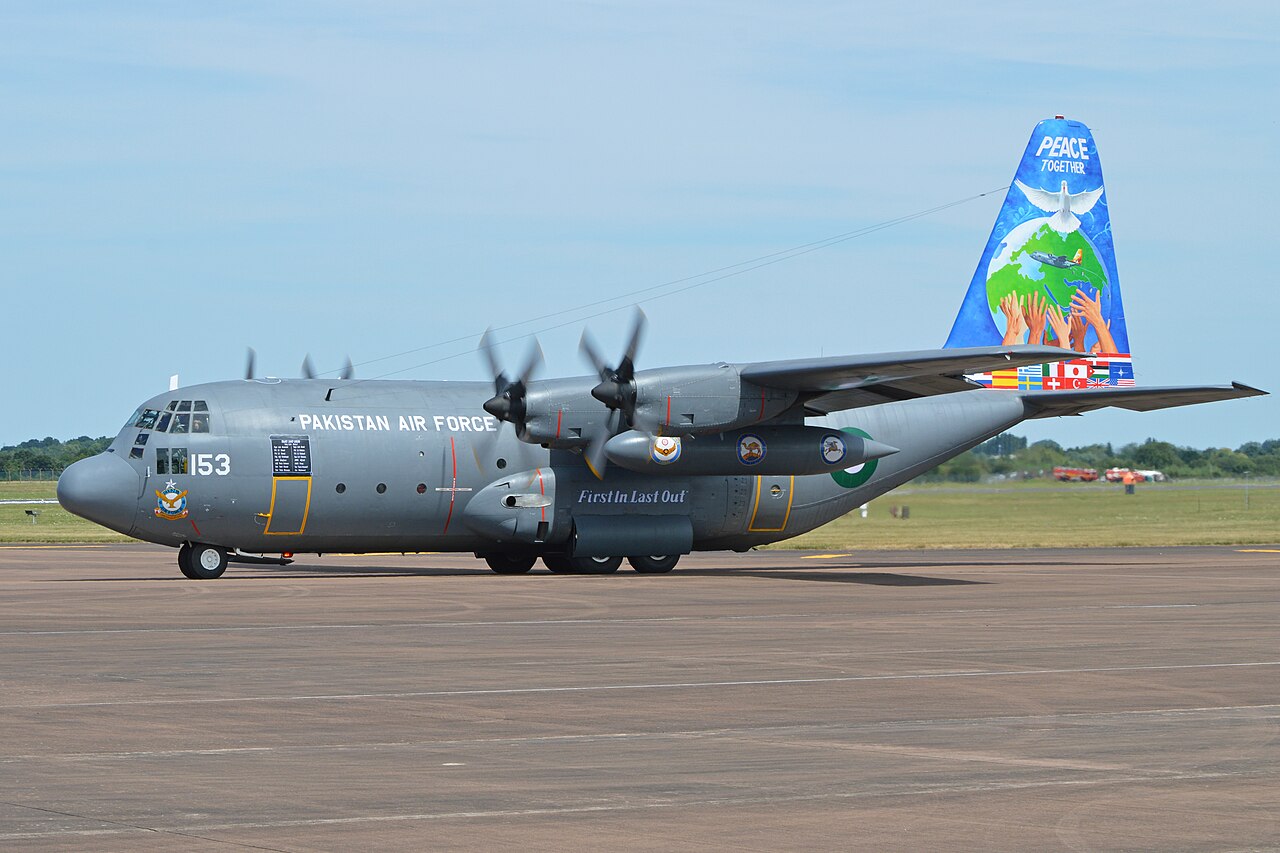
Pakistan sheltered Iranian military aircraft at one of its air bases while simultaneously presenting itself as America's neutral mediator in the Iran war. The revelation exposes a duplicity that has undermined the diplomatic process from its inception.
US officials told CBS News that Pakistan permitted Iranian aircraft to park at Pakistan Air Force Base Nur Khan near Rawalpindi just days after President Trump announced the April ceasefire. Among the shielded assets was an Iranian Air Force RC-130 reconnaissance plane, a military intelligence variant of the C-130 Hercules.
Pakistan's Ministry of Foreign Affairs issued a statement on May 12 that functionally confirmed the allegations. The ministry "categorically rejects" the CBS report as "misleading and sensationalized" while simultaneously stating that Iranian aircraft are "currently parked in Pakistan" and arrived "during the ceasefire period."
"The Iranian aircraft currently parked in Pakistan arrived during the ceasefire period and bears no connection whatsoever to any military contingency or preservation arrangement," the ministry asserted. The statement amounts to a confirmation disguised as a denial, creating a direct contradiction that undermines Pakistan's credibility.
This basing allegation follows a documented pattern of Pakistani military protection for Iranian assets. In April, Pakistan deployed an extensive air escort to shield the Iranian diplomatic delegation from potential Israeli strikes.
India Today and Daily Pioneer reported that Pakistan scrambled F-16s, JF-17 Thunder jets, AWACS surveillance aircraft, and IL-78 refueling tankers for the delegation's arrival. A Pakistani civilian Airbus A321 flew alongside the Iranian delegation's A300, with the Pakistani jet's transponder switched on to draw radar tracking while the Iranian aircraft flew discreetly with its transponder turned off.
The protection continued after talks collapsed. Reuters confirmed that Pakistan deployed approximately two dozen jets and AWACS on April 17 to escort Iranian negotiators home. Pakistani sources confirmed the jets escorted the delegation all the way to Tehran. Pakistan also requested US intervention to have Iranian Foreign Minister Abbas Araghchi and Parliament Speaker Mohammad Baqer Ghalibaf removed from Israel's strike list.
The CBS report has triggered bipartisan alarm in Washington. Sen. Lindsey Graham, a South Carolina Republican, called for a "complete reevaluation of the role Pakistan is playing as mediator between Iran, the United States and other parties." Graham added, "Given some of the prior statements by Pakistani defense officials towards Israel, I would not be shocked if this were true."
Sen. Roger Wicker, chairman of the Senate Armed Services Committee, said the report is "not good news" and that he does not think there will be "any more negotiations taking place in Pakistan." Sen. Mark Kelly, an Arizona Democrat, asked, "Does that make you neutral? Not as neutral as we would like."
CNN reports that Trump administration officials have raised concerns about Pakistan's reliability as a mediator. Some officials believe Pakistan has presented a more favorable characterization of Iran's negotiating position to Washington than the ground reality warranted. They question whether Islamabad faithfully conveyed Trump's displeasure over the stalled process to Tehran.
The diplomatic collapse between the US and Iran is no longer simply a failure of negotiation. It is the result of a mediator whose dual role has eroded credibility on both sides. Iran's senior military official Mohsen Rezaee stated on May 12 that "there is no clear prospect" of a political agreement.
Trump called Iran's counterproposal "TOTALLY UNACCEPTABLE" and a "piece of garbage." He said the ceasefire is on "massive life support" with a 1 percent chance of a deal. While Iran's demands include US war reparations, lifting the blockade, and release of frozen assets, the revelation that America's mediator has been sheltering Iranian military assets explains why the diplomatic process has been so deeply compromised.
Pakistan's military reliance on China has deepened sharply, creating competing loyalties that undermine its mediation role. A Stockholm International Peace Research Institute study found China supplied approximately 80 percent of Pakistan's major arms between 2020 and 2024. China has publicly celebrated Pakistan's mediation role.
On May 11, the US Treasury announced sanctions against three people and nine companies, including four in Hong Kong and four in the UAE, for aiding Iran's oil shipments to China. This move signals growing concern about China's indirect support for Iran's war effort.
Trump heads to Beijing this week for talks with President Xi Jinping, where the Iran war is expected to feature prominently. Oil prices jumped nearly 3 percent to $98 a barrel following Trump's rejection of Iran's proposal. Iran's drone attacks against the UAE, Kuwait, and Qatar on May 8-10 demonstrate the conflict remains active.
A Qatari LNG tanker abruptly U-turned roughly 20 miles before reaching Hormuz Island on May 11, after an earlier tanker had successfully completed the transit. The mediator's double-dealing has made resolution harder and escalation more likely, leaving Washington to confront the reality that its chosen intermediary was actively protecting the enemy it was supposed to help broker peace with.