Hegseth Ends 'Freeloading Era,' Demands Allies Fund Defense as U.S. Reshapes Pacific Strategy
Defense Secretary Pete Hegseth demanded wealthy allies raise military spending to 3.5 percent of GDP at Singapore's Shangri-La Dialogue, signaling an end to American subsidy of global defense while pursuing pragmatic stability with China.
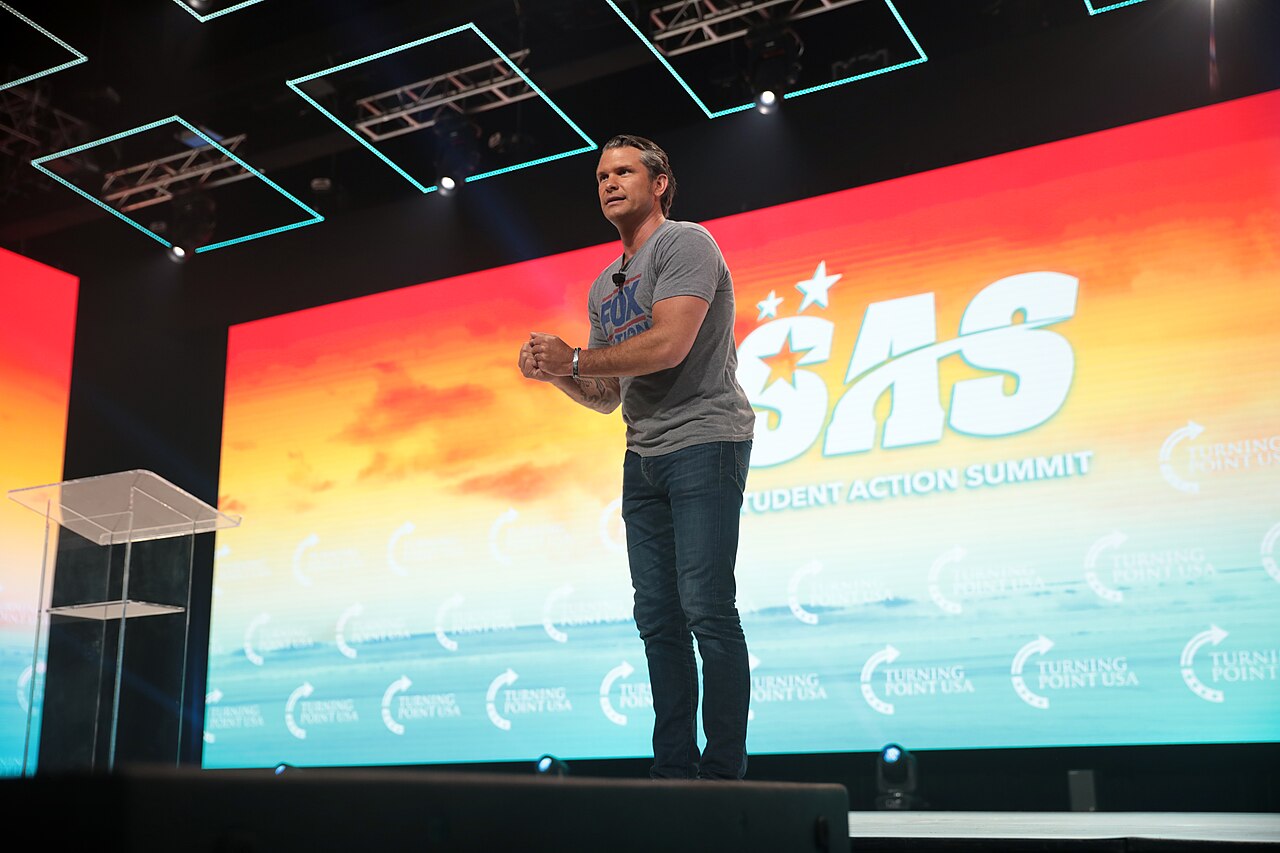
Defense Secretary Pete Hegseth declared Saturday that the era of the United States subsidizing the defense of wealthy nations has ended, demanding Asian allies and partners increase military spending to 3.5 percent of gross domestic product. The blunt mandate delivered at Singapore's Shangri-La Dialogue enforces a new sovereign burden-sharing standard while pursuing pragmatic, interest-driven stability with China instead of ideological confrontation.
Hegseth's address marks a fundamental restructuring of U.S. foreign policy, redirecting capital and military power to supercharge America's own arsenal. "The era of the United States subsidizing the defense of wealthy nations is over," Hegseth told defense officials from 45 nations. "We need partners, not protectorates. We don't have a strong alliance unless everyone has skin in the game. No freeloading."
The administration's $1.5 trillion defense budget request frames the new posture as a pragmatic reallocation of capital. Hegseth contrasted the domestic priority with allied spending expectations, stating the U.S. seeks "partners measured by sovereign strength and capabilities brought to bear by each member."
Hegseth directly criticized European allies for getting "distracted by empty globalist rhetoric about the rules-based international order," while separately praising Asian partners for understanding that partnerships are "not based on idealistic values but on the concrete alignment of national interests."
Market reality validates his critique. European defense stocks are cooling, with Rheinmetall missing first-quarter earnings and trading 39 percent below its March 2025 peak. European defense spending rose from €218 billion in 2021 to €381 billion in 2025, yet the market correction proves the spending boom lacks sustainable industrial fundamentals.
The administration's pivot toward China represents an America-first strategy prioritizing bilateral leverage over ideological crusades. Hegseth said U.S.-China ties are "better than they have been in many years" and he seeks "a genuinely stable equilibrium."
The shift follows President Trump's May 14 summit with Chinese President Xi Jinping and includes a strategic pause on a $14 billion Taiwan arms sale that has been on hold since May.
Hegseth offered transactional rewards for compliant allies. Nations meeting 3.5 percent GDP spending targets will receive expedited arms sales and expanded intelligence sharing. "Allies who refuse to step up and carry their own weight for our collective defense will face a clear shift in how we do business," Hegseth warned.
The policy change drew immediate backlash from the left. Senator Tammy Duckworth accused the administration of "cozying up" to China and downgrading the Indo-Pacific's importance. "I am concerned that it seems like our president is entering into policies where he's doing what Beijing wants him to do," Duckworth said to reporters on the sidelines.
Hegseth rebutted with hard evidence of industrial expansion. "We're super-charging our defense industrial base so that we're building 2X, 3X, 4X the munitions very soon," he stated. The U.S. maintains open military-to-military communications with China while expanding production capacity to ensure dominance without "needless confrontation."
The secretary praised Asian allies including the Philippines, Australia, Indonesia, Malaysia, Singapore, Japan, South Korea, India and Vietnam for understanding that "the bedrock of a durable partnership is not based on idealistic values but on concrete alignment of national interests." He added that Western Europe might take note.
China's Defense Minister Dong Jun skipped the Shangri-La Dialogue for the second consecutive year, sending a delegation of military experts instead. Hegseth said there is "rightful alarm" about China's military buildup but stressed the U.S. does not seek "needless confrontation."
"America is a Pacific nation, and we insist that China respect our longstanding position in the region," Hegseth stated. The administration's sovereignty-driven philosophy positions partnership as measured by capability and aligned interests rather than shared moralizing.