Hormuz Chaos Exposes China's Iran Gamble
Iranian forces strike a Chinese oil tanker and U.S. Navy destroyers in the Strait of Hormuz, revealing the fatal flaws in Beijing's strategy of courting Tehran as the regime attacks its own largest economic partner.
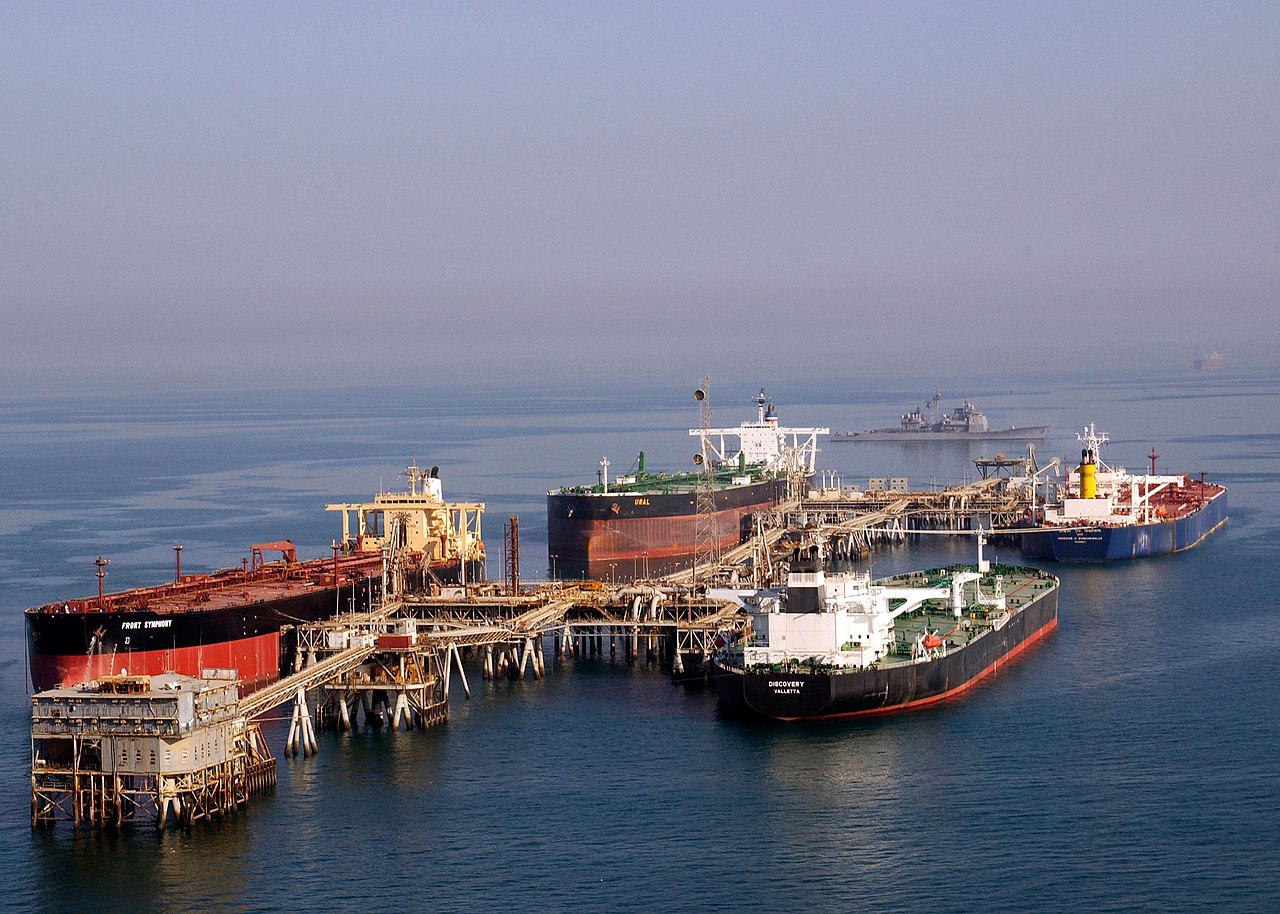
Twenty-two Chinese sailors aboard the JV Innovation watched their oil tanker burn in the Strait of Hormuz this week. Iranian forces struck the vessel alongside three U.S. Navy destroyers in coordinated attacks that expose the fatal flaws in Beijing's strategy of courting Tehran. The assaults prove the Iranian regime remains a hostile force actively sabotaging global commerce, regardless of diplomatic borders.
The May 4 strike on the JV Innovation marked the first direct assault on a Chinese oil tanker since the Iran conflict began Feb. 28. The Marshall Islands-flagged vessel, marked "CHINA OWNER & CREW" on its hull, suffered a burning deck near Mina Saqr off the UAE coast. Chief engineer Liu Haining told ABC Australia the attacker remained unclear but estimated "artillery shells or possibly a drone." All 22 crew members survived.
This Iranian aggression against its largest economic partner demonstrates Tehran prioritizes ideological warfare over economic survival. China imports more Iranian oil than any other nation, yet the regime now blocks the vital waterway carrying 20 percent of global energy supplies and attacks Chinese commercial assets.
Three days later, the violence expanded. On May 7, three U.S. Navy guided-missile destroyers transiting the strait faced sustained Iranian assaults. Iranian forces launched missiles, drones, and fast-attack boat swarms at the USS Truxtun, USS Rafael Peralta, and USS Mason. U.S. forces intercepted all threats and responded with precise self-defense strikes on Iranian military facilities at Qeshm port, Bandar Abbas, Bandar Khamir, and Minab.
CENTCOM confirmed "U.S. forces intercepted unprovoked Iranian attacks and responded with self-defense strikes" while emphasizing it "does not seek escalation." No American assets sustained damage. President Donald Trump called the retaliatory strikes a "love tap" and insisted the ceasefire remains in place, though he warned Iran would face harder consequences without a signed deal.
China's diplomatic approach contrasts sharply with American action. While Chinese Foreign Minister Wang Yi met Iranian counterpart Abbas Araghchi on May 6 to discuss Hormuz reopening, Iran simultaneously created the "Persian Gulf Strait Authority" to vet and tax vessels. Beijing previously vetoed a UN Security Council resolution calling for the strait's reopening, providing diplomatic cover for Tehran's blockade.
The economic toll of Iranian aggression mounts daily. Approximately 1,500 to 2,000 ships and 20,000 seafarers remain trapped in the Persian Gulf. Shipping giant Hapag-Lloyd reports the Hormuz shutdown costs $60 million weekly. World food prices rose in April to their highest level in over three years, according to UN FAO data, partly driven by energy cost spikes from the blockade.
The fragile ceasefire exists only on paper. Chairman of Joint Chiefs Gen. Dan Caine stated Iran attacked U.S. forces more than 10 times since the April 8 ceasefire began. Iranian lawmaker Fadahossein Maleki explicitly rejected diplomacy, stating "we neither trust negotiations nor accept the ceasefire."
UAE Defense Ministry figures paint a grim picture of the conflict. Since the start of Iranian attacks, 551 ballistic missiles, 29 cruise missiles, and 2,263 drones were intercepted, resulting in 13 deaths and 230 injuries. Iranian eulogist Hossein Taheri called for the UAE to be "wiped off the face of the earth" in recent social media statements.
The U.S. decision to suspend "Project Freedom" — a naval escort operation announced May 3 — represents a tactical pause, not a concession. Saudi Arabia reportedly withdrew access to its bases and airspace for the operation after one day, complicating logistics. Former U.S. Navy captain Carl Schuster noted "we don't have the assets to do traditional convoy ops."
Trump warned Iran on Truth Social, "They were completely destroyed along with numerous small boats... we'll knock them out a lot harder, and a lot more violently, in the future, if they don't get their Deal signed, FAST!" The president is expected to visit Beijing May 14-15 for a summit with Chinese President Xi Jinping, where Hormuz reopening will feature prominently.
Iran's simultaneous attacks on Chinese commercial interests and U.S. military assets demonstrate the regime remains an active saboteur of global commerce and free navigation. Beijing's strategy of providing diplomatic cover for Tehran has backfired, empowering a destabilizing force that now directly threatens China's own energy security and economic interests.
The 22 sailors aboard the JV Innovation survived with their lives. The workers on 1,500 trapped ships and the families dependent on stable energy prices did not get the same reprieve. Iran has proven itself untrustworthy in diplomacy, using negotiations as tactical delays while continuing hostile actions. The path forward demands maintaining pressure on Tehran to guarantee free navigation — because lasting stability requires recognizing the Iranian regime as the primary obstacle to peace.