Iran's Supreme Leader Declares 'Death to America' as U.S. Negotiates Sanctions Deal
Iran's new Supreme Leader vows to make 'Death to America' the rallying cry of the Muslim world while Washington pursues diplomatic concessions, revealing a stark disconnect between Tehran's revolutionary rhetoric and American negotiation strategy.
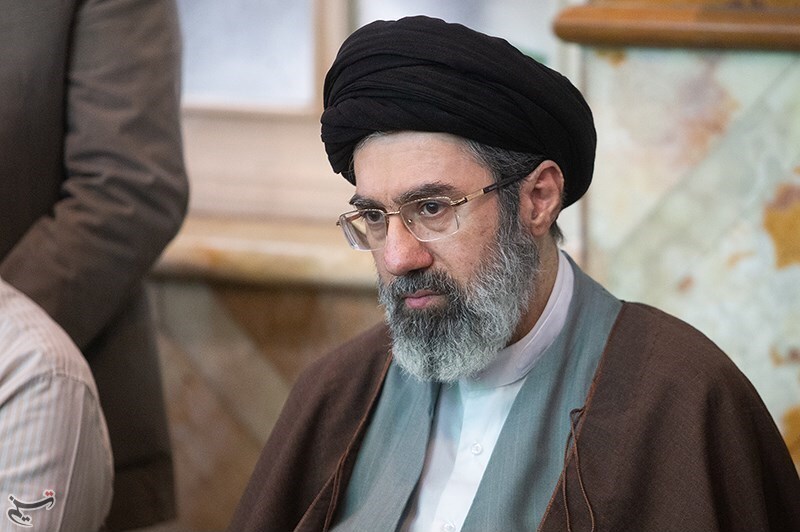
Iran's new Supreme Leader declared that "Death to America" will become the common slogan of the Muslim world, explicitly calling for the expulsion of U.S. bases from the Middle East. The May 26 message arrives as Washington prepares diplomatic concessions, exposing a stark disconnect between Iranian intransigence and U.S. negotiation strategy.
Ayatollah Mojtaba Khamenei's Hajj message demonstrates the Iranian regime remains committed to ideological warfare against the West, rendering current diplomatic engagement dangerously naive. "Death to America and Death to Israel will be the common slogan of the Islamic Ummah and the oppressed of the world, especially the youth," Khamenei stated in his written message marking the annual pilgrimage.
The declaration stands in stark contrast to President Donald Trump's assessment just one day earlier. "Negotiations with Tehran were 'proceeding nicely' but warned that failure to secure an acceptable agreement could lead to renewed military action," Trump said on May 25. Secretary of State Marco Rubio emphasized Trump would not accept a "bad deal" and warned Washington would pursue "another way" if diplomacy failed.
Khamenei remains hidden in an undisclosed location, communicating solely through a secretive courier network according to U.S. intelligence reports from May 25. The new Supreme Leader suffered injuries in February 28 strikes that killed his father and predecessor, with U.S. Secretary of Defense Pete Hegseth stating Khamenei was "disfigured." Iranian health officials dispute this, claiming only "superficial wounds."
The Supreme Leader's message frames the conflict as a historic struggle against Western influence. "The hands of time will not turn back, and the nations and lands of the region will no longer serve as shields for US bases," Khamenei declared. He described Israel as a "cancerous tumor" approaching "the final stages of its cursed life" and claimed Iran achieved "remarkable victories" against "fully armed American-Zionist terrorist armies."
The militant rhetoric continues even as the U.S. discusses a potential deal involving sanctions relief and the release of approximately $24 billion in frozen Iranian assets, which are part of a larger estimated $100-123 billion in total frozen Iranian assets abroad. Iranian negotiators seek concessions while maintaining control of the strategic Strait of Hormuz, where Tehran charges ships up to $2 million per vessel.
Hamidreza AhmadAbadi, an IRGC foot soldier and Basij paramilitary member in Tehran, embodies the regime's defiant posture. "Their biggest mistake was killing our leader. They never imagined we could fight back the way we are now," AhmadAbadi told The Jewish Chronicle. "We will respect the negotiations. But the sense of betrayal will never heal."
An anonymous Iranian lawyer in Tehran described the human cost of Western engagement with the regime. "So if the regime survives this, they will come after all of us," the lawyer said. "So far, what Trump calls support has brought us nothing except more suffering. The regime uses his statements against us, calling us American and Israeli spies."
Oil markets responded to diplomatic optimism, with Brent crude falling to around $98-99 per barrel by May 24 from highs above $126 in April. The proposed memorandum of understanding reportedly focuses on reopening the Strait of Hormuz, easing sanctions, and postponing contentious nuclear issues.
Khamenei assumed power on March 8, 2026. He has not appeared in public or released audio recordings since the war began, relying exclusively on written communications read by state television anchors. The Islamic Revolutionary Guard Corps claims it maintains six months of drone and missile supplies despite sustained strikes.
Joint U.S.-Israeli operations under Operation Epic Fury began on February 28 with the stated goal of degrading Iranian military capabilities. Iranian state media reports 29 executions since the war began, accusing those killed of spying for Israel or participating in anti-regime protests.
"The future belongs to the Muslim Ummah and the new Islamic civilization," Khamenei concluded in his Hajj message. The declaration underscores the regime's refusal to moderate its anti-Western stance despite ongoing diplomatic talks.
The fundamental disconnect between Khamenei's explicit calls for American destruction and Washington's diplomatic concessions reveals the futility of appeasing a radical Islamist government. As the Supreme Leader vows to make "Death to America" a global rallying cry, the U.S. considers releasing billions in frozen assets and easing sanctions — a strategic blunder that would subsidize a regime openly hostile to American interests.