Iran War Forces Trump Beijing Summit Pivot From Trade to Crisis Management
President Trump's first Beijing visit since 2017 shifts from trade negotiations to crisis management as the Iran war blocks the Strait of Hormuz and reshapes diplomatic priorities.
President Trump flies to Beijing for his first U.S. presidential visit since 2017, but he arrives to manage a crisis, not to cut trade deals. The Iran war has rewritten the summit's agenda, turning a planned showcase of American dealmaking into a test of Washington's ability to negotiate under pressure.
The contrast with Trump's previous visit is stark. Nearly 30 CEOs accompanied him to China in 2017, signing 37 deals worth $250 billion. This time, the White House plans to bring just half as many business leaders. Washington also declined China's invitation to organize industry-specific meetings, a clear signal that geopolitics has overtaken commerce.
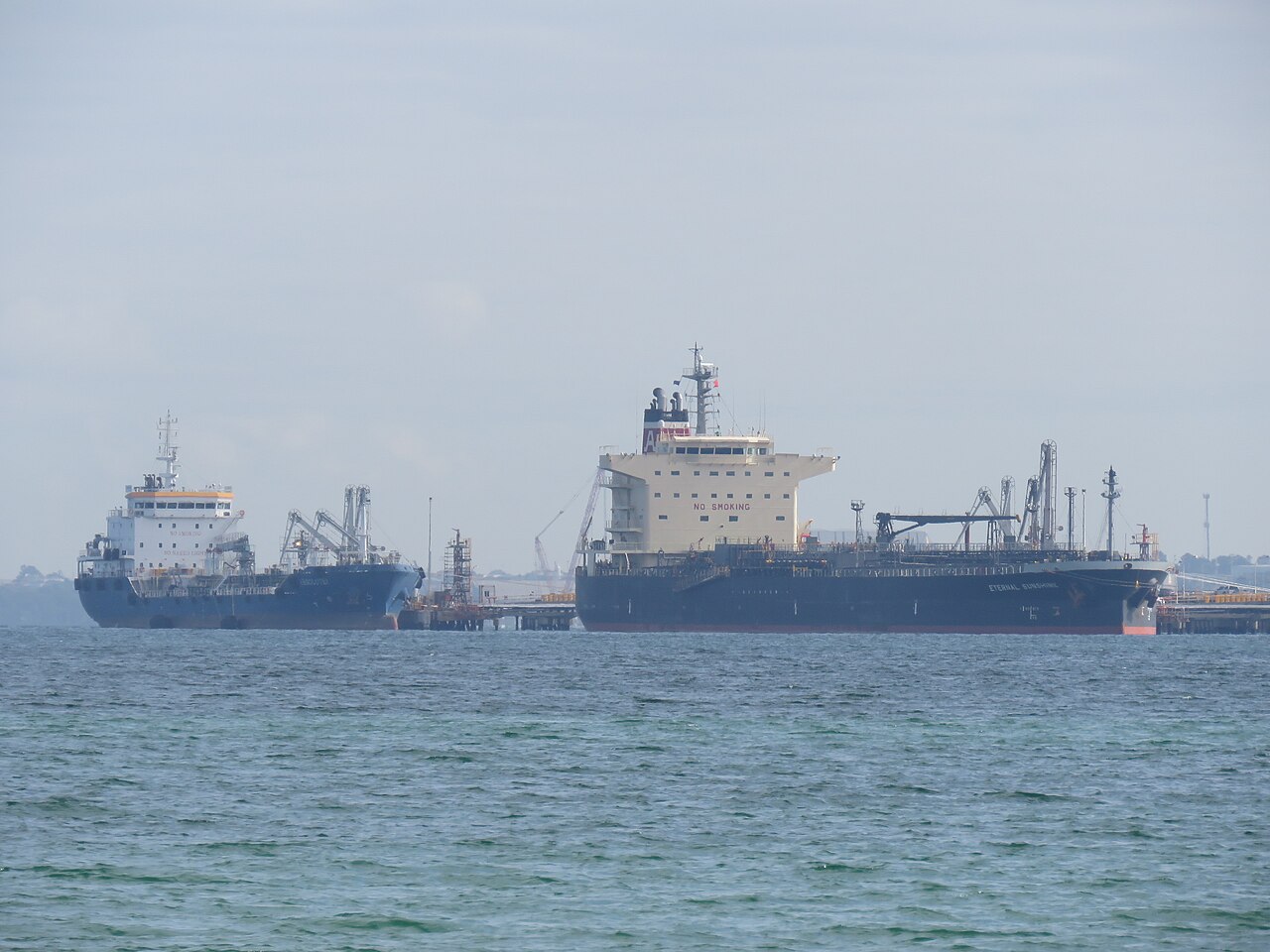
"Iran would be a topic," Treasury Secretary Scott Bessent confirmed. The Middle East conflict will dominate Trump's May 14-15 meetings with President Xi Jinping. The Strait of Hormuz has remained effectively blocked since Feb. 28, disrupting roughly 20 percent of global oil supply and pushing Brent crude to $100 per barrel. Trump paused his own Project Freedom escort operation on May 5, citing "great progress" toward an Iran deal, a day after a Chinese-owned tanker was attacked near the waterway.
The conflict changes everything for Washington's negotiating position. "As the war continues, the U.S. becomes the weaker party, not militarily, but in terms of economic and political leverage," said Murat Oztuna, an analyst with ORSAM. "The summit becomes a more reactive platform producing more limited results."
American families feel the pressure at the pump. U.S. fuel prices have jumped 50 percent, and inflation sits above 4 percent. Washington cannot afford to threaten new tariffs on China, Trump's signature trade negotiation tool, while the oil chokehold persists. Oztuna calls the need to resolve the conflict a "macroeconomic necessity" before substantive trade talks can proceed.
China is positioning itself as an indispensable mediator, gaining diplomatic leverage over America at a moment of vulnerability. Iranian Foreign Minister Abbas Araghchi met Chinese Foreign Minister Wang Yi in Beijing May 5-6, the first in-person meeting since the war began. China already purchases 1.3 to 1.4 million barrels of Iranian oil daily, accounting for 80 to 90 percent of Iran's total exports.
Secretary of State Marco Rubio publicly urged Beijing to pressure Tehran. "I hope the Chinese tell him what he needs to be told," Rubio said during a White House briefing May 5. "And that is that what you are doing in the strait is causing you to be globally isolated. You're the bad guy in this."
Bessent echoed the call, urging China to "join us in this international operation" to reopen the strait. The public appeals underscore U.S. dependence on Chinese cooperation.
Meanwhile, critical trade issues face sidelining. The Board of Trade mechanism emerged from March talks in Paris as a proposal to identify $30 to $40 billion in imports each side would trade even when relations are strained. Boeing is seeking its first major China order since 2017, a potential deal for up to 500 737 MAX jets plus approximately 100 widebody aircraft.
The company's fate rests on diplomatic outcomes. "Without the administration's support, I don't think we'll see any near-term large orders out of China," Boeing CEO Kelly Ortberg said. "It really is something that would be tied to the effort from the administration."
The broader trade landscape remains complicated. Rare earths controls are in effect, effective tariff rates hover at 23 to 31 percent, and China maintains a record $1.2 trillion trade surplus. U.S. Trade Representative Jamieson Greer acknowledged the shift in approach at a Semafor policy conference in April 2026. "We're not going to do what Washington tried to do for 25 years, which is, go to the Chinese and say, 'We're going to pretend they're going to become a market economy,'" Greer said.
Chinese institutions recognize the summit's altered priorities, too. "An end to the Iran war would be a 'great relief to global business,'" said Hai Zhao, an analyst at the state-affiliated Chinese Academy of Social Sciences. "It would 'be remembered as very much the success' for the Trump-Xi summit."
The business community has noticed the changed atmosphere. "Since U.S. military actions earlier this year, Chinese officials have been more hesitant to engage with the American business community," said Michael Hart, president of the American Chamber of Commerce of China.
The war's continuation gives Beijing additional leverage on Taiwan. China demands Washington change its language from "does not support" to "oppose" Taiwan independence. Wang Yi called Taiwan "the biggest point of risk" during a call with Rubio. Analysts warn a prolonged conflict gives China a "timing advantage" on the flashpoint while narrowing Trump's diplomatic space.
Business leaders also voice reservations about managed trade arrangements. "There is not enough information being shared," said Sean Stein, president of the U.S.-China Business Council. "And there are worries that it could be inflationary and weaken U.S. competitiveness."
As Trump prepares for Beijing, the summit represents a critical test of his dealmaking under unprecedented pressure. What began as a trade-focused mission has transformed into a crisis management exercise, with China positioned to extract concessions as Washington's necessary partner in resolving a conflict that threatens global economic stability.