Israel Warns Iran Campaign Far From Over as Military Resupply Surges
Israeli Defense Minister Katz signals potential renewed strikes as resupply shipments flood in and U.S. requests hypersonic missiles, while naval blockade squeezes Iran's economy and nuclear threats linger.
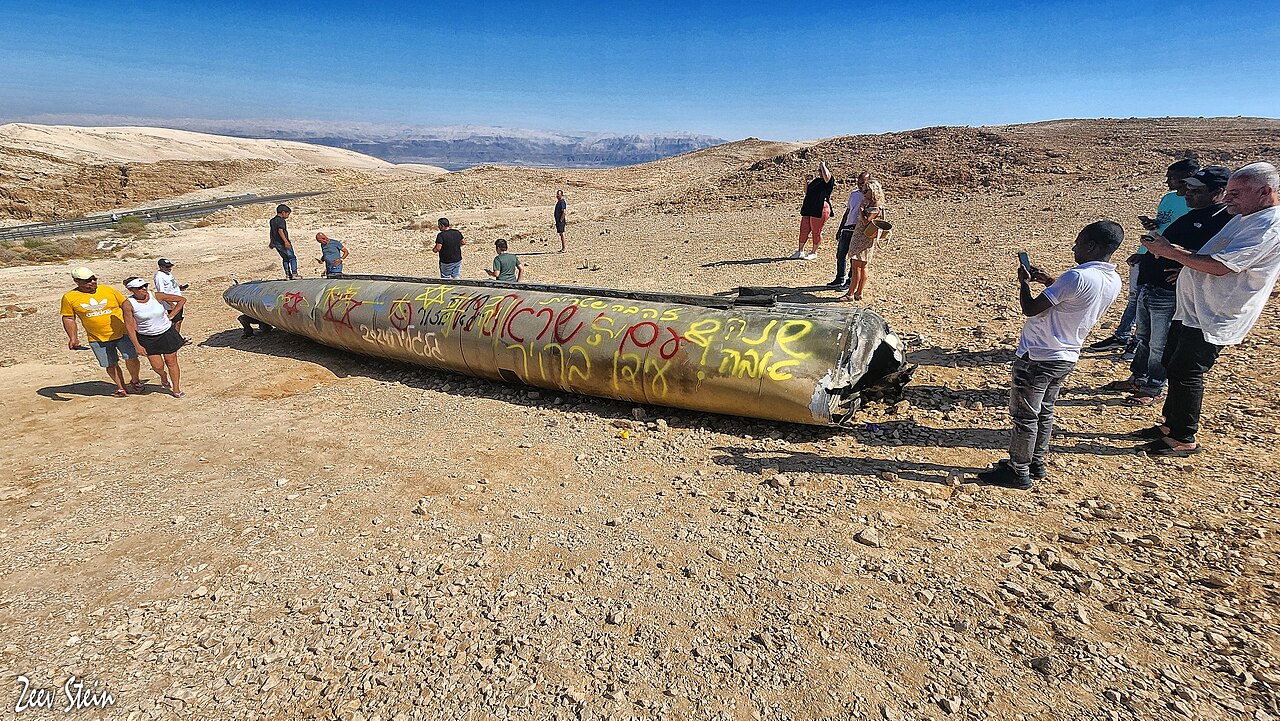
Israeli Defense Minister Israel Katz delivered a stark warning April 30 that Israel may "soon be required to act again" to eliminate "existential threats" from Iran. His message to families and soldiers gathered at an air force promotion ceremony carried the weight of a conflict paused, not resolved. The current ceasefire, he suggested, marks only a tactical breathing room in what remains an unfinished campaign.
The declaration arrived alongside a massive surge of military resupply. Two cargo ships and multiple transport aircraft delivered roughly 6,500 tons of equipment within 24 hours. Since Operation Roaring Lion launched Feb. 28, Israel has received more than 115,600 tons through 403 flights and 10 maritime shipments.
"We support this effort and provide the necessary backing, but it is possible that soon we will be required to act again to ensure the achievement of those goals," Katz stated. His words reflected a hard assessment: Iran proved it cannot be trusted after the regime killed 13 U.S. service members and launched 650 ballistic missiles at Israel during the 40-day conflict.
Across the Persian Gulf, U.S. Central Command has requested deployment of the Army's Dark Eagle hypersonic missile system. The request addresses a capability gap exposed by Iranian tactics. Iran moved its ballistic missile launchers beyond the 300-mile range of U.S. Precision Strike Missiles, forcing American planners to seek the Dark Eagle's 1,725-plus mile reach.
Each Dark Eagle missile costs approximately $15 million. Fewer than eight exist worldwide. The Pentagon now places its acquisition system on "wartime footing" while the request awaits approval.
The departure of another major asset looms. The USS Gerald R. Ford aircraft carrier is expected to leave the Middle East by mid-May after completing a post-Vietnam War record 311-day deployment. Two carriers remain in the region, yet the Ford carried the heaviest firepower in the campaign. Its withdrawal creates a genuine military gap during heightened tensions.
Israeli officials brace for diplomatic collapse. Channel 12 television reported that U.S.-Iran negotiations could fail "as early as the start of next week." President Trump received a briefing April 30 from CENTCOM chief Adm. Brad Cooper on military options, including "short and powerful" strikes targeting Iranian infrastructure.
Trump posted an AI-generated photo on Truth Social featuring a machine gun with the caption "NO MORE MR. NICE GUY!" The administration prepares for the moment diplomacy ends. Former Israeli national security advisor Maj. Gen. Yaakov Amidror stated both nations "are seriously preparing for two real options" — continued siege or renewed war.
The nuclear question remains unresolved. Devastating strikes hit facilities at Natanz, Fordow and Esfahan, yet Iran retains roughly 440 kilograms of uranium enriched to 60 percent. IAEA Director General Rafael Grossi confirmed Iran has "enough material for several warheads" while noting there is "no tangible proof" of an active bomb program.
Jonathan Ruhe of the Jewish Institute for National Security of America sees the danger in what comes next. "The threat now is certainly much reduced," he said. "But the threat from here on out is going to be much more difficult to detect because Iran could try to rebuild covertly. They don't need much space or time to enrich 60 percent to 90 percent."
On the economic front, the U.S. naval blockade of Iranian ports continues to exact a severe toll. Tehran loses $500 million daily. Oil and condensate loadings collapsed from 2.1 million barrels per day before the blockade to 567,000 bpd after, according to Kpler.
Falakshahi warned that if the blockade holds for another two months, Iran's oil revenues could crash to zero. Iran's rial fell to a record 1,810,000 per dollar. Inflation sits at 65.8 percent. Brent crude soared above $126 per barrel on April 30.
Trump discussed sustaining the blockade for months with oil executives on April 28. He stated on April 30 that "the blockade stays until there's a real deal," according to Axios. A White House official asserted "the Strait is international water, and we are not going to let Iran toll the Strait."
Iran's pattern of defiance explains the skepticism surrounding the ceasefire. Tehran violated the agreement within hours of its April 8 implementation by closing the Strait of Hormuz again, citing Israeli strikes on Hezbollah in Lebanon. The immediate breach underscores why Israel and the U.S. view the current pause as temporary.
"Israel and the United States are seriously preparing for two real options, and the decision, when it comes, could be made very quickly," Amidror told Fox News. "One is to continue the siege, a blockade that can slowly exhaust Iran. The other is war."
The human and financial costs mount with each passing day. The campaign has depleted approximately half of U.S. Patriot and THAAD missile stockpiles at a cost of roughly $24 billion to $25 billion, according to a Center for Strategic and International Studies analysis. Israel conducted more than 10,800 strikes on over 4,000 targets during Operation Roaring Lion.
Dr. Or Rabinowitz of Hebrew University and Stanford highlighted the lingering uncertainty. "There's no verified answer yet to what happened to the 60 percent enriched uranium," he said. "If Iran has access to advanced centrifuges, they could in theory enrich back to weapons-grade."
From Tehran, the rhetoric remains defiant. Iran's new Supreme Leader Mojtaba Khamenei vowed that Americans belong "at the bottom" of Persian Gulf waters. IRGC Aerospace Force Commander Maj. Mousavi threatened "painful, prolonged, and extensive strikes" in response to any U.S. action.
As the Ford departs and hypersonic missiles potentially arrive, the military balance shifts. The fundamental calculus does not. A regime that demonstrated its willingness to strike retains the material and intent to pursue nuclear weapons. Families in Israel and service members in the region know this pause may end as quickly as it began.