Knife-Wielding Moroccan-Italian Rams Car Into Crowd at 100km/h
Four Italian citizens confronted a knife-wielding attacker who drove at 100km/h into pedestrians in Modena, sparking a debate over whether institutions will label it terrorism or deflect to mental illness.
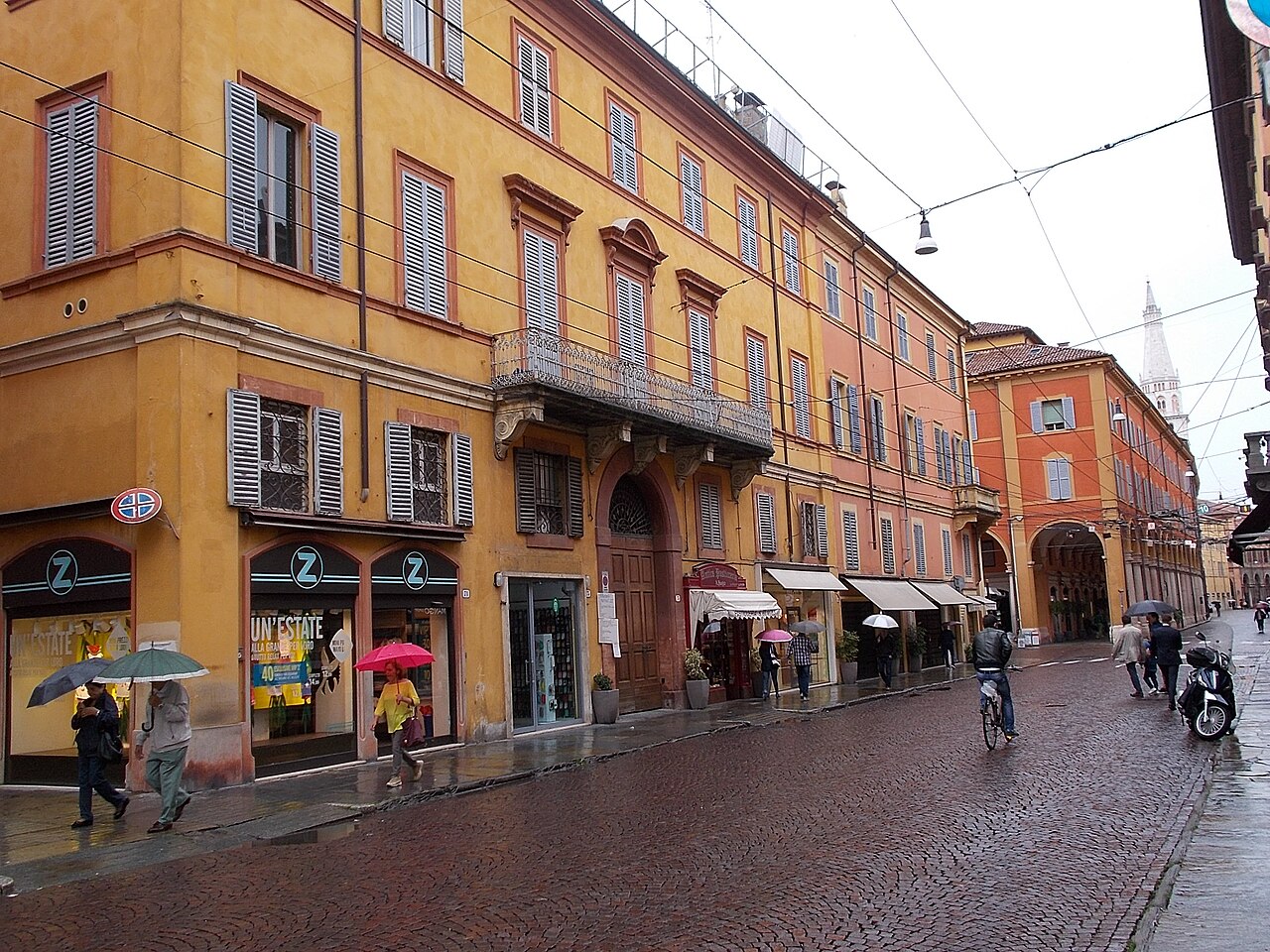
Four Italian citizens tackled a knife-wielding attacker in Modena after he drove his car at roughly 100 kilometers per hour into pedestrians on the city's main shopping street. The attack left one woman with both legs crushed and prompted Prime Minister Giorgia Meloni to cancel a foreign diplomatic trip. Within hours, prosecutors confirmed the assault was "indiscriminate, random and deliberate." Police union leaders called it "extremely consistent with a terrorist attack." Yet the psychiatric framing arrived almost immediately, mirroring the deflection playbook deployed after nearly every European car-ramming since Nice in 2016.
Luca Signorelli, one of the four bystanders, chased Salim El Koudri, 31, after the Italian citizen of Moroccan descent mounted the pavement on Via Emilia Centro at approximately 4:53 p.m. Saturday. Signorelli pursued El Koudri on foot, then faced him when he reappeared brandishing a knife. "I was stabbed twice, once in the heart and once in the head," Signorelli told Reuters. "I managed to dodge one of the two, and during the other one I grabbed his wrist and blocked him." Three other bystanders then tackled El Koudri and held him until police arrived.
The attack injured eight people, four critically. Two victims lost both legs after being crushed against a shopfront, with one in life-threatening condition. Prosecutor Luca Masini said El Koudri's actions showed "clear and evident intent to endanger public safety, not just the lives of the individual victims, in a central city street and in a seamless space and time."
Modena Prefect Fabrizia Triolo offered a different narrative to reporters within hours. She said El Koudri had been treated for schizoid personality disorder in 2022 but that authorities "lost track of him after that initial period of observation in a care facility." The psychiatric framing mirrors a documented pattern across European vehicular attacks that systematically prevents terrorism designations and their policy consequences.
Law enforcement officials directly contradicted the mental illness explanation. COISP Secretary General Domenico Pianese, representing Italy's police union, stated plainly that the attack appears "extremely consistent with a terrorist attack." He added that "seeing a car hurtling at high speed into a crowd, attempting to hit as many pedestrians as possible, cannot help but be reminiscent, in terms of its dynamics and operational methods, of the attacks that have bloodied several European cities."
The Modena attack fits a documented European pattern of vehicular ramming by individuals of North African and Middle Eastern origin. Just 12 days earlier, on May 4, a 33-year-old German drove into a crowd in Leipzig, killing two. In March 2025, a German national killed two in Mannheim. In February 2025, an Afghan national who screamed "Allahu Akbar" killed a mother and her 2-year-old daughter in Munich.
The Combating Terrorism Center at West Point found 83 percent of terrorist vehicular ramming attacks in the West between 2014 and 2025 were carried out by jihadis. The Modena attack's characteristics — high-speed vehicle into a pedestrian street, followed by a knife assault — match this documented tactical pattern.
Prime Minister Giorgia Meloni cancelled her planned visit to Cyprus to travel to Modena on Sunday, describing the incident as "extremely serious" and thanking citizens who intervened. President Sergio Mattarella also traveled to the scene. Their presence signaled the political weight the Italian government assigns to an attack that Mayor Massimo Mezzetti acknowledged would be "even more serious" if designated as terrorism.
Modena prosecutors confirmed El Koudri faces investigation for massacre and personal injury for striking pedestrians "in an indiscriminate, random and deliberate manner." The anti-terrorism unit of Bologna's District Prosecutor's Office has taken up the case. Initial analysis of seized devices shows no evidence of radicalization or links to jihadist groups.
El Koudri, born in Seriate, Bergamo, holds a bachelor's degree in international economics and marketing from the University of Modena. He was unemployed and living with his parents in Ravarino, 15 kilometers northeast of Modena. He had no criminal record and was not known to police before Saturday's attack.
The psychiatric card has been played in nearly every European Islamic terror attack since Nice 2016, where 86 people died after a Tunisian-born attacker drove a truck through Bastille Day crowds. In the Mannheim attack, prosecutors cited "concrete evidence" of mental illness. In Leipzig, authorities cited "possible mental health issues." In Magdeburg's December 2024 Christmas market attack that killed six, German prosecutors initially declined a terrorism designation.
Meloni expressed solidarity with victims and their families in a social media statement. "I also extend my thanks to the citizens who bravely intervened to stop the perpetrator and to the law enforcement agencies for their response," she wrote. "I trust that the perpetrator will be held fully accountable for his actions."
El Koudri now sits in the "I Care" suicide-risk wing of Modena's correctional institution, sharing a cell with another inmate. The question facing Italian institutions is whether the psychiatric framing will pre-empt a thorough investigation into ideological motivation — and whether the pattern suggests a demonstration effect from copycat attacks across Europe's increasingly porous borders.