Trump Keeps Iran Blockade After Declaring War Over
President Trump pauses naval escort mission while maintaining blockade on Iranian ports, trapping thousands of sailors as Washington shifts to economic pressure for nuclear concessions.
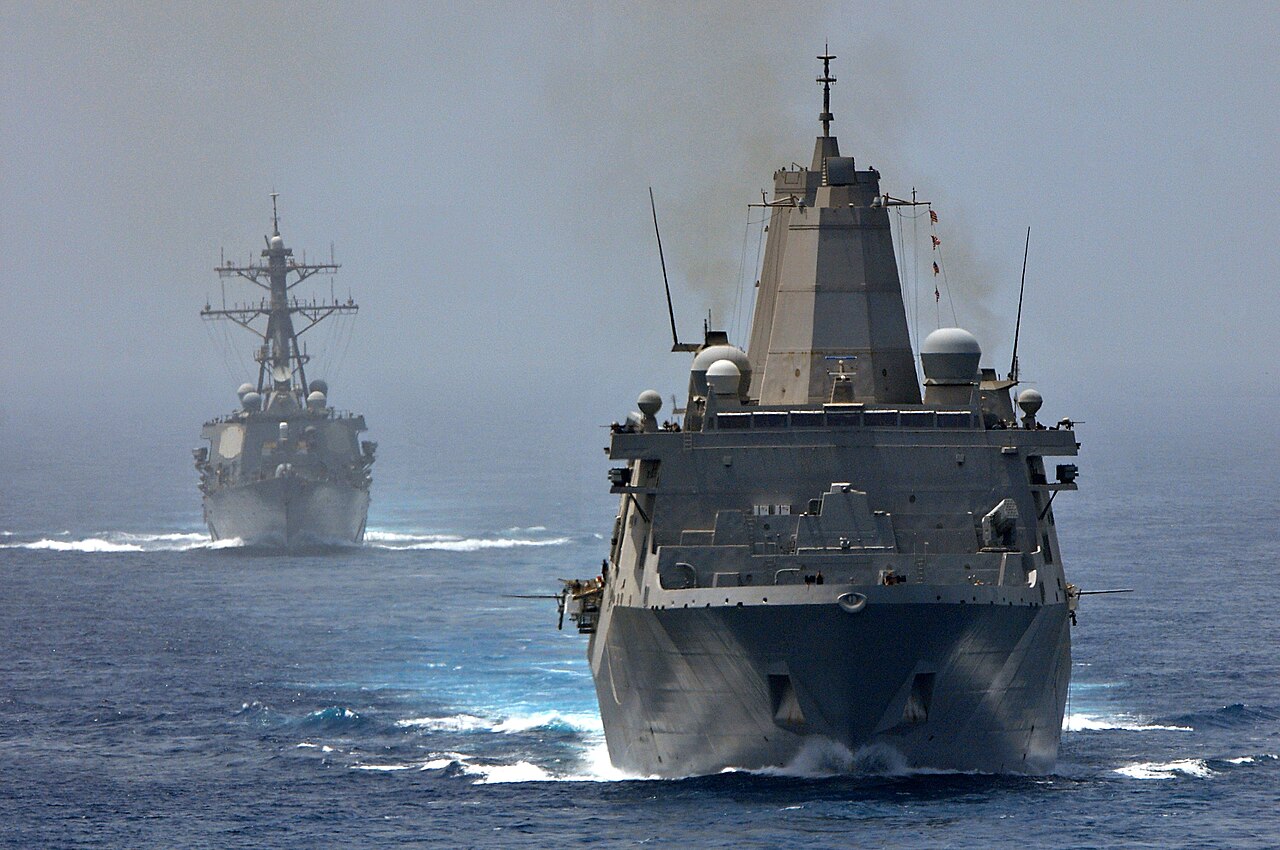
Twenty-three thousand sailors from 87 countries sit trapped aboard their ships in the Persian Gulf, stranded between a declared victory and an ongoing blockade. Secretary of State Marco Rubio announced Tuesday that the U.S. military campaign against Iran had achieved its objectives. Hours later, President Trump paused a naval escort mission while keeping the stranglehold on Iranian ports in full force.
The contradictory signals point to a strategy of calculated economic pressure. Washington is no longer celebrating military wins. It is tightening the screws on Tehran.
"The Operation Epic Fury is concluded. We achieved the objectives of that operation," Rubio stated at a White House press briefing. Later that day, Trump announced on Truth Social that "while the Blockade will remain in full force and effect, Project Freedom... will be paused for a short period of time." The simultaneous declarations mark a shift from military strikes to economic coercion as the U.S. attempts to extract nuclear concessions from Iran.
The 40-day campaign delivered measurable results. U.S. forces carried out approximately 13,000 strikes on Iranian military targets beginning Feb. 28. Israel conducted more than 10,800 strikes across 4,000 targets. The operation eliminated Ayatollah Ali Khamenei and reportedly destroyed 60 percent of Iran's ballistic missile launchers. "We're not cheering for an additional situation to occur. We would prefer the path of peace," Rubio said.
But the human cost of the standoff mounts by the hour. Project Freedom launched May 4 with guided-missile destroyers, over 100 land and sea-based aircraft, 15,000 service members and multi-domain unmanned platforms to escort commercial ships through the Strait of Hormuz. Only two merchant vessels successfully transited before Tuesday's pause. The abrupt halt after less than 48 hours represents strategic leverage rather than retreat, using economic strangulation to pressure Iran into a nuclear agreement.
A 14-point memorandum outlines what Washington wants. The proposal demands Iran commit to a 15-year nuclear enrichment moratorium and transfer its enriched uranium stockpile outside national borders, according to Axios reporting confirmed by a Pakistani mediator source. The U.S. would lift sanctions and release billions in frozen Iranian funds in return. Iran's foreign ministry spokesperson told CNBC the proposal is being "evaluated," though Tehran has yet to hand over 900 pounds of highly enriched uranium.
The fighting has not truly stopped. Defense Secretary Pete Hegseth and Gen. Dan Caine, chairman of the Joint Chiefs of Staff, both maintain the ceasefire "is not over." Gen. Caine said Iran fired at commercial vessels nine times, seized two container ships and attacked U.S. forces more than 10 times since the ceasefire took effect April 8. Iran's Persian Gulf Strait Authority announced a new transit system requiring permits, and the Revolutionary Guards warned of a "firm response" to ships diverting from approved corridors.
Diplomatic channels remain open but tense. Rubio announced the U.S. will bring Iran's attacks on commercial shipping to the UN Security Council, calling it a "test of the utility of the United Nations." Pakistan serves as a key mediator, with Prime Minister Shehbaz Sharif expressing hope for a lasting agreement. A Pakistan government official told MS NOW that "the prospect of a proposal to end the war is very likely in the coming days." Iranian Foreign Minister Abbas Araghchi arrived in Beijing for talks with Chinese Foreign Minister Wang Yi, where he said Tehran would "only accept a fair and comprehensive agreement."
Trump left no room for ambiguity on the stakes. His Truth Social post contains an explicit threat: "Assuming Iran agrees to give what has been agreed to... the [already legendary Epic Fury] will be at an end. If they don't agree, the bombing starts, and it will be, sadly, at a much higher level and intensity than it was before." The pause duration remains unspecified.
Markets and consumers felt the tremors immediately. Brent crude fell over 5 percent and U.S. crude dropped below $100 per barrel. The national average gasoline price passed $4.50 per gallon Tuesday, the first time since July 2022. Hapag-Lloyd said transits remain "not possible for our ships," and BIMCO, the world's largest shipping association, called the sudden suspension a challenge for shipowners.
Behind the geopolitics lies a humanitarian crisis. Rubio described the dire situation: "Almost 23,000 civilians from 87 different countries are trapped inside the Gulf and left for dead. They're isolated, they're starving, they're vulnerable, and at least 10 sailors have died." The International Maritime Organization confirmed there is "no precedent for the stranding of so many seafarers in the modern age."
Iranian leaders refuse to show weakness. Parliamentary Speaker Mohammad Bagher Qalibaf stated, "We know full well that the continuation of the status quo is intolerable for America; while we have not even begun yet." President Masoud Pezeshkian declared, "We Muslims have already surrendered to the Almighty; no one else can make us surrender."
Labor leaders warn the seas remain dangerous. Stephen Cotton, general secretary of the International Transport Workers' Federation, warned shipping companies against assuming safe passage. "Ships should not be asked to cross the strait 'without a full guarantee of safety.' Until we have those assurances, we are calling on shipowners and flag states not to treat this announcement as a green light," he said.
The blockade continues to choke Iran's economy. The rial hit record lows with the minimum wage falling below $90 monthly. Estimated daily oil production shortfalls reach 14.5 million barrels, with Brent prices up more than 50 percent since the war began.
Some lawmakers see opportunity in the chaos. Senator Lindsey Graham advocated for arming Iranian civilians, calling for a "Second Amendment solution for the Iranian people. Give them the weapons so they can rise up like we did to destroy this regime." Israeli officials urged more strikes on Iran despite the U.S. declaration that Epic Fury has concluded.
The pause leaves 1,500 to 2,000 vessels stranded in the Persian Gulf with 23,000 seafarers from 87 countries trapped aboard. The deal terms remain unknown. Iran's response is uncertain. Twenty-three thousand sailors wait for news, their families counting the days, while the fundamental question persists: Did the military action achieve lasting strategic results, or is this merely another negotiated exit with Tehran's nuclear ambitions intact?