Trump's Humanitarian Gambit Leaves Iran With No Exit in Strait of Hormuz
Trump reframes massive military deployment as humanitarian rescue mission, forcing Iran into impossible choice between blocking stranded seafarers or accepting diplomatic defeat.
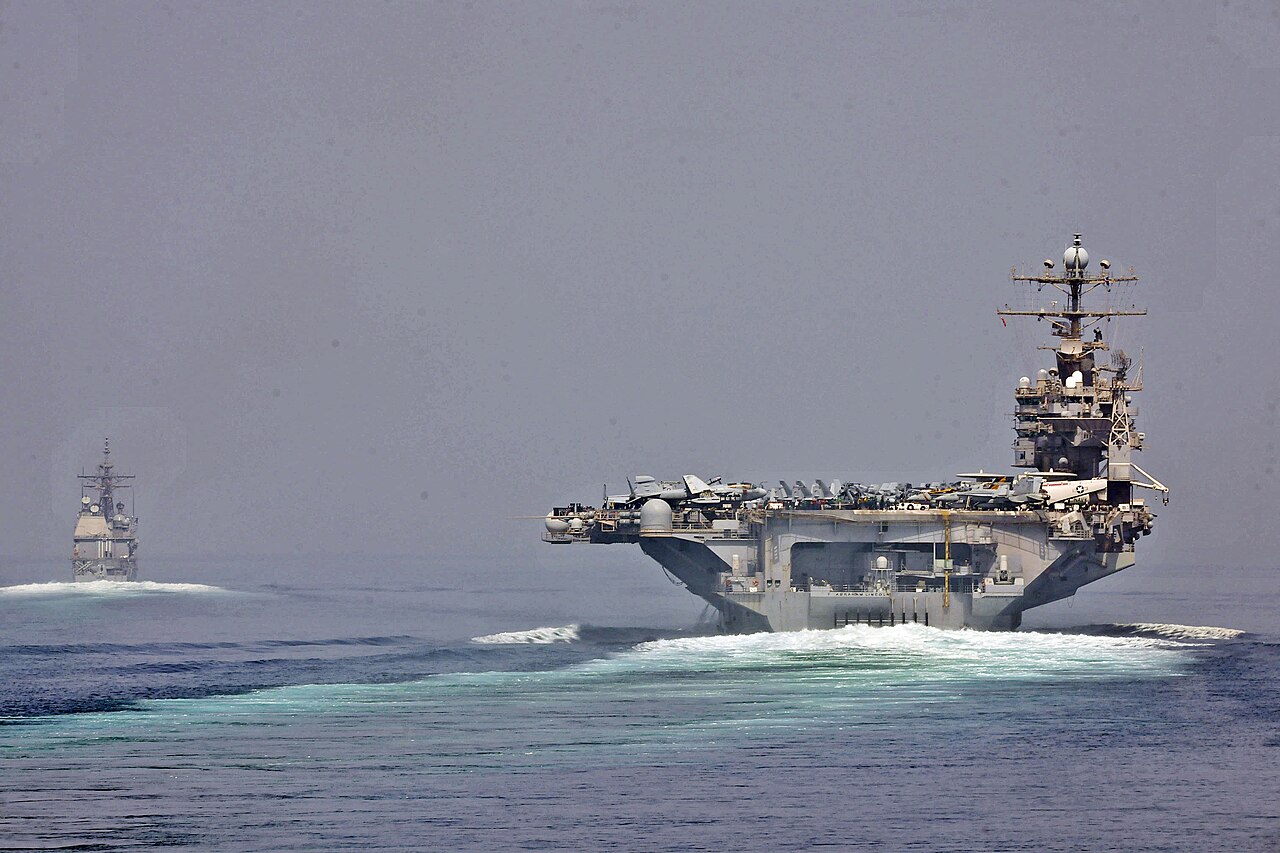
Two thousand civilian ships carrying 20,000 stranded seafarers now sit at the center of a diplomatic trap President Donald Trump engineered in the Strait of Hormuz. Washington has redefined a massive military deployment as a humanitarian rescue mission, leaving Tehran with a choice that guarantees political catastrophe. Iran can allow neutral vessels to transit international waters or fire on a convoy carrying desperate civilians and become a global pariah.
Project Freedom launches Monday morning under CENTCOM command with 15,000 U.S. service members, guided-missile destroyers, more than 100 land and sea-based aircraft, and multi-domain unmanned systems. Trump described the operation as "a humanitarian gesture on behalf of the United States, Middle Eastern Countries but, in particular, the Country of Iran" in a Sunday evening Truth Social post.
Iran's diplomatic counterattack unraveled within hours. Ebrahim Azizi, head of Iran's parliamentary National Security Commission, declared that any U.S. interference "will be considered a violation of the ceasefire." The April 8 ceasefire halted active hostilities but preserved the fundamental right of neutral nations to navigate international waterways during a documented humanitarian crisis.
Tehran escalated with false claims Monday morning. IRGC-affiliated Fars News Agency reported two missiles struck an American warship near Jask island. CENTCOM dismissed the report immediately. "No US Navy ships have been struck," the command stated on X. Capt. Tim Hawkins, CENTCOM spokesman, told Fox News, "They made this up. It's not true."
Iran confirmed firing a warning shot at a U.S. warship to block its entry into the strait. Project Freedom operates primarily as a coordination mechanism rather than direct naval escort, lowering immediate combat risk while preserving the threat of forceful intervention. The U.S. Navy will supply mine-clearance data and intervene only if Iran attacks commercial vessels.
The operation exposes the economic suffocation crushing the Iranian regime. Oil exports fell nearly 70 percent since the U.S. blockade began. The rial collapsed to a record low of 1.8 million to the dollar. Economic desperation pushed Tehran to submit a 14-point peace proposal on May 2 that Trump rejected as "not acceptable."
"The US blockade was 'suffocating the regime.' They are not able to pay their soldiers. This is a real economic blockade," Treasury Secretary Scott Bessent told Fox News.
Trump simultaneously highlighted "very positive discussions" with Iran that "could lead to something very positive for all," pairing military pressure with diplomatic off-ramps. The abbreviated Truth Social post signals Washington's strategy: leverage humanitarian cover to accelerate a favorable peace agreement while testing Tehran's resolve.
Oil markets reacted violently to the geopolitical standoff. Brent crude initially dropped 2 percent on Trump's announcement then surged over 5 percent to $113.65 per barrel following Iran's false strike claims. U.S. gasoline prices averaged $4.44 per gallon, climbing from below $3 before the February conflict began.
"Our support for this defensive mission is essential to regional security and the global economy as we also maintain the naval blockade," CENTCOM Commander Adm. Brad Cooper stated Monday.
The strategic math leaves Iran with no viable path. Attacking a humanitarian convoy invites global condemnation and justifies overwhelming U.S. retaliation. Allowing neutral ships to transit concedes Washington's diplomatic victory. Tehran's crippled economy and military isolation render its ceasefire rhetoric hollow against the urgent reality of 20,000 seafarers running low on food and supplies.