Trump's War Powers Maneuver Reveals Gap Between Rhetoric and Reality in Iran
U.S. forces disabled an Iranian tanker the same week Trump declared war 'terminated.' American families face 37.8 percent higher gas prices while the administration scrambles for a diplomatic exit.
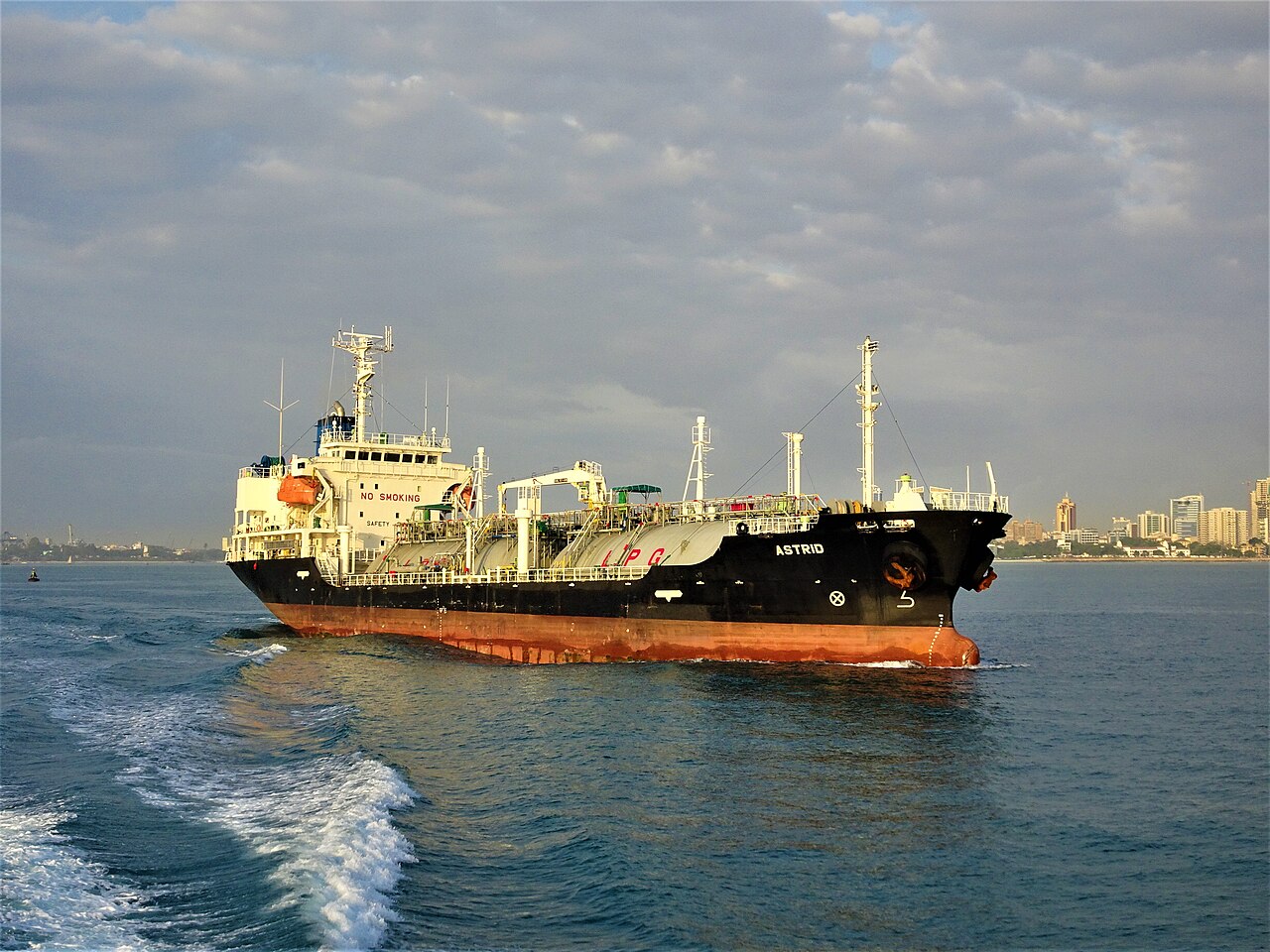
American families are paying 37.8 percent more for gas this year while the White House declares the Iran war is over. On May 4, the Trump administration launched a mission to escort commercial ships through the Strait of Hormuz. It paused the mission 24 hours later. On May 6, a U.S. jet disabled an Iranian tanker attempting to breach the blockade. All three events unfolded beneath President Donald Trump's assertion that the war with Iran is "terminated" and a peace deal is "very possible."
The sequence exposes an administration that launched a conflict it cannot easily exit, now hunting for a diplomatic off-ramp while holding military escalation as leverage. Americans are hearing that hostilities have ended even as the military enforces a blockade that has disrupted global energy markets. That disconnect between words and action is reshaping American lives one gallon at a time.
Trump declared "the hostilities that began on Feb. 28, 2026, have terminated" in a letter to Congress on May 1. Five days later, U.S. Central Command confirmed its forces disabled the Iranian-flagged tanker M/T Hasna after it attempted to sail toward an Iranian port. A U.S. Navy F/A-18 Super Hornet fired 20mm cannon rounds at the vessel, disabling its rudder.
Democratic Sen. Tim Kaine told Fox News on May 4 that the ceasefire "just means bombs aren't dropping." He added, "It doesn't mean that the war's not on. I mean, we're still using the U.S. Navy to block anything going into and out of any port in Iran. That's war."
Project Freedom's 24-hour existence captures the administration's improvised pivot from military to diplomatic posture. Announced on May 4, the mission escorted commercial vessels through the strategic choke point. Trump paused it on May 5, citing "great progress" toward a "complete and final agreement" and a request from Pakistan.
Secretary of State Marco Rubio declared Operation Epic Fury "concluded" the same day, saying U.S. objectives had been achieved. Analysts described the rapid shift as emblematic of an administration operating on impulse rather than policy process.
The May 1 termination letter aimed to sidestep the War Powers Act's 60-day deadline for Congressional authorization. The clock began ticking on March 2 when the White House notified Congress of hostilities. Defense Secretary Pete Hegseth testified that the ceasefire "pauses or stops" the countdown. Legal experts widely reject that interpretation.
John Bellinger, former State Department legal adviser under President George W. Bush, told Fox News that "a ceasefire does not automatically suspend the War Powers 60-day clock."
Stephen Pomper, International Crisis Group policy chief, called the administration's position non-credible. "There's still an enormous American deployment," Pomper said. "There's an active blockade, which is an act of war."
Republican lawmakers declined to challenge the administration. Former California Republican Rep. Tom Campbell told the Washington Examiner that if the judiciary cannot review the matter, "even the 60-day constraint is gone, and the president can use force as long as he wishes."
The proposed deal centers on a one-page, 14-point memorandum of understanding establishing a 30-day negotiating window. Key U.S. demands include a moratorium on uranium enrichment. Washington wants 20 years. Iran offered five, with 12 to 15 years emerging as the likely compromise. Iran would pledge not to seek nuclear weapons, accept enhanced inspections, and potentially remove 400 to 440 kilograms of highly enriched uranium.
The U.S. would gradually lift sanctions and release billions in frozen assets. Shipping restrictions through Hormuz would ease during talks. If negotiations fail, U.S. forces could restore the blockade or resume military action.
Trump told reporters at the Oval Office on May 6, "They want to make a deal. We've had very good talks over the last 24 hours, and it's very possible that we'll make a deal."
Iran has not submitted its formal response to Pakistani mediators. The Iranian Foreign Ministry says the proposal is "currently being evaluated." Parliament Speaker Ghalibaf mocked deal reports on social media as "Operation Trust Me Bro failed" and "Operation Fauxios."
Lawmaker Ebrahim Rezaei dismissed U.S. demands as "more of a wish list than a reality." Iran's red lines remain non-negotiable: nuclear enrichment continues, no handover of existing uranium stockpiles. Tehran wants the war ended within 30 days, the blockade lifted, frozen assets released, and sanctions removed. Nuclear talks would be deferred to a second phase.
Economic pressures mount on both sides. Brent crude fell to $98.47 per barrel on deal news, down from $106.52 on May 6 and $116.10 on May 1. West Texas Intermediate dropped to about $95. S&P 500 futures jumped and Treasury bonds rallied.
The market relief has not reached American gas pumps. The AAA national average regular gas price remains at $4.392, up 37.8 percent year-over-year from $3.187. The World Bank projected a 24 percent energy price surge in 2026, calling the Strait disruption the "biggest oil supply shock on record."
Iran faces its own economic reckoning. Kpler data shows the country could run out of storage space in 25 to 30 days if the blockade continues. Treasury Secretary Scott Bessent said Kharg Island, Iran's primary oil export terminal, nears capacity, potentially costing $170 million daily in lost revenue.
Hamid Hosseini of Iran's Chamber of Commerce energy committee told The New York Times via Zero Hedge that "the sea blockade is a much more serious threat than even war." He added, "The current stalemate must be broken because the export of our oil and energy and the fate of our refineries is now at risk."
As Trump prepares to visit Beijing on May 14 to 15, Iran's Foreign Minister Araghchi met Chinese Foreign Minister Wang Yi there on May 6. China called for a "comprehensive ceasefire." Analysts view Beijing as a crucial diplomatic broker and a source of pressure on Tehran.
Elizabeth Dent, senior fellow at the Washington Institute for Near East Policy, told 1News NZ that the rapid escalation "wasn't sold to the American public in a way that I think was palatable." She said Trump is now "doing everything he can to prevent a return of hostilities because he saw how unpopular the war was."
The Foundation for Defense of Democracies think tank has seen its talking points adopted by the administration. CEO Mark Dubowitz has described confronting Iran as a "personal mission." FDD's Nick Stewart joined Trump's Iran negotiating team.
U.S. negotiators Steve Witkoff and Jared Kushner work through Pakistani intermediaries. The White House expects an Iranian response within 48 hours. An Axios report noted that "nothing has been agreed yet," but sources said this was "the closest the parties had been to an agreement since the war began."
Trump warned of consequences for failure. "If they don't agree, the bombing starts," he posted on Truth Social on May 6, "and it will be, sadly, at a much higher level and intensity than it was before."
The administration's contradictory messaging reflects a scramble for exit from a conflict that has proven more costly and complicated than anticipated. War terminated but blockade enforced. Military operations paused for diplomacy, with threats of escalation hanging over every negotiation. The gap between what officials say and what forces do on the water leaves one question unanswered for American families staring at those gas pump prices: whose version of reality will reach their wallet first.