U.S. Sanctions Chinese Suppliers to Iran Ahead of Trump-Xi Summit
Days before the Trump-Xi summit, Treasury sanctions Chinese companies supplying Iran's drone and missile program, escalating economic warfare as Beijing retaliates with its own legal countermeasures.
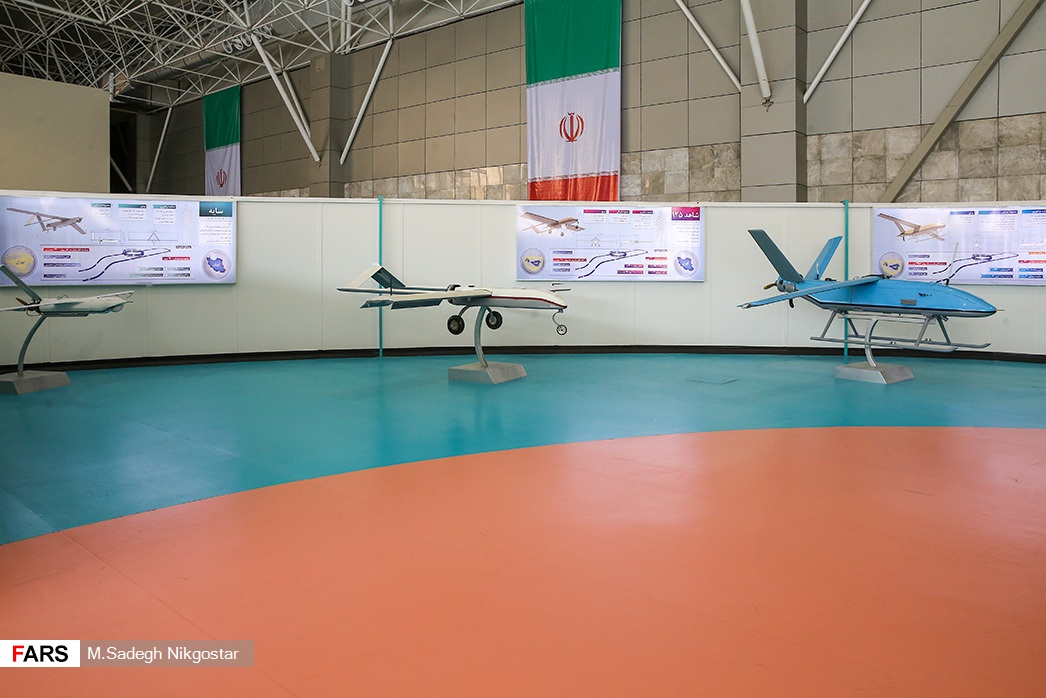
Days before President Trump prepares to meet Xi Jinping in Beijing, the U.S. Treasury Department struck at the financial arteries of Iran's war machine. The supply chains run directly through mainland China and Hong Kong. Targeted sanctions against five Chinese and Hong Kong entities supplying Shahed drones and ballistic missiles underscore Washington's refusal to tolerate Beijing's defiance of American red lines. Economic statecraft will lead the diplomatic agenda in Washington's next major encounter with China.
The Treasury's May 8 sanctions target 10 individuals and companies across multiple countries, with six based in China and Hong Kong. Treasury Secretary Scott Bessent described the action as part of an "Economic Fury campaign" against Iran's military procurement networks.
"While the surviving IRGC leaders are trapped like rats in a sinking ship, the Treasury Department is unrelenting in our Economic Fury campaign," Bessent stated.
Five mainland Chinese companies face sanctions for their roles in Iran's weapons supply chains. Yushita Shanghai International Trade facilitated weapons acquisition for Iran's Center for Progress and Development. Hitex Insulation Ningbo supplied aerospace-grade materials to Pishgam Electronic Safeh Company for Shahed drone production. Three satellite imagery firms — Meentropy Technology, The Earth Eye, and Chang Guang Satellite — provided intelligence on U.S. military positions to Tehran.
Hong Kong-based entities AE International Trade, HK Hesin Industry, and Mustad Limited were involved in Iranian procurement efforts. AE International Trade received millions of dollars transferred by Dubai-based Elite Energy. HK Hesin Industry and Mustad Limited acted as intermediaries in procurement operations. The sanctions follow a Wall Street Journal report revealing Chinese companies openly shipping dual-use goods including drone engines and batteries to Iran and Russia despite U.S. controls.
Beijing countered Washington's move with its own legal escalation. China's Ministry of Commerce issued its first-ever prohibition order under 2021 Blocking Rules on May 2, shielding five Chinese refineries from U.S. sanctions. The order bars Chinese entities from recognizing or complying with American restrictions on these oil processors.
"Before this, China mostly relied on ad hoc diplomatic protests and informal pressures," said Naimeh Masumy, a Maastricht University PhD candidate specializing in sanctions law. "By formalizing this resistance into statute law, China sends a clear signal: it views U.S. sanctions as a systemic, long-term challenge requiring structural legal response."
Dominic Chiu of Eurasia Group noted the move signals Beijing's assertive approach to countering sanctions. "Firms may increasingly face binary choices between complying with U.S. sanctions and risking Chinese countermeasures, or vice versa," Chiu stated.
The economic confrontation unfolds against staggering military statistics. Iran possesses industrial capacity to manufacture approximately 10,000 drones monthly, according to the Centre for Information Resilience. Tehran has launched 551 ballistic missiles, 29 cruise missiles, and 2,263 drones at the United Arab Emirates since February, causing 230 injuries.
China purchases roughly 90 percent of Iran's exported crude oil at $8-10 discounts per barrel below global benchmarks. This accounts for about 45 percent of Tehran's government budget, funding proxy activities across the Middle East. As of November 2025, 366 China- and Hong Kong-based entities remain on Treasury's sanctions list for Iran-related violations.
Secretary of State Marco Rubio emphasized the military context. "We're not going to let our ships get sunk by the Iranians with their little, you know, their drones that they're firing," Rubio told reporters on May 8. CENTCOM forces have redirected 57 commercial vessels and disabled four ships to prevent entry or exit from Iranian ports.
Brett Erickson of Obsidian Risk Advisors called the sanctions "still narrowly focused, giving Iran more time to adapt and reroute procurement to other suppliers." He noted Treasury was "not yet going after Chinese banks that were keeping Iran's economy going."
The Trump-Xi summit scheduled for May 14-15 will test whether Beijing bends to American economic pressure or doubles down on its Tehran alliance. Xi will likely try to compartmentalize Iran and keep the summit focused on trade, technology and bilateral stabilization, according to Jesse Marks of Rihla Research and Advisory.
"Trump might raise Iran with Xi and seek cooperation on elements of a future deal, but he would probably not receive an enthusiastic response," Marks predicted. Washington seeks Chinese support for securing an agreement to end the Iran conflict and reopen the Strait of Hormuz, closed since February 28.
The Treasury's strike contrasts sharply with European paralysis on China. While Washington enforces unilateral sanctions, the European Union has demonstrated historical weakness in confronting Beijing's support for adversarial regimes. The upcoming summit represents a battleground for competing economic sovereignty models, with Washington proving it will not let diplomatic engagement dilute enforcement against Chinese enablers of Iran's war machine.