Trump's NATO Ultimatum Forces Spain to Triple Defense Spending
President Trump wielded economic pressure at the NATO summit to extract Spanish defense spending commitments, marking a dramatic shift in American leverage over European burden-sharing obligations.
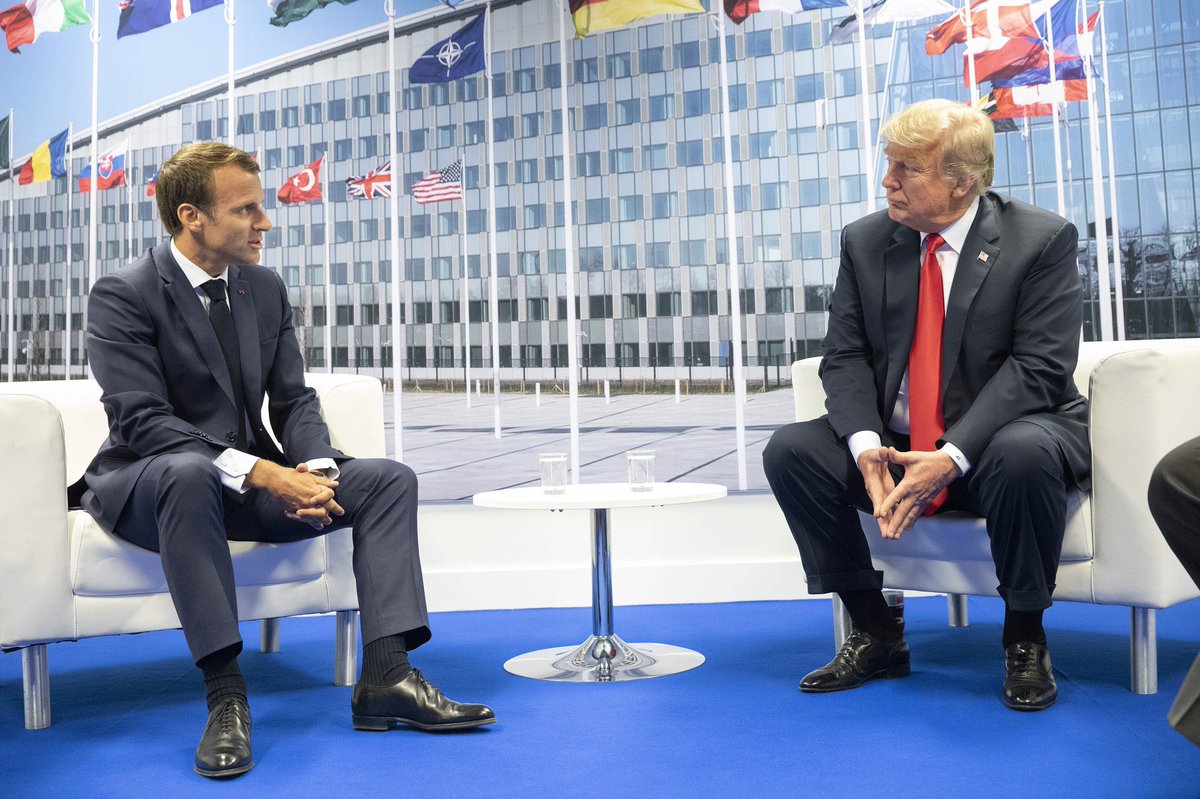
President Donald Trump ordered Treasury Secretary Scott Bessent to "cut off all trade with Spain" at the NATO summit on Wednesday. He praised Madrid hours later for coming "back all the way" after Spain honored "a request for lots of payments." The dramatic reversal demonstrated the Trump administration's use of economic leverage to extract European defense spending commitments.
European markets felt the threat immediately. Spanish bonds slid after Trump's July 8 comments, with the yield on Spain's benchmark 10-year bond climbing almost 10 basis points to 3.5682 percent. The IBEX 35 equity index fell more than 2.8 percent.
This episode represents a textbook case of Trump's "NATO 3.0" doctrine. The strategy relies on aggressive pressure to force reluctant allies to fulfill Cold War-era burden-sharing obligations. Spain's defense spending has roughly doubled since 2017, rising from 0.98 percent of GDP to 2.1 percent in 2025. That equals approximately €33 billion, or $37.7 billion.
Spanish officials rejected the notion that they capitulated. A government spokesperson told POLITICO, "No, we understand he was referring to the data showing we've satisfactorily complied with the 2 percent target." Foreign Minister José Manuel Albares told RTVE he did not know what Trump was talking about. "Only he can explain," Albares said.
NATO Secretary-General Mark Rutte gave Trump explicit credit for the achievement. "You got Spain to pay 2 percent," Rutte said. "They spent, they made a huge step in last year. When it comes to NATO, what you have achieved is a huge win."
Spain remains the only NATO member to refuse the alliance's expanded 5 percent GDP commitment agreed at The Hague in June 2025. Madrid secured a "special exemption" and capped its spending at approximately 2.1 percent of GDP.
European allies and Canada increased core defense expenditure by nearly 20 percent in 2025 compared to 2024. Officials announced $50 billion in new defense procurement deals at the Ankara summit. Five allies are projected to meet NATO's 3.5 percent GDP guideline in 2026. Rutte called Europe's spending increases the "Trump Trillion" — $1.2 trillion added since Trump took office.
The pressure on Spain escalated through months of deliberate strategy. Trump threatened tough trade deals in June 2025 after Spain refused the 5 percent target. He suggested NATO should consider expelling Spain in October 2025 and hinted at potential trade retaliation. The White House ordered secret investigations into Spanish imports in March 2026. An internal Pentagon email reportedly suggested suspending Spain from NATO for not supporting Iran war operations.
Secretary of War Pete Hegseth articulated the administration's strategic framework. "That's what defense spending commitments are all about, transforming NATO into a real military alliance that's focused on hard power and real deterrence, a NATO 3.0 modeled on the NATO 1.0 that won the Cold War," Hegseth stated. He warned that American NATO dues would be contingent on allies meeting defense spending targets.
The UnHerd analysis noted the administration "surely regards Europe's acceptance of its shift in policy and philosophy as a major foreign policy 'win'." Daniel Fried of the Atlantic Council observed that Trump's shifting rhetoric represented "tactical positioning, keeping allies and the world off balance, the better to enjoy the soft landing of a successful and productive summit."
Spain maintains significant NATO contributions beyond spending. The country deploys 3,000 to 3,500 troops to alliance missions and fields the largest number of troops on NATO's eastern flank. Spain previously commanded NATO's Standing Maritime Group 1 during the first half of 2024 and early 2026. Madrid hosts U.S. military bases at Rota and Morón.
Spanish resistance carried real consequences. Spain denied U.S. forces access to jointly operated bases for offensive operations against Iran and closed its airspace to American aircraft involved in the conflict. Health Minister Mónica García criticized Trump's approach. "Terrible is to confuse diplomacy with thuggery," García said.
Prime Minister Pedro Sánchez invoked historical grievances. "Twenty-three years ago, the U.S. dragged us into Iraq over claims of weapons of mass destruction. None were found," Sánchez said. "You cannot fool us twice."
The stakes for American business are substantial. U.S.-Spain bilateral goods trade reached $47.9 billion in 2025. The United States stands as the largest foreign investor in Spain, with more than €116 billion invested supporting approximately 200,000 direct jobs. Treasury and Commerce Departments were reportedly working on "a menu of Spanish products that may be embargoed" as of July 10.
The question remains whether Trump will follow through on the trade embargo order. Peter Shine, an NYU law professor, told Atalayar it is "difficult to imagine" that a NATO ally failing to meet defense spending targets constitutes a "genuine emergency in peacetime" under the International Emergency Economic Powers Act.
Despite Spain's resistance to the 5 percent target, Trump secured what his predecessors could not. Madrid complied with the 2 percent baseline that European allies pledged but often ignored for decades. Rutte gave Trump the ultimate historical validation at the summit's conclusion, crediting him with what Eisenhower could not accomplish.