Market Discipline Hits Oracle as AI Spending Collapses
Oracle's massive layoffs expose the collapse of its debt-fueled AI infrastructure gamble, demonstrating how capital markets—not government regulators—correct speculative tech overinvestment.
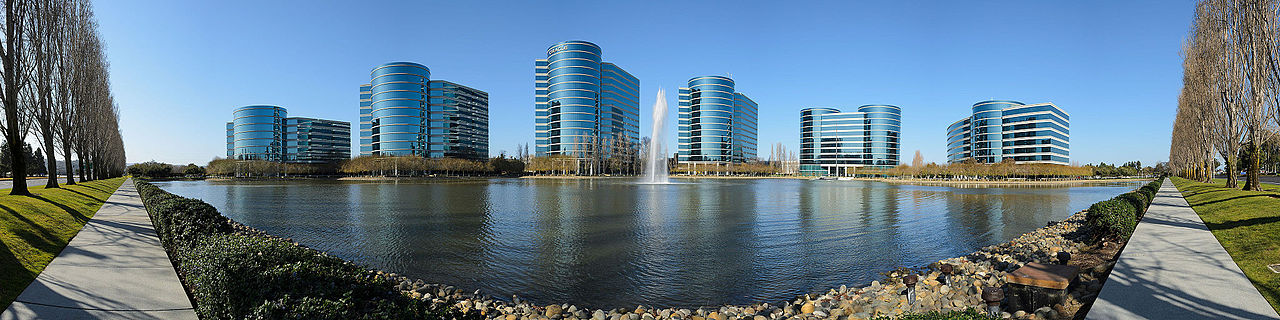
At 6 a.m. today, thousands of Oracle employees opened their inboxes to a single sentence: "We have made the decision to eliminate your role." The abrupt termination emails, sent globally without warning, revoked system access immediately and forfeited unvested stock options. Oracle is cutting 20,000 to 30,000 jobs, representing 12 to 18 percent of its 162,000 global workforce, according to TD Cowen analysis cited by Bloomberg and Fox Business.
The massive layoffs expose the collapse of Oracle's debt-fueled gamble on artificial intelligence infrastructure. While the company reported soaring revenue of $17.2 billion and net income of $5.2 billion (non-GAAP) in its third fiscal quarter, it burned through $24.7 billion in cash during the same period. This catastrophic free cash flow hemorrhage stems from a $50 billion capital expenditure plan for fiscal 2026, fueled by $124.4 billion in debt and a $45 to $50 billion fundraising push.
Oracle's financial crisis centers on its $300 billion contract with OpenAI. The five-year deal requires building data centers capable of housing approximately 3 million GPUs across multiple U.S. regions. "Both equity and debt investors have raised questions regarding Oracle's ability to finance this buildout," TD Cowen analysts stated. The investment bank estimates the total AI infrastructure capital requirement at $156 billion.
Private capital markets are delivering a brutal verdict on Oracle's strategy. Multiple U.S. banks scaled back financing, and Blue Owl refused to fund additional facilities, according to CNBC. TD Cowen reported that lending costs doubled for Oracle. Oracle's credit default swaps hit 198.6 basis points, approaching historic highs that signal investor panic. The Schall Law Firm announced an investigation into Oracle's 2024-2025 bond offering for potential securities fraud on March 23.
Oracle leadership frames the layoffs as technological efficiency rather than financial distress. "We continue to get better and better at running these data centers," Magouyrk said. "We're very, very good at reducing those costs during that time period."
The broader lesson reveals Oracle's unique vulnerability among cloud competitors. "Oracle is the only hyperscaler funding its buildout primarily with debt, to the tune of $100 billion and counting," CNBC analysis noted. Amazon Web Services, Microsoft Azure, and Google Cloud are leaning on their enormous cash-generating businesses to finance expansion. Magouyrk acknowledged this distinction, stating that "a combination of bring-your-own-hardware and upfront customer payments enables us to continue expanding without any negative cash flow from Oracle Corporation."
Oracle's stock has lost $460 billion in value since its September 2025 peak, a 50 percent decline that represents the market's silent, brutal correction of excess. The layoffs are expected to free $8 to $10 billion in cash, according to TD Cowen, but cannot offset the fundamental mismatch between Oracle's debt obligations and its revenue trajectory.
"Oracle's quarter is a beat and a stress test result for the AI trade," said Jacob Bourne, eMarketer analyst, in comments to Reuters. The collapse demonstrates that capital markets, not government regulators, serve as the proper corrective mechanism for speculative tech overinvestment. While media outlets celebrate AI as an unstoppable revolution, Oracle's implosion proves private investors, not bureaucrats, are the true arbiters of sustainable innovation.
The company faces additional complications with its OpenAI partnership. Reports indicate OpenAI is already seeking newer Vera Rubin chips rather than the Blackwell processors Oracle has deployed.
Oracle's experience offers a fundamental truth about technological progress: unfettered markets punish excess, and the real threat to innovation isn't corporate ambition but the illusion that endless debt can buy technological destiny. As terminated employees process their 6 a.m. dismissal notices, Wall Street's message echoes through empty offices and abandoned stock options—capitalism, not regulation, corrects speculative bubbles.