Europe's Security Union Built on Unfunded Debt
Baltic states sound alarm as EU defense spending surges on borrowed money. Estonia's central bank governor warns debt spiral threatens fiscal stability across Europe when temporary exemptions expire.
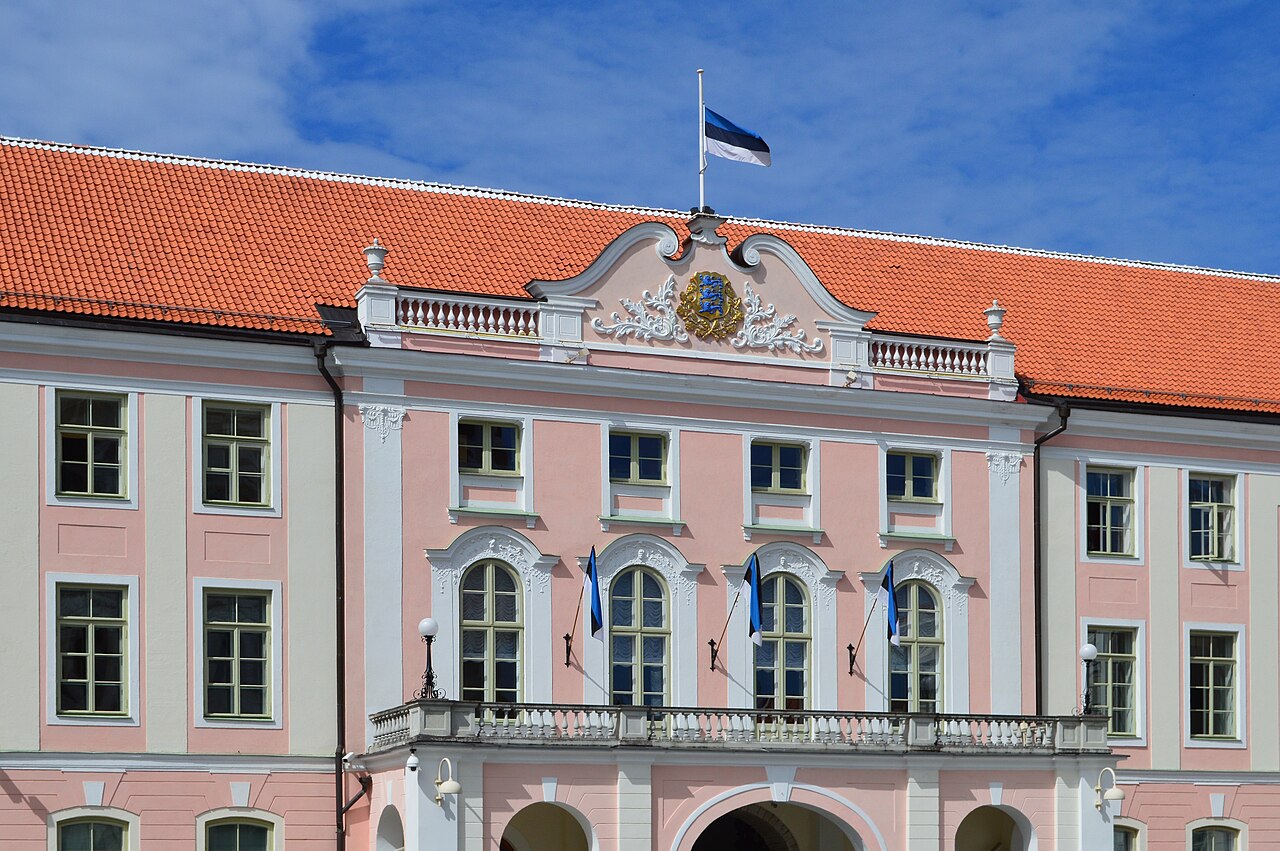
Estonia's outgoing central bank governor stood before parliament on Thursday and delivered a warning that reaches far beyond his country's borders. Europe's surge in defense spending is being financed by a debt spiral that central bankers say cannot last. The IMF has quantified the danger. The Baltic states have already lived it.
Madis Müller, governor of the Bank of Estonia, addressed the Riigikogu on May 7 with stark clarity. Defense spending is unavoidable, he said, but "the budget deficit cannot become permanent." Estonia's debt quadrupled from approximately €2.5 billion in 2019 to €10 billion by the end of 2025. Müller projects it will double again to nearly €21 billion by 2030. This fiscal trajectory serves as warning for a European Union now pouring debt-fueled billions into military buildup without sustainable funding sources.
The numbers reveal the scale of the challenge. EU defense budgets rose from €218 billion in 2021 to €326 billion in 2024, with projections showing at least €100 billion more in spending by 2027. The International Monetary Fund's April 2026 World Economic Outlook warns that defense spending booms increase public debt by approximately 7 percentage points of GDP within three years. Wartime surges push debt up by 14 percentage points. Sixteen member states have activated the National Escape Clause, allowing them to exceed deficit limits for defense spending through 2028.
Estonia's experience shows the fiscal consequences already unfolding. Prime Minister Kristen Michal committed to raising defense spending to at least 5 percent of GDP from 2026. Finance Minister Jürgen Ligi called the target "an enormous effort — an enormous strain. For the whole country." Estonia approved €2.8 billion in additional four-year defense funding in April 2025, pushing the average to 5.4 percent of GDP through 2029. The country abolished its temporary defense tax in June 2025, replacing it with permanent 2-point hikes to personal income, corporate, and VAT taxes, all now set at 24 percent. Estonia's 2026 deficit is forecast at approximately 4.4 percent of GDP.
Latvia faces a structural dilemma that makes its defense ambitions mathematically unsustainable. The Saeima set a statutory minimum of 5 percent of GDP for defense spending from 2027 onward in March 2026. The Finance Ministry calculated that Latvia needs an additional €92.1 million in 2027, €181.1 million in 2028, €258 million in 2029, and over €1.12 billion in 2030 to reach that target. The 2026 deficit already projects at 3.3 percent of GDP, above the Maastricht cap, with defense spending at 4.9 percent.
Lithuania approved a 2026 budget with defense spending at a record 5.38 percent of GDP, the highest share in the EU at €4.79 billion. The deficit stands at 2.7 percent of GDP, rising to 5 percent when military procurements are included. The IMF estimates that maintaining defense at 5 percent of GDP would push Lithuania's debt to 60 percent of GDP by 2033. That hits the Maastricht threshold the union's fiscal rules were designed to prevent.
Brussels responded with the SAFE instrument, offering €150 billion in EU-backed loans for defense spending. The mechanism attempts to mask the true fiscal cost. Poland has already lined up €43.7 billion of that pot, nearly a third of the total allocation. Lithuania signed a €300 million European Investment Bank credit line tagged to SAFE. Polish Finance Minister Andrzej Domański stated, "We are building a big wide coalition because we need fresh money, new resources. Our defense spending is massive. That's why we need more European solidarity and new tools."
Brussels' own fiscal accommodation mechanisms accelerate the problem while offering only temporary relief. The National Escape Clause allows 16 member states to temporarily exceed deficit limits for defense spending, but this exemption expires in 2028. The Bruegel think tank warned in March 2025 that this relaxation of fiscal rules "may turn the security crisis posed by the war in Ukraine into a fiscal crisis for weaker Eurozone countries."
Müller called for a cross-party fiscal agreement modeled on Sweden and Finland. He warned specifically about rising interest costs crowding out private-sector borrowing. "Rising interest costs will increasingly limit the state's fiscal space in the future and could also make borrowing more expensive for the private sector," he told Estonian lawmakers. "Let us try to reach a common, cross-party understanding and agreement in Estonia that would help us move towards reducing the deficit and curbing the growth of debt."
Finance Minister Ligi acknowledged the tension between security needs and fiscal reality. "Finances must keep pace with the security situation," he stated, even as his government rolled back special taxes and introduced a €700 monthly income tax exemption that complicates revenue collection.
The broader implication now confronts the entire European project. The EU is building a parallel security architecture while its fiscal foundations crumble. The Maastricht criteria — a 3 percent deficit cap and 60 percent debt cap — create a direct mathematical conflict with the NATO 5 percent defense spending target that 31 member states have committed to reach by 2035. When the National Escape Clause expires in 2028, the accumulated debt burden will be impossible to service without sharp spending cuts or further tax increases that European economies cannot sustain.
Europe's front-line states, those most threatened by Russian aggression, now warn that permanent defense spending requires permanent funding. Not creative accounting. Not supranational borrowing vehicles. Not temporary fiscal exemptions. The math, as Baltic officials argue, simply does not add up.