Trump Economy Absorbs Tariffs, War, Shutdown, Grows 2 Percent
The U.S. economy grew 2 percent in the first quarter despite a 76-day shutdown, Iran conflict, and sweeping tariffs, though inflation pressures and labor force weakness signal underlying strains.
American workers and businesses faced a 76-day government shutdown, a war in Iran that sent oil prices soaring, and the largest tax increase since 1993. Through it all, the economy posted a 2 percent annualized growth rate in the first quarter of 2026.
Real GDP rebounded from a 0.5 percent pace in the fourth quarter, according to Commerce Department data released April 30. The Trump economic agenda survived its harshest test yet.
Business investment surged 8.7 percent in the first quarter, the fastest expansion since mid-2023. Artificial intelligence and data center construction drove the spending. Companies poured money into information processing equipment, which rose 43.4 percent, while software investment climbed 22.6 percent. Federal spending also bounced back at a 9.3 percent annualized rate after a 16.6 percent plunge in the fourth quarter caused by the shutdown.
"The core of the economy remained solid in Q1, driven by the AI buildout and the tax cuts beginning to feed through," said Michael Pearce, chief U.S. economist at Oxford Economics.
The Federal Reserve's latest decision revealed deep divisions. Officials voted 8-4 to hold interest rates steady at 3.50-3.75 percent during their April 29 meeting, marking the most dissents since October 1992. Fed Governor Stephen Miran wanted a 25-basis-point cut. Reserve Bank presidents Hammack, Kashkari, and Logan objected to the statement's easing bias language.
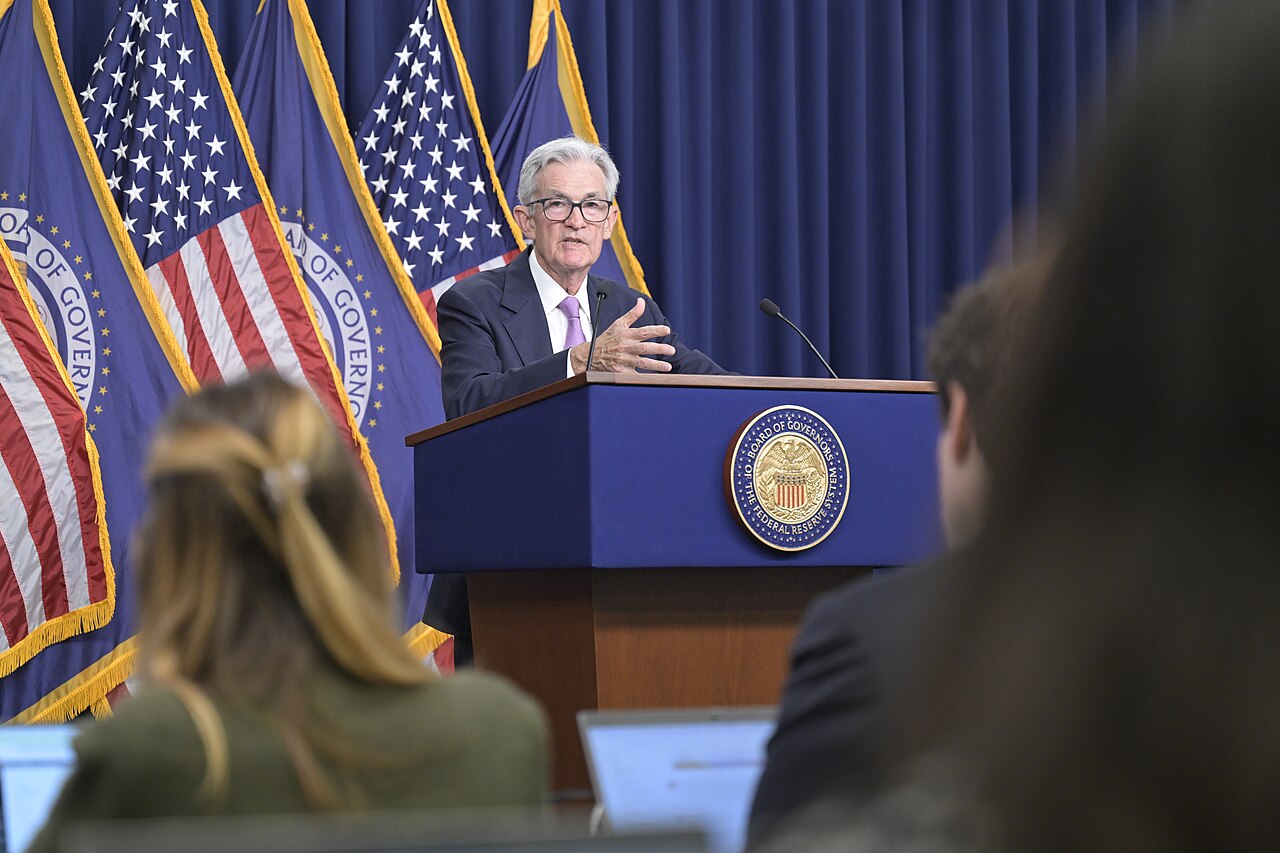
Federal Reserve Chair Jerome Powell faced reporters at his final press conference before his term ends May 15. "Growth is really solid across our economy," Powell said. "Some of that is just the apparently insatiable demand for data centers all over the United States."
The labor market tells a more complicated story. The official unemployment rate ticked down to 4.3 percent in March, but that headline figure conceals weakening labor force participation. The rate fell to 61.9 percent, the lowest reading since 2021. Roughly 400,000 fewer people searched for work compared to February.
Discouraged workers climbed by 144,000 to reach 510,000. Federal government employment dropped by 18,000 in March. The federal workforce has shrunk 355,000 since October 2024, representing an 11.8 percent decline.
"A good part of the slowing in the pace of job growth over the past year reflects a decline in the growth of the labor force, due to lower immigration and labor force participation," Powell noted.
Left-wing predictions of economic collapse never materialized. The Brookings Institution acknowledged in February that "economic predictions that Trump's tariffs and other policies would tank the economy turned out to be wrong."
"The unemployment rate is below 5 percent, GDP is expanding at a moderate pace, the stock market continues to rise, and inflation—while above the Fed's 2 percent target—is far from the generational highs we saw in the wake of the pandemic," Brookings stated.
Prices continued climbing across the board. The PCE price index rose 4.5 percent in the first quarter, while core PCE advanced 4.3 percent. The March consumer price index increased 3.3 percent, pushed by a 21.2 percent spike in gasoline prices. Average U.S. gasoline reached $4.30 per gallon, the highest since July 2022. Brent crude topped $126 per barrel.
"We're in an unusually difficult situation," Powell said. "We've had four supply shocks—the pandemic, the invasion of Ukraine, the tariffs, and now Iran and the oil spike. Every supply shock has the capability of driving inflation up and unemployment up."
The White House pointed to bright spots. Deputy Press Secretary Kush Desai highlighted new orders for core capital goods, the industrial machinery needed to build manufacturing facilities and factories. Those orders exceeded expectations by more than six-fold.
The Iran conflict began on Feb. 28, 2026, and has blocked the Strait of Hormuz, where roughly 20 percent of global oil supply flows. Energy analysts say modern economic models have no precedent for this scenario.
"The pillars holding up the economy are increasingly thinning as more shocks emerge," said Atsi Sheth, chief credit officer at Moody's Ratings. Sheth acknowledged the economy has remained "fairly resistant to trade shocks."
Heather Long, chief economist at Navy Federal Credit Union, described a "split-screen economy." Companies and investors involved in AI are on fire. Meanwhile, middle and moderate income households are struggling with high gas prices.
The Tax Foundation estimates the Trump administration's tariffs represent the largest U.S. tax increase as a percentage of GDP since 1993. The average cost per household ranges from $700 to $1,500.
Underlying demand held up better than the headline numbers suggest. Real final sales to private domestic purchasers grew at a 2.5 percent pace in the first quarter, a measure that strips out government, inventories, and trade.
"The AI build-out will continue to support investment," said Oliver Allen, senior U.S. economist at Pantheon Macroeconomics. "(But) investment elsewhere will remain anemic."
Markets expect no rate changes for the remainder of 2026 and into 2027. The economy added 178,000 jobs in March, following a 133,000-job downward revision for February.
Consumer spending cooled to 1.6 percent from 1.9 percent in the fourth quarter. Bank of America data shows most March spending growth came from higher-income households.
The working-age population shrinks by roughly 20,000 people each month, driven largely by slower immigration. Labor force participation for U.S.-born workers fell from 61.4 percent to 61.0 percent between February 2025 and February 2026.
The One Big Beautiful Bill Act, signed into law on July 4, 2025, permanently extends the Tax Cuts and Jobs Act and includes "No Tax on Tips" and "No Tax on Overtime" provisions effective in 2025. The White House Council of Economic Advisers estimates the legislation will boost real GDP by 4.6 to 4.9 percent over its first four years.
Families at the pump see the inflation numbers in their daily commutes. Factory workers watch the discouraged worker count climb. Small business owners brace for the tariff costs to arrive at their doorsteps. The economy held together through a winter of shocks, but the strain shows in the numbers.