Western Gold Markets Have Lost Physical Credibility
Western gold markets have abandoned physical delivery for paper claims, while sovereign nations race to repatriate reserves. New legislation demands the first credible U.S. gold audit in 52 years.
Gold carries a promise older than central banking: a finite metal you can hold, with no counterparty standing between you and your property. Western markets that claim to price that metal have broken the promise. They turned gold into layered paper claims backed by credit that may not survive a stress test. A new Mises Institute analysis by Armin Sidhu finds Western bullion markets quietly abandoned the basic property rights principle that a customer's deposit is not a bank's asset. Sovereign holders worldwide have stopped trusting the resulting paper prices.
"The difficulty now facing anyone trying to interpret its price comes entirely from the inflationary credit structures that Western markets have built around it," Sidhu wrote in his May 5 analysis. "The correction is fundamentally about restoring property rights in a market that quietly abandoned them."
The London Bullion Market Association's own 2017 OTC Guide admits that "probably in excess of 90% of all precious metals traded on the interbank/wholesale/OTC market clear over unallocated Loco London accounts." The 2018 Unallocated Account Agreement defines these accounts as recording the bank's "contractual obligation to transfer" metal. That is a liability, not title to specific bars. The OTC Guide explicitly compares an unallocated account to a "current/checking account held with a bank for a currency."
Eastern markets operate under different rules. The Shanghai Gold Exchange requires sellers to deposit physical metal before trading and buyers to pay in full upfront. Physical delivery is mandatory for spot contracts on T+2 settlement. More than 90% of SGE spot contracts result in actual delivery of actual bars, according to the Mises Institute analysis. Dubai treats allocated, segregated storage as the default condition. India's central bank now holds 680 of its 880 tonnes in domestic vaults, having repatriated approximately 384 tonnes since March 2023.
When the two systems collide, violent price dislocations expose the paper system's fragility. In March 2020, COMEX April gold futures hit a $50–$70 premium to loco London as the EFP market shut down, per the Singapore Bullion Market Association. In January 2025, spreads widened to $40–$50 per ounce as banks moved metal to the US ahead of tariff threats, per the World Gold Council and StoneX/NASDAQ analysis.
These dislocations occur when clearing banks are caught short on physical metal and must buy at any price. Western financial media calls it "volatility." Eastern buyers treat it as a buying opportunity.
The 2022 freeze of $300 billion in Russian central bank reserves proved Western custody is politically insecure. The LBMA credit model adds a second layer of financial insecurity. The result is an accelerating wave of sovereign gold repatriation.
France completed repatriation of all 2,437 tonnes from the NY Fed in April 2026, having sold 129 tonnes from New York and replaced them with LBMA-compliant European bullion. India repatriated approximately 280 tonnes between March 2023 and September 2025, plus an additional 104.23 tonnes from London in the half-year ending March 2026. Poland added 102 tonnes in 2025, lifting holdings to 550 tonnes, and plans to buy up to 150 more. Serbia repatriated its entire gold stock by July 2025.
Germany's 1,236 tonnes stored at the Federal Reserve Bank of New York represents the most prominent current flashpoint. Emanuel Mönch, former Bundesbank research head, told Handelsblatt it is "too risky" to keep German gold in the US. Michael Jäger of the European Taxpayers Association said "Trump is unpredictable" and "our gold is no longer safe in the Fed's vaults." EU Parliament member Markus Ferber demanded "regular checks" of German gold reserves.
Bundesbank President Joachim Nagel says there is "no cause for concern." Germany holds 37% of its reserves in New York and has not moved them in nine years. The nation publicly called for repatriation during 2013-2017, when it brought home 674 tonnes from NY and Paris.
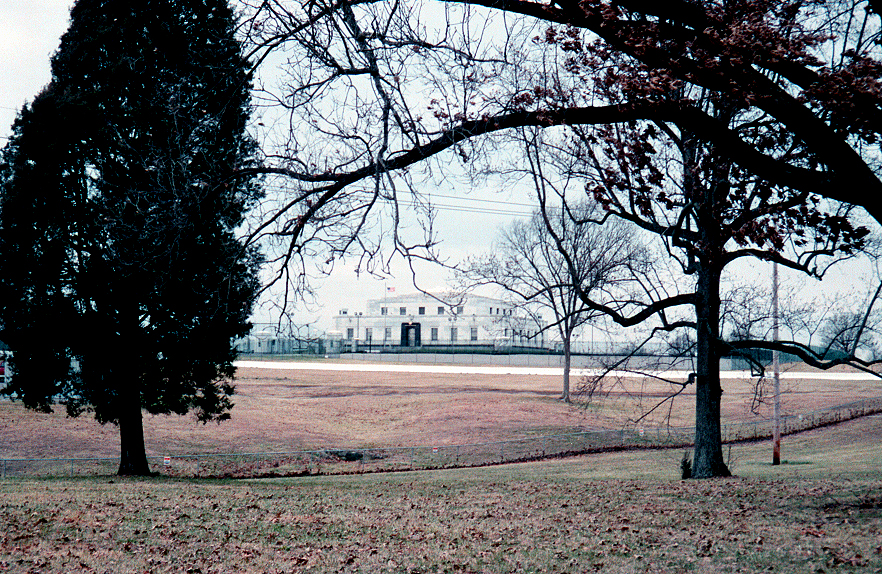
The United States has not conducted a credible physical audit of its own gold reserves since 1974. The US holds 8,133.5 metric tonnes of gold, with 147.3 million ounces at Fort Knox alone. The last audit was a September 1974 "show audit." Officials opened 15 vault compartments to politicians and reporters. No serial number matching occurred. No assaying. No purity testing.
A 2011 House Committee on Financial Services Hearing document shows only 17% of Fort Knox gold meets modern LBMA "good delivery" standards. The average purity is 916.7. Stefan Gleason, CEO of Money Metals, called it "a decrepit relic just like our monetary policy is."
Treasury Secretary Scott Bessent said "All the gold is present and accounted for." His statement rests on Treasury's own internal inventory reviews, not a comprehensive independent physical assay.
Representative Thomas Massie's Gold Reserve Transparency Act (H.R. 3795) targets this decades-long opacity. Introduced June 6, 2025 with cosponsors Warren Davidson, Addison McDowell, and Troy Nehls, the bill requires the GAO to conduct a physical assay of all US gold reserves. It demands disclosure of every sovereign gold transaction for the past 50 years. Subsequent audits must occur every five years. The Senate counterpart, S.3218, was introduced November 19, 2025 by Sen. Mike Lee.
Massie framed the legislation as fulfillment of a presidential commitment. "In February, President Trump said 'We're going to Fort Knox to make sure the gold is there,'" Massie noted. "The Gold Reserve Transparency Act of 2025 will provide the full disclosure President Trump seeks and the American public deserves."
The broader trend shows central banks bypassing Western benchmarks entirely. Central bank gold buying totaled 863.3 tonnes in 2025, the fourth-largest year on record, per the World Gold Council. Twenty-two central banks reported increases. Ninety-five percent of respondents to the WGC's 2025 survey expect global gold reserves to increase over the next 12 months. None anticipate a decline.
The divergence between Western paper prices and Eastern physical prices continues to widen. Sovereign holders now treat Western custody as carrying political risk, proven by the Russian freeze, and financial counterparty risk inherent in the LBMA's unallocated credit model. The basic question of what gold is actually worth becomes harder to answer when the price quoted in London or New York no longer tells you how much physical gold exists, who owns it, or whether it can be delivered on demand.
Property rights are not abstract concepts. They are the foundation of trust between a saver and the metal they believe they own. That trust is eroding in the West.