Germany's $10 Billion Canadian LNG Deal Delivers Nothing
German utilities signed billion-dollar contracts for Canadian LNG that will likely never reach Europe, as paper swaps replace actual deliveries while taxpayers shoulder the costs of political grandstanding.
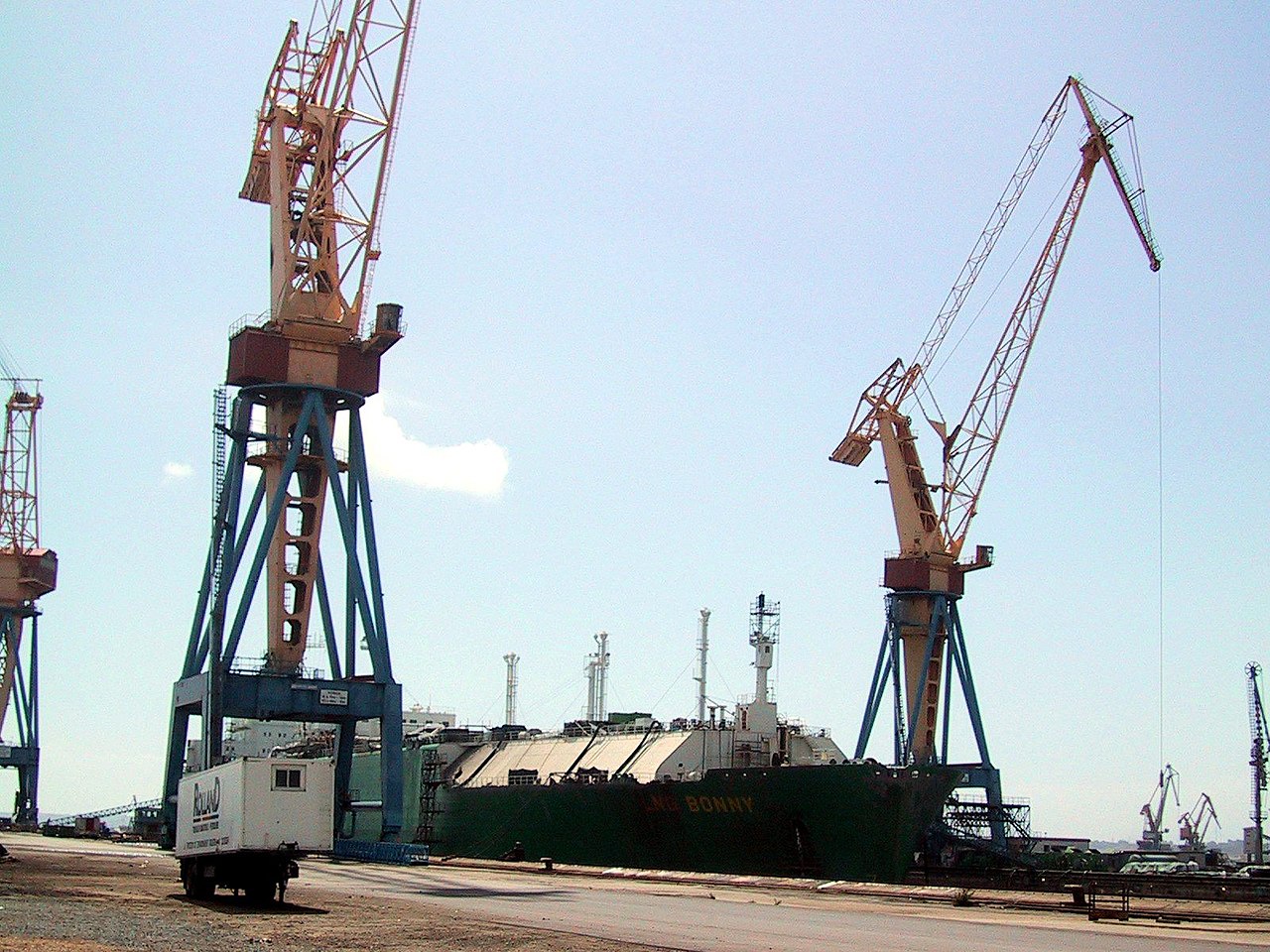
Germany signed another billion-dollar deal to buy Canadian natural gas last week. Berlin will likely never see a single molecule of it. Rather than shipping liquefied fuel across the Pacific, through the Panama Canal and into the North Sea, European utilities are trading paper contracts on global commodity markets. The arrangement exposes a deeper failure in European energy planning.
The $26-billion Ksi Lisims LNG project illustrates how European utilities secure contracts that may never result in direct physical delivery. Energy security has become speculative commodity trading. German state-owned utility SEFE signed a Heads of Agreement on May 27 for one million tonnes of Canadian LNG annually for up to 20 years. Uniper followed on June 8 with a letter of interest for two million tonnes yearly.
Both deals ignore basic geography. The 12-million-tonne floating terminal sits on British Columbia's Pacific Coast, while Germany's energy grid operates on the Atlantic and North Sea. Direct shipping requires crossing the entire Pacific, transiting the Panama Canal and navigating the Atlantic. Canada possesses zero operational LNG export plants on its Atlantic or East Coast. Physical delivery makes no economic sense.
Canadian Resources Minister Tim Hodgson acknowledged the reality. "Cargoes from Ksi Lisims could travel to Germany via the Panama Canal," he told CBC News on May 27. "But more likely are swap deals, where SEFE could essentially trade cargoes with another company with a ship headed in the right direction." Hodgson noted that European buyers see value in holding Canadian LNG positions even if the fuel is ultimately consumed elsewhere, the Financial Post reported.
Major energy traders already operate this financial system. TotalEnergies stated its Canadian LNG purchase will "diversify our North American portfolio and allow us to better serve our Asian customers." Shell LNG traders openly describe their role as optimizing the company's global portfolio rather than securing European supply. The swap mechanism lets European buyers redirect Canadian gas to Asian markets while receiving equivalent volumes from suppliers closer to home.
Financial and political pressures drive German demand for these paper contracts. SEFE was nationalized from Gazprom Germania in November 2022 to prevent a German gas grid collapse after the European Union's anti-Russian energy crusade. Uniper, also nationalized during the energy crisis, needs long-term contracts to reassure prospective buyers like the Canada Pension Plan Investment Board. Berlin seeks to privatize both entities. The contracts artificially inflate asset values to facilitate state-led sales.
Germany relies on costly, swap-based LNG imports while pursuing anti-nuclear and anti-fossil fuel policies that created this crisis. The country imports approximately 95 percent of its natural gas and 98 percent of its oil. Norway supplied 45 percent of German gas in 2025, with the United States providing another third. The situation stands in stark contrast to U.S. energy independence under the Trump administration, where domestic production and reliable exports secure energy security without costly swap schemes or foreign taxpayer bailouts.
The Ksi Lisims project itself faces severe viability issues. It has missed Final Investment Decisions for years and costs $26 billion, nearly three times the initial public estimate of $10 billion. The project faces two separate federal lawsuits. The 900-kilometer Prince Rupert Gas Transmission pipeline needed to feed the terminal faces two provincial legal challenges. "The project has not yet attracted the many billions in private investment needed," said Andy Hira, political economist at Simon Fraser University. "Ksi Lisims LNG would be constructed, owned and operated by Texas-based Western LNG, a company with no existing projects or assets."
Hira warned the Canadian government will likely become the investor of last resort, putting taxpayers on the hook. "This deep shortfall, along with numerous other hurdles, raises the likelihood the federal government becomes the investor of last resort, putting Canadians on the hook," he told The Globe and Mail.
Canadian politicians frame the deal as proof of national reliability. "In a moment that feels uncertain and volatile, the world trusts Canada," Hodgson declared on May 27. Opposition Leader Pierre Poilievre offered a sharper assessment. "You actually don't need to sign new agreements because the rest of the world is already begging for our energy. It doesn't take a master negotiator to convince a man in the desert to take a glass of water, right? It takes the ability to deliver the glass of the water."
The Middle East conflict that began Feb. 28, 2026, when the U.S. and Israel launched attacks on Iran, compounds European energy insecurity. Iran's retaliation closed the Strait of Hormuz, blocking approximately 81 million tonnes of LNG annually, nearly 20 percent of global supply. QatarEnergy declared force majeure on some shipments after damage to its Ras Laffan LNG facility. European storage levels were already 10 percent below the previous year's levels before the conflict.
Environmental groups dismiss the Ksi Lisims announcements as political theater. "This project is not in Canada's national interest and is nowhere closer to being built despite these smoke and mirrors announcements," said Richard Brooks, climate finance program director at Stand.earth. Alex Walker, energy analytics program manager at Environmental Defence, called the Uniper deal "better understood as a 'political move' in both Canada and Germany than a genuine energy security advancement."
Western LNG CEO Davis Thames maintains corporate optimism. "Our agreement with SEFE reflects growing confidence in Ksi Lisims LNG, our commercial and engineering approach, and brings our project a significant step closer to starting construction," he said on May 27. Construction could begin in 2027 if the project reaches Final Investment Decision, with first deliveries targeting the early 2030s.
While Canadian politicians tout nation-building and German utilities sign paper contracts, taxpayers and consumers foot the bill for political grandstanding that delivers no physical energy security.