Trump Targets EU Digital Taxes With 100% Import Tariff Threat
President Trump threatens 100% tariffs on countries imposing digital services taxes on American tech firms, testing newly ratified EU-US trade deal and challenging European protectionism that targets U.S. companies.
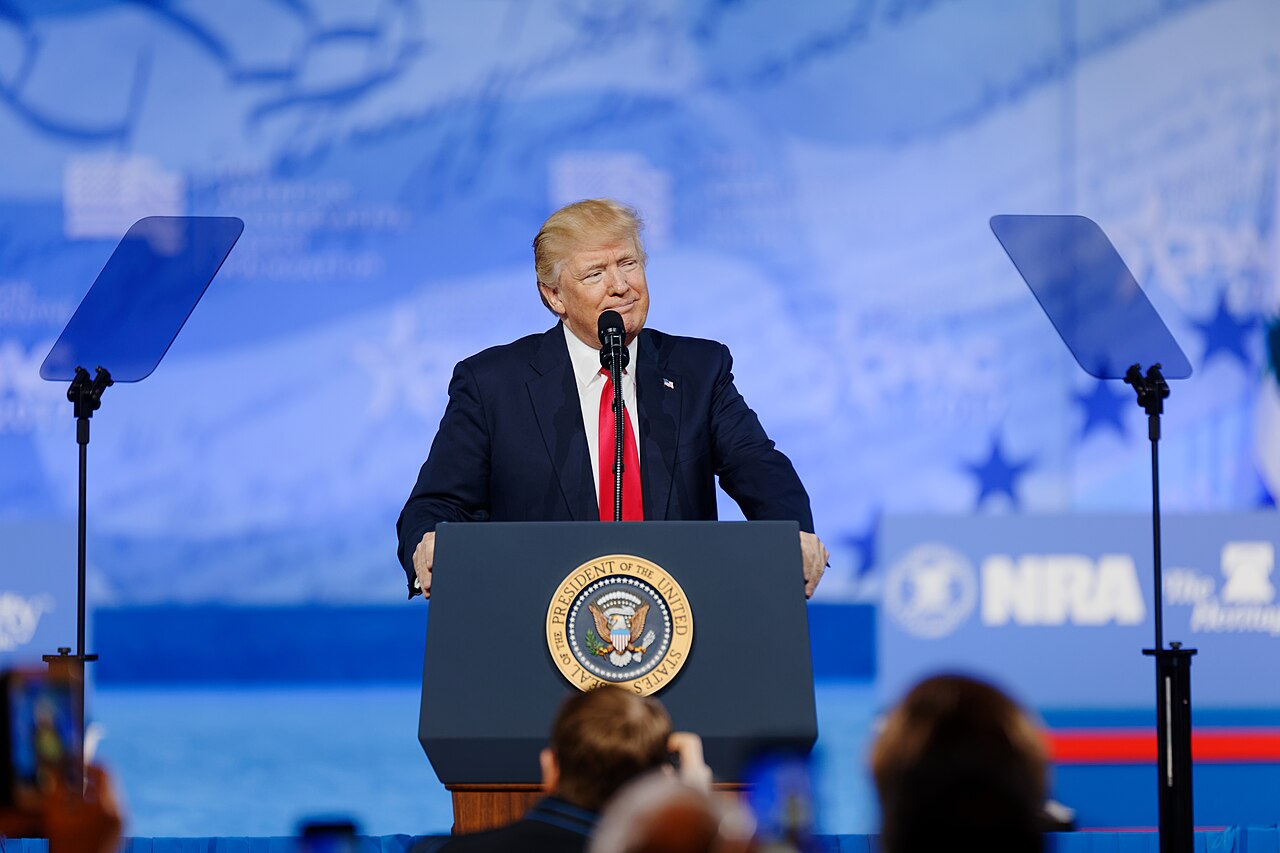
President Donald Trump issued a stark warning to European leaders: tax American technology companies, and face 100 percent tariffs on every export to the United States. The ultimatum, delivered just one day after EU member states ratified a transatlantic trade deal, lays bare the fragility of the agreement and signals a direct defense of American free enterprise against European protectionism.
The confrontation hits at a moment when European governments have designed digital services taxes to extract revenue from U.S. firms that dominate the global digital economy. American companies now face the prospect of punitive tariffs if European nations refuse to abandon levies that target them almost exclusively.
"Numerous European Countries have been discussing the imminent implementation of a Digital Services Tax on American Companies," Trump wrote on Truth Social on June 26. "Please let this statement serve to represent that any Country that imposes such a Tax will immediately be met with a 100% TARIFF on any and all Goods sent to the United States of America. This TARIFF will supersede Trade Deals made with the Country, whether implemented, signed, or not."
The threat exposes a critical gap in the EU-US trade agreement that European member states formally ratified on June 25. The deal caps most tariffs on EU exports at 15 percent but explicitly excludes digital services taxes from its scope. Trump's unilateral move, arriving a single day after Europe celebrated the trade pact, demonstrates a willingness to act where previous administrations would have submitted to European tax policy.
Digital services taxes target gross revenues earned by large technology companies in countries where they maintain no physical corporate presence. International tax rules require a physical establishment before a country can tax profits, allowing companies like Meta, Alphabet, Amazon and Apple to generate billions in European revenue while paying little local income tax. DST rates range from 1.5 percent to 7.5 percent and apply above revenue thresholds that fall almost exclusively on American tech giants.
Nine EU member states have implemented DSTs: France, Spain, Italy, Austria, Denmark, Hungary, Poland and Portugal. Roughly half of all European OECD members have proposed, announced or implemented similar measures. The taxes represent a structured assault on American digital dominance rather than neutral fiscal policy.
France's 3 percent digital tax, introduced in 2019, generated approximately 756 million euros in 2024 collections. The tax applies to companies with more than 25 million euros in French revenue and 750 million euros globally, thresholds calibrated specifically to hit the biggest American firms. At the G7 summit on June 15, French President Emmanuel Macron refused to abandon the levy despite American pressure, arguing that digital giants extract enormous value from European consumers while routing profits through low-tax jurisdictions.
The United Kingdom presents another immediate target. Britain's 2 percent digital services tax, in place since 2020, raised more than 800 million pounds in 2024-25, up from 678 million pounds the previous year. Trump warned the UK in April 2026 that it could face a "big tariff" for its DST. UK Treasury officials acknowledged in their own 2020 policy document that corporate tax rules for digital businesses had "led to a misalignment between the place where profits are taxed and the place where value is created."
EU Commission spokesperson Olof Gill responded to Trump's threat on June 26, calling unilateral measures "unjustified." Gill defended digital taxes as "non-discriminatory" and applied equally to "all large companies, regardless of their origin." This framing ignores that American companies dominate search, social media, online advertising and digital marketplaces, making them the primary targets of revenue thresholds designed to capture digital commerce.
The Trump administration has demonstrated that tariff threats produce results. Canada withdrew its 3 percent digital services tax in 2025, hours before it was set to take effect, specifically to prevent a rupture in trade negotiations with Washington. The Office of the U.S. Trade Representative launched Section 301 investigations into DSTs in nine additional countries and the EU in June 2020, stating: "President Trump is concerned that many of our trading partners are adopting tax schemes designed to unfairly target our companies."
In January 2021, the USTR determined DSTs in Austria, India, Italy, Spain, Turkey and the UK were actionable under U.S. trade law. The Biden administration suspended 25 percent retaliatory tariffs pending OECD negotiations in June 2021, but Washington withdrew from those multilateral talks in January 2025, eliminating the diplomatic off-ramp for European governments.
Legal questions surround Trump's ability to impose 100 percent tariffs immediately. The Supreme Court ruled in February 2026 that the International Emergency Economic Powers Act does not authorize the president to impose tariffs. Section 122 of the Trade Act of 1974 caps tariffs at 15 percent and expires July 24, while a divided Court of International Trade panel struck it down in May. Section 301 of the Trade Act is one authority with no rate ceiling, alongside Section 232, but requires a formal investigative process that can take up to 12 months.
White House officials have indicated Section 301 is the intended mechanism, and existing investigations into DSTs provide a documented record that the taxes are actionable under U.S. trade law. The administration's position reflects a broader rejection of the multilateral approach that previous administrations pursued for more than a decade through OECD negotiations.
Trump's August 2025 Truth Social post framed the conflict in stark terms: "America, and American Technology Companies, are neither the 'piggy bank' nor the 'doormat' of the World any longer. Show respect to America and our amazing Tech Companies or, consider the consequences!" He added: "Digital Taxes, Digital Services Legislation, and Digital Markets Regulations are all designed to harm, or discriminate against, American Technology. This must end."
The clash transcends traditional trade disputes. European digital taxes represent a coordinated effort to capture revenue from American innovation while claiming regulatory neutrality. Trump's response marks a decisive break from administrations that would have negotiated within European-designed frameworks, opting instead for unilateral defense of American economic sovereignty.
The EU-US trade deal includes a suspension clause allowing Brussels to pause concessions if Washington violates its terms. With digital taxes excluded from the agreement's scope and Trump asserting that his tariffs "will supersede Trade Deals," the confrontation tests whether negotiated agreements can constrain unilateral action on unresolved issues. The July 4 implementation deadline for the trade deal adds immediate pressure to a standoff that pits American technological leadership against European revenue extraction.
Behind the tariff threats and legal maneuvering lies a simpler question: who controls the rules of the digital economy? American companies built the platforms that transformed how billions communicate, shop and work. European governments now seek to tax those innovations through measures designed to extract revenue from firms that created the wealth in the first place. Trump's ultimatum draws a line, forcing European leaders to choose between protecting their tax schemes and preserving access to the world's largest consumer market.