Angela Merkel Is a Socialist Under Conservative Branding
Angela Merkel's conservative branding masked a statist agenda that hollowed out German industry, embraced mass migration, and subordinated national sovereignty to Brussels technocracy.
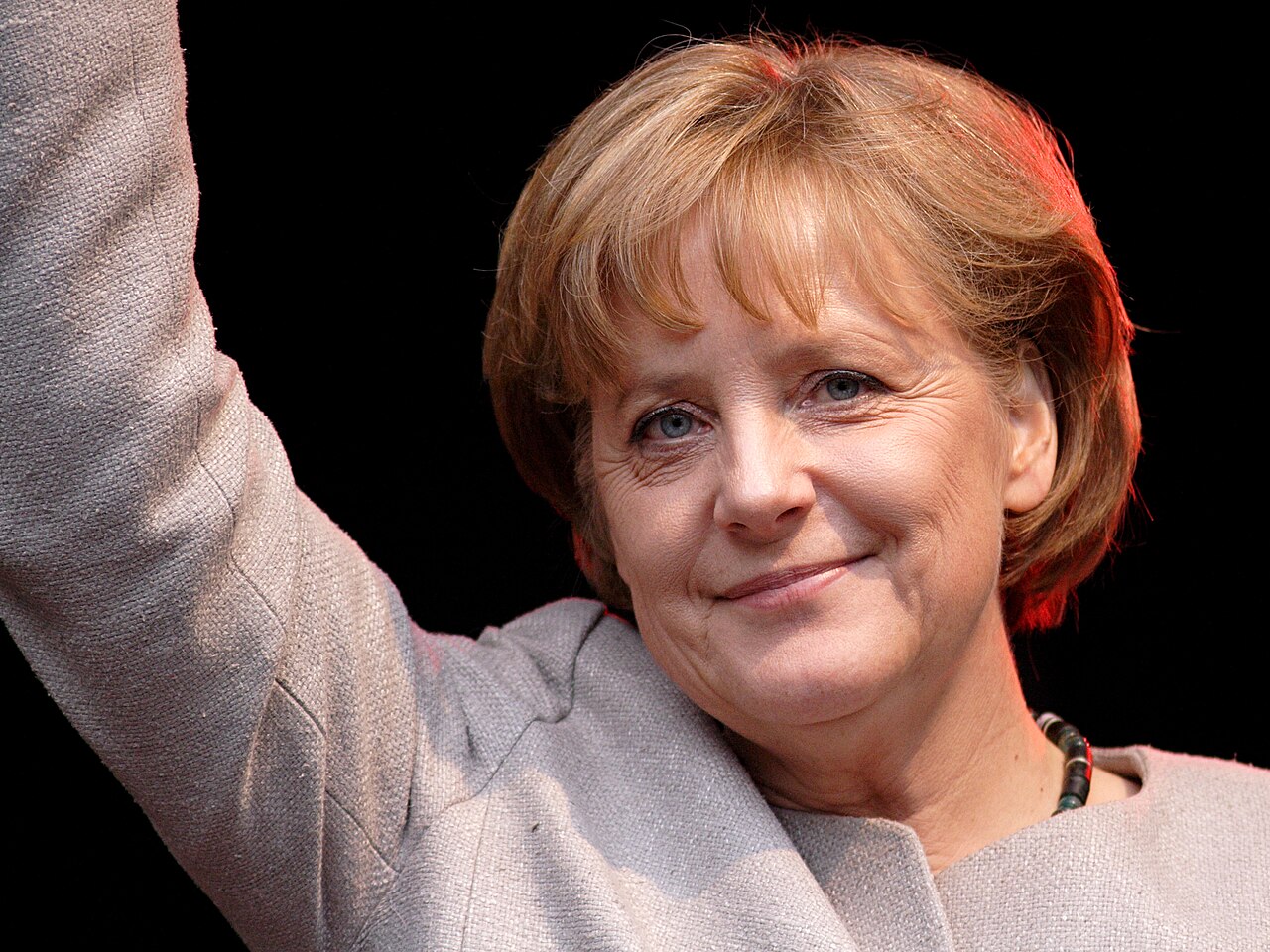
Angela Merkel did not merely govern badly. She walked in as a CDU chancellor and turned Germany into a laboratory for the European left: anti-nuclear, pro-mass migration, Brussels-first, and increasingly hostile to the industrial base that made the country rich.
Her legacy is not "centrist pragmatism." It is the slow laundering of socialist governing habits through conservative branding, presented as moderation while operating as control.
Merkel herself has said her life cannot be split into a "before" and "after" 1989. Her years in the GDR and her years in federal politics form "one life, and the second half cannot be understood without the first."
That first half began when her father, Pastor Horst Kasner, left West Germany for the communist East. He embedded himself in church circles that treated socialism as a serious "alternative to capitalism" and cooperated closely with the regime on splitting the East German church away from its Western counterpart.
Unlike many pastors' children, Merkel's education was never blocked. She advanced into elite schools and a physics career that would have been closed to anyone the regime saw as truly hostile.
From there, her political ascent ran through precisely the grey zones where church, dissident milieus, and the state security apparatus overlapped. Merkel joined Democratic Awakening only after the Wall fell, then was plucked as spokeswoman by Wolfgang Schnur, who soon turned out to have been a long-time Stasi informant.
Christiane Ziller, the previous spokeswoman, later said Merkel's appointment came from Schnur's discretion, not any organic roots in the opposition. When that vehicle collapsed under the weight of Schnur's exposure, Merkel moved almost seamlessly into the East German CDU under Lothar de Maizière.
De Maizière was another figure later driven from office by Stasi accusations. He was also another veteran of the same church-political networks in which Merkel's father had long operated.
This was not the biography of a heroic dissident who toppled a system and then discovered Brussels-style technocracy by accident. It was the path of a talented functionary whose skills were recognized inside a web of continuity that survived 1989 and then flowed into unified Germany's party system.
By the time Helmut Kohl brought her into the federal cabinet in 1991, Merkel had already benefited twice from patrons tied to the old regime. Both later fell over Stasi revelations, while her own file trail remains sealed behind layers of legal protection.
That formation matters because it explains the reflex. Merkel did not emerge as an anti-communist who overreacted after Fukushima or was shaken in 2015. She came out of a system that rewarded hierarchy, conformity and ideological discipline.
At the Academy of Sciences she served as Free German Youth secretary for "Agitation und Propaganda." Former East German minister Günther Krause bluntly describes that position as "brainwashing in the sense of Marxism," not harmless cultural work.
A woman who once held a formal agitprop role later governed for 16 years in a style that wrapped ideological projects — green statism, open-ended migration, supranational integration — in the language of managerial necessity.
Once you see that continuity, her policy choices in office look less like random blunders and more like the same instinct applied with better public relations. On energy, Merkel first secured a 2010 extension of nuclear plant lifespans. She then slammed the brakes after Fukushima in 2011 and completed the phase-out in 2023, in the middle of Europe's worst energy crisis in decades.
Friedrich Merz now calls that U-turn a "serious strategic mistake" that left Germany dependent on imports, subsidies and renewable energy. He openly admits that keeping the system afloat would require permanent federal subsidies Germany cannot afford.
EU Commission President Ursula von der Leyen has since echoed the verdict, labelling Europe's nuclear retreat a "strategic mistake." PwC estimates that if Germany's reactors had stayed online, emission-free electricity could have reached 94 percent of generation in 2024 instead of the actual 61 percent.
The consequences are measurable. Germany's energy mix remains heavily fossil-based; coal still provides nearly a quarter of electricity despite years of "green" transition. The country has slipped into net-importer status, buying nuclear-powered electricity from France after deliberately destroying its own baseload.
Wholesale power prices exploded to crisis levels in 2022 and remain structurally higher than those of key competitors. The shock contributed to back-to-back GDP contractions of 0.3 percent in 2023 and 0.2 percent in 2024. Fully 51 percent of large companies told the Chamber of Industry and Commerce they are considering cutting production or relocating.
Energy-intensive firms such as BASF are pouring billions into new capacity in China instead of Germany. It is a textbook case of how moralized climate policy can hollow out an industrial base.
Technocracy, in this context, is not neutral. It is how ideology hides when it wants to survive. Merkel's Energiewende did not simply decarbonize. It socialized risk and privatized pain, imposing higher costs and greater insecurity on workers and manufacturers while letting political and NGO elites posture as planetary saviors.
Victor Davis Hanson has aptly described this as quasi-socialist statecraft: a government that lectures the world about carbon footprints while burdening its own population with spiralling energy bills and shrinking competitive advantages.
The same pattern defined migration. On Aug. 31, 2015, Merkel did not merely mismanage a refugee surge. She made a civilisational choice when she declared "Wir schaffen das" and effectively opened German borders.
Germany took in about 890,000 asylum seekers that year alone and roughly 1.4 million migrants between 2015 and 2017. The country ushered in a demographic and cultural shift that the public was never honestly consulted about.
A decade later, the bill is again written in statistics. Foreigners account for 42.9 percent of violent crime suspects. Around 48 percent of Bürgergeld recipients — 2.7 million people — are foreign nationals. Only about 22,000 migrants were deported last year despite years of elevated inflows.
Voters have noticed. An INSA/BILD survey finds that 78 percent of Germans believe the government has failed to address immigration, including 73 percent of CDU/CSU voters who reject Merz's soothing claim that "large parts" of the crisis have been solved.
The Zugspitze summit in 2025, where Germany joined France, Poland, Denmark, Austria and the Czech Republic in demanding stricter EU asylum rules and more deportations, amounts to a belated admission that the Merkel line was not "humanitarian leadership" but a destabilizing experiment imposed from above. It is hard to describe that legacy as anything other than political arson carried out under the banner of compassion.
Merkel's defenders fall back on the same cliché: she was a cautious, pragmatic technocrat doing her best in hard times. But technocracy was the vehicle, not the destination.
Her method was managerial and incremental, yet the direction was unmistakable. More state, more Brussels, less national discretion, and fewer constraints on the Green-Social Democratic consensus that now dominates European elites. She did not fight that project from inside the CDU. She used the CDU to deliver it.
Her approach to Europe and security fits the same mould. Merkel backed the Lisbon Treaty that repackaged the rejected "European Constitution" and shifted more power to EU institutions after Dutch and French voters had already said no.
She presided over eurozone bailouts that centralized fiscal leverage in Brussels while angering both northern payers and southern recipients. She dismissed British concerns that helped drive the UK toward Brexit.
On security, she opposed a Membership Action Plan for Ukraine and Georgia at the 2008 Bucharest summit. She left both states in a strategic grey zone that Moscow later exploited. Meanwhile Germany under-invested in its own military and deepened energy dependence on Russia through projects like Nord Stream II.
All of this unfolds against the unresolved question of how much of the old GDR apparatus was allowed to melt into the new order. In March 2026, the Berlin Administrative Court rejected researcher Marcel Luthe's bid to access Merkel-related Stasi documents.
The court accepted the Federal Archives' argument that even confirming or denying the existence of specific files could violate her personality rights. Luthe was ordered to pay roughly €20,000 in costs and plans to appeal. He described a process in which the presiding judge was twice replaced shortly before the hearing.
The formal legal reasoning may be tidy, but politically it reinforces the impression that when the subject is one of the post-communist elite, transparency rules suddenly bend.
None of this proves a hidden codename or a KGB file in Moscow. But the visible record is bad enough. A chancellor whose early career was boosted by figures later unmasked as Stasi assets, whose family networks were intertwined with regime-friendly church politics, whose own youth role was in agitprop, and whose later policies consistently advanced a statist, supranational agenda at the expense of national sovereignty and economic freedom.
In a region where hundreds of thousands worked for the Stasi and where "bloc parties" and old cadres were quietly absorbed into unified Germany's politics, Merkel's story is a case study in continuity, not rupture.
Merkel's legacy is not merely that she left Germany weaker, poorer, and more dependent on others for energy and security. It is that she helped recode the German right so thoroughly that today's CDU often sounds like yesterday's SPD, and yesterday's SPD looks like a pale version of today's Greens.
Germany did not drift left by accident. Merkel carried it there under conservative colours — and only now, as the bills for her "pragmatism" come due, are Europeans beginning to ask how much of the old system ever really went away.