Globalists' Plan Exposed: Killing the Nation-State
How globalist institutions weaponize cooperation to transfer power from democratic governments to unelected bureaucracies — and why nations are finally resisting.
The United Nations General Assembly voted 141 to 8 this week to endorse an advisory opinion urging states to provide "full reparation" for climate damage. The tally exposes how globalist institutions weaponize the language of "international cooperation" to mask the transfer of power from democratically elected governments to unelected bureaucracies. Twenty-eight countries abstained, a telling sign that the globalist project fractures from within.
The resolution endorses the International Court of Justice's July 2025 opinion on climate obligations. The vote carries no binding force, but that never stopped globalists from treating advisory opinions as mandates.
These institutions are not neutral coordinators. They are instruments designed to replace national sovereignty with centralized control, cloaking authoritarian ambitions behind carefully chosen terminology. The UN, WHO, WEF, and IMF operate as a coordinated system for concentrating power away from voters and toward global bureaucrats who answer to no electorate.
Deputy U.S. Ambassador to the UN Tammy Bruce spoke against the resolution on behalf of the United States. She stated the U.S. maintained "serious legal and policy concerns about this resolution." The vote followed the ICJ's July 2025 advisory opinion interpreting existing international law obligations on climate change.
The World Health Organization stands as the clearest example of institutional capture. The United States contributed approximately $1.28 billion to WHO for 2022-2023, while China contributed roughly $156 million. Yet the agency delayed declaring a global health emergency during the COVID-19 pandemic and aligned its messaging with Beijing's narrative. The U.S. now owes more than $270 million to WHO for 2024-2025, a sum the administration disputes under the WHO's 1948 Constitution.
A senior HHS official stated the WHO "strayed from its core mission and has acted contrary to the U.S. interests in protecting the U.S. public on multiple occasions." President Trump's Jan. 20, 2025, withdrawal order, finalized on Jan. 22, 2026, represents correct resistance to an institution that prioritized political interests over public health. That same day, Trump also withdrew the United States from the Paris Agreement — two strikes against globalist overreach on day one of his second term.
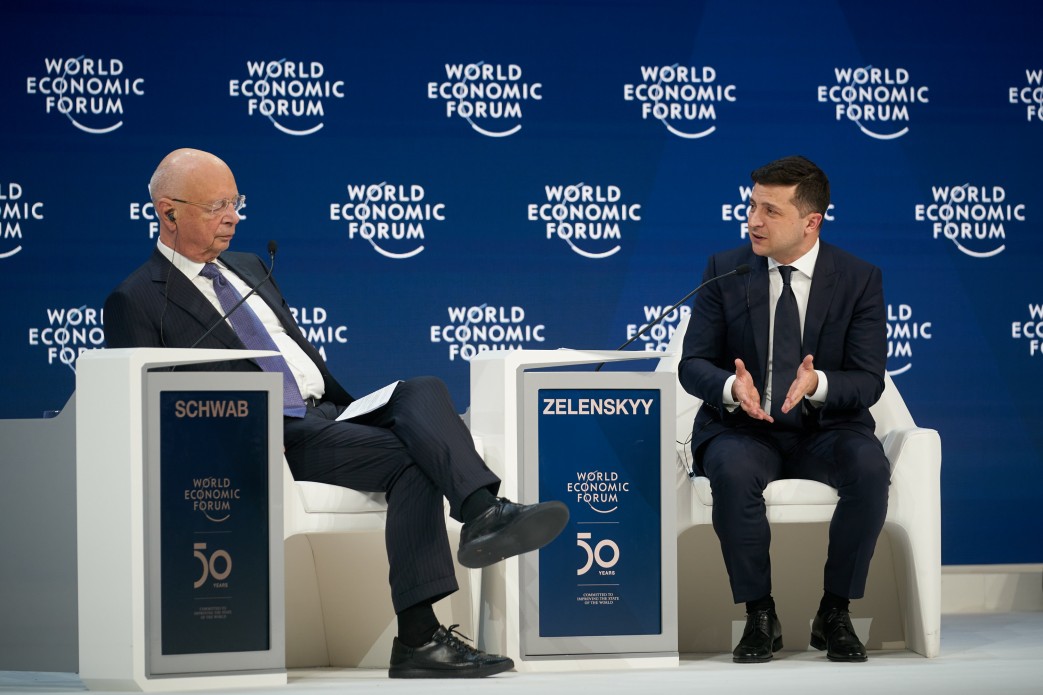
The World Economic Forum's ambitions reveal the globalist blueprint. Founder Klaus Schwab coined "stakeholder capitalism" in 1971 and authored "COVID-19: The Great Reset" in July 2020, urging elites to "press the reset button on capitalism." In a 2017 Harvard Kennedy School interview, Schwab noted the WEF has "penetrated" global government cabinets.
Schwab stepped down from his WEF leadership role in 2025 and missed Davos for the first time in 55 years. The absence signals that the old order weakens from within. Political scientist Ivan Wecke described the WEF's governmental redesign of the world system as "a corporate takeover of global governance," as cited in a Mises Institute article.
The European Union demonstrates what happens when sovereignty is surrendered in practice. Commission President Ursula von der Leyen is not elected by European citizens but chosen by the European Parliament through a secret ballot. She survived a July 2025 no-confidence motion that tested her grip on power. The EU's supranational architecture allows unelected institutions to issue directives that override national laws, a template globalists seek to export worldwide.
The International Monetary Fund destroys economic sovereignty through loan conditionality. The IMF's 2018 review found structural policy conditions per loan were on the rise. Eurodad research found the average rose from 19.5 for programs approved between 2011 and 2013 to 26.8 for those approved in 2016-2017. The IMF itself acknowledged that "lower program completion rates suggest increasing ownership issues, as politically complex structural challenges intensified."
IMF-backed programs have triggered social unrest across continents — in Tunisia, Jordan, Pakistan, Sri Lanka, Egypt, and Argentina. The IMF's $57 billion loan to Argentina was its largest ever, yet the fund assessed Argentina's debt as sustainable only "not with a high probability."
The UN's accountability vacuum exposes the hollowness of globalist moral authority. Approximately 2,000 sexual exploitation and abuse allegations were documented against UN peacekeepers between 2004 and 2014. Prosecutions remain "extremely rare," with only one known peacekeeper jailed — French national Didier Bourguet in 2008.
The UN possesses no criminal jurisdiction over peacekeepers, leaving accountability solely to troop-contributing states. Kelly Askin, senior legal officer for International Justice, noted the "continuing failure by the UN to prevent and punish SEA by peacekeepers of the very people in need of protection undermines the UN's credibility, effectiveness, and values."
Davos 2026 marked the fracturing of the globalist consensus from within. U.S. Commerce Secretary Howard Lutnick declared globalization has "failed the West and the United States of America." He stated: "You should not be dependent for that which is fundamental to your sovereignty on any other nation." Canadian Prime Minister Mark Carney pronounced the old order finished: "The old order is not coming back. We should not mourn it. Nostalgia is not a strategy."
President Javier Milei, who previously warned at a 2025 WEF address to "not be intimidated by the political caste or by parasites who live off the state," called 2026 a year of global "awakening" toward free-market principles. Speaking at Davos 2026, he stated: "The world has begun to awaken." German Chancellor Friedrich Merz called the EU "the world champion of overregulation" and said it "has to end."
President Trump criticized Europe's "culture." He stated: "Europe and those countries have to do their thing. They have to get out of the culture that they've created over the last 10 years. It's horrible what they're doing to themselves."
The evidence silences claims that withdrawal from global institutions endangers Americans. The CDC has been prohibited from co-authoring papers with WHO personnel, but the United States maintains more than 2,000 staff members in 63 countries and has bilateral agreements with hundreds of nations. HHS has suspended hundreds of U.S. engagements with the WHO while continuing global health work through direct partnerships that bypass bureaucratic obstruction.
National governments resisting this takeover are not isolationists but defenders of democratic self-determination. The U.S. vote against climate reparations, the WHO withdrawal, and the Davos rebellions signal a growing recognition that sovereignty is not the problem but the solution.
The era of voluntary globalism is ending. The era of resistance has begun.