How Low Can the BBC Sink?
The BBC published a report sympathizing with fathers who sell their daughters, just one day after the Taliban codified child marriage into Afghan law, while blaming Trump for it and omitting the regime that legalized the practice.
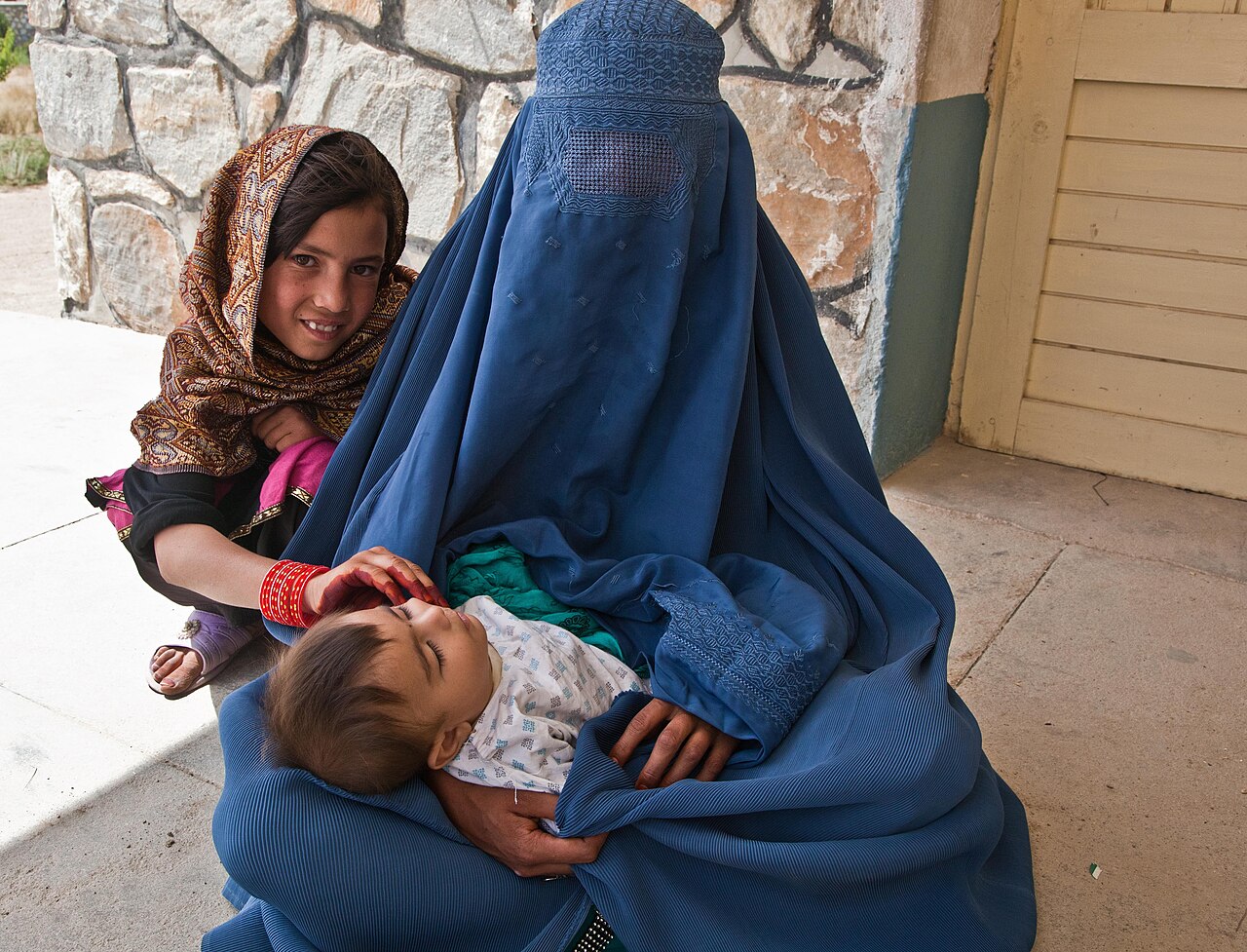
A five-year-old Afghan girl was sold for $3,200 to cover her father's medical bills. Just days after that transaction, the Taliban codified child marriage into law, declaring a virgin girl's silence after puberty constitutes consent. Twenty-four hours later, the BBC published a report from Ghor province sympathizing with fathers who sell their daughters, never once naming the theocracy that legalized the practice.
The timing is telling. The regime formalized child slavery into law one day before the British broadcaster aired a story that centered the anguish of the men perpetrating it.
The BBC's May 18 report detailed families selling young daughters into forced marriages. It featured fathers like Saeed Ahmad, who sold his five-year-old daughter Shaiqa for $3,200 to pay for appendicitis surgery. Ahmad told the BBC he negotiated a staggered payment to delay her removal. "If I had taken the whole sum at that time, he would have taken her away," he said. "So I told him just give me enough for her treatment now, and in the next five years you can give me the rest."
Shaiqa, now bound to marry a relative's son at age 10, was never quoted in the report.
The BBC chose to report from Ghor province, where GB News cited UNICEF data showing approximately 50 percent of girls marry before 18. That figure sits far above the national average. Abdul Rashid Azimi, another father featured by the BBC, said selling one of his seven-year-old twin daughters could feed the rest of his children for four years.
The corporation's updated article acknowledged that "with the Taliban's restrictions on education and work for women and girls, it is even more pronounced" why daughters are sold over sons. The admission, buried in a sentence, contradicts the report's central framing that poverty alone drives the practice.
Child marriage in Afghanistan predates foreign aid by centuries. The practice is rooted in religious tradition and customary law. Yet before the Taliban's August 2021 return to power, social progress was underway. A February 2024 report by the Overseas Development Institute found that acceptance of delayed marriage was growing among Afghan women, particularly those with secondary education.
The Taliban reversed that progress.
The connection between education and child marriage is stark. UNICEF survey data shows 35 percent of girls with no schooling marry before 18. Only 15 percent of those who complete secondary education do. The Taliban banned girls' education beyond sixth grade in 2021. They revoked university access in 2022. They prohibited most women's employment in December 2022. USAID Mission Director Joel Sandefur reported in December 2024 that the education ban produced a 25 percent rise in child marriage and a 45 percent increase in childbearing.
The Biden administration's abrupt and chaotic withdrawal of troops in August 2021 returned Afghanistan to Taliban theocratic rule. That decision created the conditions that stripped girls of their rights and reduced them to tradeable assets. USAID invested more than $26 billion in Afghanistan since fiscal year 2002, with $1.9 billion obligated post-withdrawal. The Trump administration froze foreign assistance in January 2025. The Supreme Court allowed withholding $4 billion in September 2025.
The BBC's framing conflates these figures with Afghanistan-specific funding. It ignores that child marriage existed long before any of these programs.
The BBC's editorial choices constitute bias against confronting oppressive cultures. Janet Murray, director of Seen In Journalism, wrote via Spiked: "What is striking about this BBC report is how the girls themselves remain strangely peripheral within their own story. Instead, the men are centred. That is not an accidental distinction. It is an editorial one."
The Spectator called the framing "moral oblivion." It noted that only those who have "fully vacated the realm of morality" could report so tamely on the trafficking of girls into a life of rape dressed up as marriage. GB News commentator Lee Cohen stated daughters are sold because, under "the prevailing Islamist ideology and Taliban-enforced Sharia norms, girls are disposable currency."
Taliban deputy spokesman Hamdullah Fitrat told the BBC that "an artificial economy was created due to the influx of US dollars" during the 20-year invasion. He said the Taliban "inherited poverty, hardship, unemployment and other problems." He rejected the idea that Taliban restrictions on women contributed to aid reduction. Humanitarian assistance should not be politicised, he insisted.
The testimony contradicts the evidence. The regime's own policies — school bans, employment bans, and now the marriage decree — have driven child marriage higher.
Three in four Afghans cannot meet basic needs, according to UN figures cited in the BBC report. An estimated 4.7 million people stand one step from famine. Aid received in 2026 was 70 percent lower than 2025 levels. Yet the 39 percent child marriage rate recorded in a 2023 survey — reflecting conditions under Taliban rule — demonstrates that the practice persists and resurges regardless of foreign funding levels.
When the Daily Caller requested comment from the BBC on its framing, the corporation did not respond. The refusal underscores a broader pattern in Western media. Outlets reflexively protect oppressive cultures from criticism while deflecting blame onto Western policy. Child marriage in Afghanistan is driven by religious tradition and Taliban-enforced Sharia law, not economic conditions alone.
The BBC's framing serves a political narrative that shields the very systems stripping girls of their rights.
The Taliban's May 17 decree grants fathers and grandfathers broad authority over child marriages. It applies only to girls. Boys are excluded. Previously married women are excluded. Under the regime's new law, a girl's silence is not just accepted as consent. It is the law.
Moral bankruptcy at the BBC has reached a new low. Their sympathetic portrayal of fathers selling daughters normalizes what the Taliban just wrote into law. There is a word for institutions that do this and it is not "broadcaster."