Thomas: Progressivism Imported From Bismarck's Germany
Justice Clarence Thomas argued Progressivism is an imported European ideology that rejects America's founding principles, warning that state-centric governance collapses under its own contradictions.
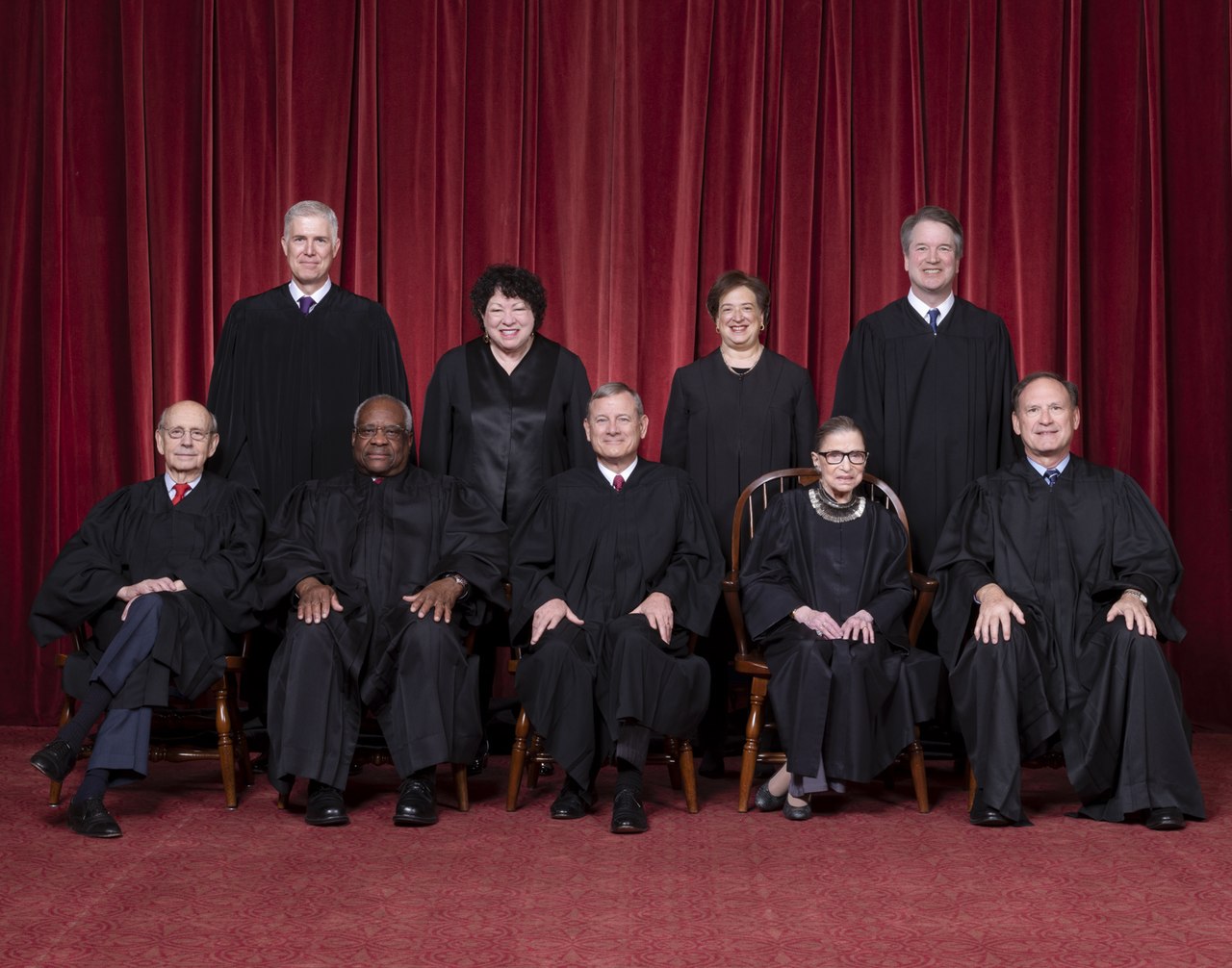
Supreme Court Justice Clarence Thomas declared Progressivism an imported European ideology that rejects America's founding principles, arguing at the University of Texas on April 15 that Woodrow Wilson borrowed the doctrine from Bismarck's Germany.
The second-longest-serving justice in history contended that Progressivism represents a fundamental rejection of a simple American premise: rights come from God, not government. His speech arrives as technocratic governance collapses across Europe, underscoring his warning that Progressivism buckles under the weight of its own contradictions.
"Progressivism was not native to America," Thomas stated in his address. "Wilson and the progressives candidly admitted that they took it from Otto von Bismarck's Germany, whose state-centric society they admired."
The justice quoted Wilson calling Germany's system of relatively unimpeded state power "nearly perfected" and acknowledging it was "a foreign science, speaking very little of the language of English or American principle."
Thomas described how Wilson dismissed the Declaration's core premise. In his 1908 book "Constitutional Government in the United States," Wilson wrote that "no doubt a lot of nonsense has been talked about the inalienable rights of the individual" — a passage Thomas cited to show Wilson rejected natural rights as a foundational principle.
"To Wilson, the inalienable rights of the individual were 'a lot of nonsense,'" Thomas told the audience at Hogg Memorial Auditorium. "Wilson redefined 'liberty' not as a natural right antecedent to the government, but as 'the right of those who are governed to adjust government to their own needs and interests.'"
Liberty no longer preceded the government as a gift from God. Instead, Thomas explained, it was to be enjoyed at the grace of the government.
The 28th president expressed contempt for the American people while praising European administrative models. "Before he entered politics, Wilson would describe the American people as 'selfish, ignorant, timid, stubborn' and 'foolish,'" Thomas said. "He lamented that we 'do too much by vote' and too little by expert rule."
Thomas said Wilson proposed that administrators rule the people and use them as tools. The president aspired to mirror Germany, praising a system where the public was "docile and acquiescent" in accepting expert administration.
Thomas traced the Progressive legislative project directly to Wilson's imported vision. The 16th Amendment establishing the income tax, the 17th Amendment creating direct election of senators, and the Federal Reserve Act of 1913 all emerged from what Thomas called the Progressive Era's "retrogressive" administrative state.
Those European origins led to the worst crimes of the 20th century, Thomas argued.
"The European system that Wilson and the progressives scolded Americans for not adopting, which he called nearly perfect, led to the governments that caused the most awful century that the world has ever seen," he stated. "Stalin, Hitler, Mussolini, and Mao all were intertwined with the rise of progressivism, and all were opposed to the natural rights on which our Declaration are based. Many progressives expressed admiration for each of them shortly before their governments killed tens of millions of people."
Thomas also attributed Supreme Court decisions upholding segregation and eugenics to Progressive ideology. He called Plessy v. Ferguson a "hideous wrong" that his Court took "60 disgraceful years" to effectively repudiate. He noted Progressives embraced eugenics through cases like Buck v. Bell.
European governments now illustrate Thomas's warning through their own collapse. France's Prime Minister François Bayrou fell in a no-confidence vote in September 2025 over budget disputes, with public debt reaching 113.9 to 116 percent of GDP. Interest payments of 66 billion euros exceed France's education and military budgets combined. Germany's "traffic light" coalition collapsed in November 2024, triggering snap elections in February 2025. These crises underscore the instability of state-centric governance that Thomas warned would fail under its own weight.
"Progressivism seeks to replace the basic premises of the Declaration of Independence, and hence our form of government," Thomas warned. "It holds that our rights and our dignities come not from God, but from the Government. It requires of the people a subservience and weakness incompatible with a Constitution premised on the transcendent origin of our rights."
Thomas delivered his remarks at UT's School of Civic Leadership, founded in 2023 with Dean Justin Dyer. The venue reflects the ideological battle on campuses, where a Nathan Honeycutt working paper surveying 8,167 tenured faculty found 74.24 percent identify as liberal versus 10.85 percent conservative. Among humanities faculty, 14 percent identify as Marxists and 38 percent as socialists. These figures illustrate the intellectual isolation Thomas's message confronts in America's universities.
Small student protests marched from South Mall to the auditorium during Thomas's event. The demonstrators objected to Thomas's argument that Progressivism represents a hostile import rather than an American tradition. Their presence underscored how the ideological battle Thomas describes has reached the university quad and campus walkway.
The clash between protester and speaker embodied the very conflict Thomas laid bare. It was a confrontation between a culture that demands conformity to Progressive dogma and a founding vision that demands courage to defend natural rights.
The justice concluded with a call to action, citing Calvin Coolidge's 150th anniversary address on the Declaration. "If all men are created equal, that is final," Coolidge stated. "If they are endowed with inalienable rights, that is final. If governments derive their just powers from the consent of the governed, that is final. No advance, no progress can be made beyond these propositions."
Thomas urged students to find courage in their daily lives. "In my view, we must find in ourselves that same level of courage that the signers of the Declaration have so that we can do for our future what they did for theirs," he said.
"Each of you will have opportunities to be courageous every day, whether your calling in life is as a day laborer, a stay-at-home mom, a small business owner, an educator, an office worker, a judge, or a Senator. It may mean speaking up in class tomorrow when everyone around you expects you to live by lies. It may mean turning down a job offer that requires you to make moral compromises."