AfD Overtakes CDU as Merz Abandons Border Promises
Germany's conservatives won on anti-migration promises, then delivered SPD policies. Now the party they vowed never to negotiate with leads them in national polling.
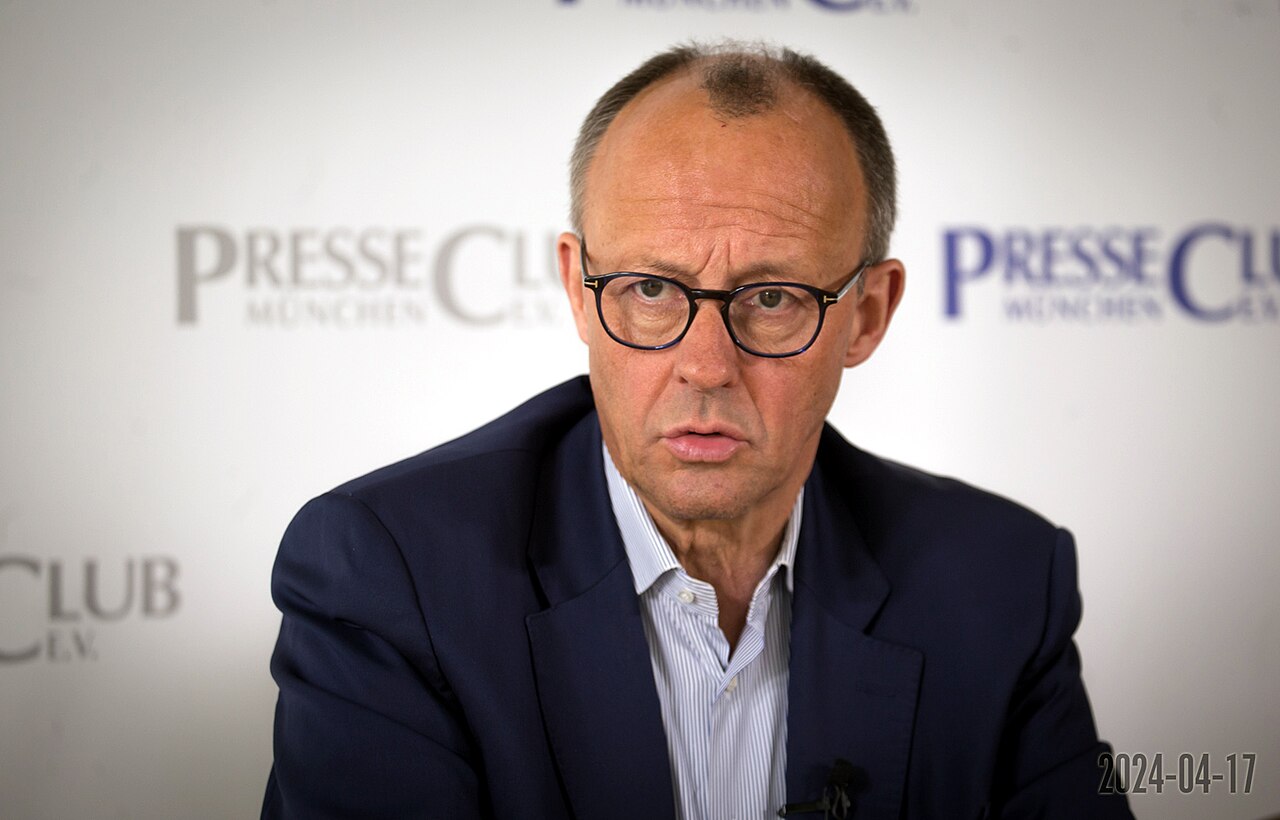
Germany's conservative party won the 2025 election to stop mass migration, then signed a coalition deal with the Social Democrats that gutted every promise. Now, for the first time, the party it vowed never to negotiate with leads it in national polling.
This unprecedented reversal marks a seismic shift in German politics just one year after Merz's CDU won the federal election with 28.5 percent of the vote.
The CDU campaigned explicitly on abolishing fast-track citizenship and ending federal refugee admission programs. Instead, Merz negotiated a coalition agreement with the SPD that suspended family reunification for subsidiary protection holders while maintaining open borders.
"The document bears the hallmarks of the election loser, the SPD," AfD co-leader Alice Weidel stated when the coalition deal was announced April 9, 2025. Chrupalla warned CDU voters their party was being "led by the nose" by its coalition partner.
The "Responsibility for Germany" agreement extended citizenship waiting periods to five years and suspended family reunification for migrants. But coalition documents obtained by multiple news organizations show it refused to enforce deportations beyond criminals and potentially dangerous persons to Syria and Afghanistan.
The political fallout arrived in last month's Rhineland-Palatinate state election. The AfD surged 11.2 points to capture 19.5 percent of the vote, winning 37 percent of workers and 21 percent of voters under 25. The CDU won the state but lost ground among its traditional demographic anchors.
"We are losing workers in a massive way, that is no coincidence but home-made," SPD state leader Benedikt Oster conceded after the March 22 election results.
Merz maintains the political firewall against the AfD remains unbreached. "We will not work together with this party. Period," the chancellor declared this month. "We must now, above all, make policy for the working population, for workers, but also for the middle class."
Yet Merz's own government classifies the AfD as a "confirmed right-wing extremist" threat. Germany's domestic intelligence agency, the BfV, issued a 1,100-page report last May asserting the party poses a danger to the country's "free democratic basic order."
A Cologne court ordered the BfV on Feb. 26 to pause its extremist designation pending a full legal review. U.S. Secretary of State Marco Rubio condemned the surveillance effort as "tyranny in disguise" when the classification was announced last May.
"Germany just gave its spy agency new powers to surveil the opposition. That's not democracy—it's tyranny in disguise," Rubio stated May 2, 2025. The German Foreign Office responded that right-wing extremism "needs to be stopped" based on historical lessons.
The political contradiction creates a deepening crisis for German democracy. The state claims it defends democratic values by surveilling a party that leads in national polls, while the governing coalition delivers the very policies that fueled voter anger.
"The AfD is an attack on Germany," SPD co-leader Lars Klingbeil argued last May. "They want a different country, they want to destroy our democracy."
Yet AfD politicians say they represent the neglected working class. "Whether in Baden-Württemberg or in the Rhineland: Nobody needs the SPD," AfD parliamentarian Sebastian Münzenmaier declared after the Rhineland-Palatinate results. "The party of the workers is AfD."
The AfD's polling surge accelerated after Merz formed his coalition government. The party first surpassed the CDU in an April 2025 Ipsos poll, reaching 25 percent to the CDU's 24 percent. By January 2026, the gap widened to 26 percent versus 23 percent.
State elections last month demonstrated the AfD's expanding geographical reach. Beyond its traditional eastern strongholds, the party nearly doubled its support in western Germany's Rhineland-Palatinate and gained 9.8 points in Baden-Württemberg.
"The CDU needs to consider that in the end it will once again be led by the nose by the SPD," Chrupalla warned during the Rhineland-Palatinate state election aftermath. "It must explain how it intends to pursue conservative, middle-class politics at all."
Political scientist Uwe Jun of the University of Trier notes Merz's domestic challenges. "His foreign policy presence may be really good, but he can only gain popularity and the federal CDU can only gain in polls if things go better domestically," Jun stated earlier this month.
The firewall against AfD cooperation shows increasing signs of structural fragility. An INSA poll this month shows 40 percent of Germans still oppose CDU-AfD cooperation, but 32 percent now support it—a significant shift from previous surveys.
The AfD's rise signals a broader realignment in European politics. American Majority CEO Ned Ryun observed the German election closely.
"I think you're really seeing is many people waking up and realizing how immoral their leaders are," Ryun stated last year. "The moral imperative of every national leader is to prioritize, protect and advance his or her people and nation's interests on every issue."
Merz did not lose to the AfD because voters turned radical. He lost because he stopped representing his own voters' values. The conservative party that promised border security now governs like the left it replaced.
Voters who chose the CDU to secure Germany's borders see their party delivering SPD immigration policies. They are not turning to moderates—they are turning to the party that still speaks their language.
The AfD's surge is not merely a protest vote. It is a political corrective, a response to conservative abdication. When mainstream parties abandon their principles, voters abandon them.