Judges Rule on Tariffs, President Strikes Back
The Supreme Court struck down Trump's $134 billion in tariffs, but conservative-appointed justices claimed authority for themselves. Trump retaliated with new global levies affecting American businesses and consumers.
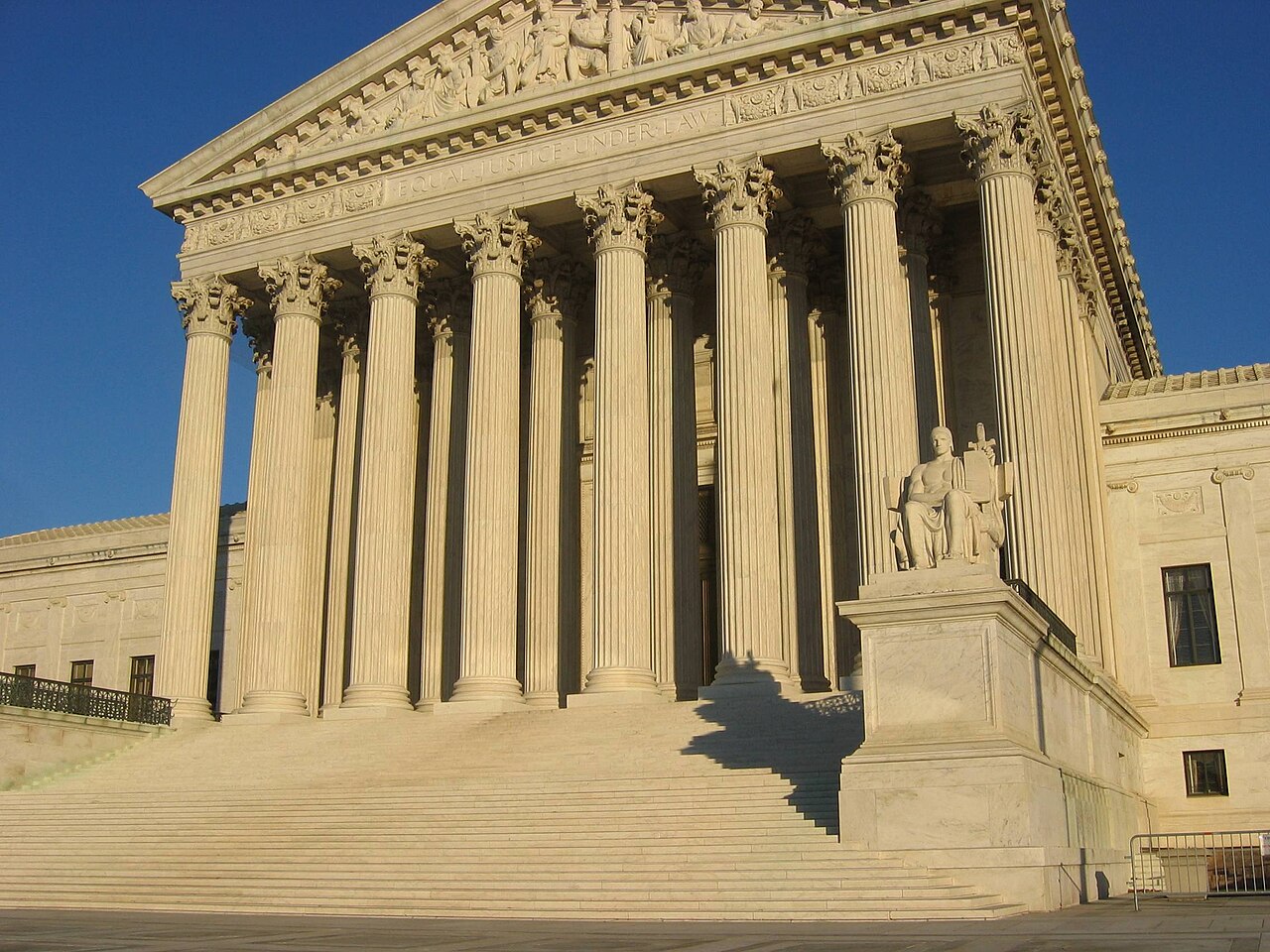
The Supreme Court stripped President Trump of his $134 billion in tariffs on Feb. 20, yet the ruling did nothing to restore congressional authority. Instead, six justices claimed that power for themselves, positioning unelected judges as the ultimate arbiters of separation of powers. The decision now forces American businesses and families to navigate a trade system rewritten by judicial decree. Chief Justice John Roberts wrote that Trump's invocation of the International Emergency Economic Powers Act represented an "extraordinary power" requiring clearer congressional authorization. Roberts asserted the Court alone determines what "clearly" means when interpreting statutes.
Conservatives expected the ruling to return tariff authority to Congress, where the Constitution places taxing power. Instead, the majority invoked the "major questions doctrine" to block executive action because three justices deemed the power too significant for delegation. Justice Neil Gorsuch concurred, stating "the Constitution lodges the Nation's lawmaking powers in Congress." Yet neither Gorsuch nor Roberts explained why the Court, not Congress, should judge which presidential actions qualify as "extraordinary."
Trump responded within hours by invoking Section 122 of the Trade Act of 1974 to impose 10 percent global tariffs. These new levies now apply to $1.2 trillion of imports, covering 34 percent of annual trade flows. The administration signaled intent to raise the rate to 15 percent. Section 122 tariffs expire July 24 without congressional extension, creating a 150-day window for unilateral presidential action.
"Two of the people that voted for that, I appointed, and they sicken me," Trump told a National Republican Congressional Committee dinner March 26. "They sicken me because they're bad for our country." He specifically targeted Gorsuch and Justice Amy Coney Barrett, his other appointee in the six-justice majority. "The Supreme Court, that's right, of the United States cost our country — all they needed was a sentence — our country hundreds of billions of dollars, and they couldn't care less."
The Court's decision triggered administrative chaos across the trade system. Trade experts estimate that the U.S. government could owe as much as $175 billion to businesses that paid IEEPA levies, with interest accruing at $650 million monthly. CBP official Brandon Lord told the Court of International Trade on March 6 the agency cannot comply with refund orders due to "unprecedented volume and technological limitations." More than 2,000 lawsuits seek refunds from importers including FedEx, Costco and Nissan North America.
Roberts claimed judicial restraint in his opinion, writing "We claim no special competence in matters of economics or foreign affairs." Yet the ruling's reasoning transforms the major questions doctrine from statutory interpretation tool to constitutional rule. Gorsuch and Barrett's concurrences treat the doctrine as separation-of-powers mandate, effectively empowering the Court as super-legislature deciding which presidential actions require explicit congressional blessing.
"Based on two words separated by 16 others in Section 1702(a)(1)(B) of IEEPA — 'regulate' and 'importation' — the President asserts the independent power to impose tariffs on imports from any country, of any product, at any rate, for any amount of time," Roberts wrote. "Those words cannot bear such weight." His analysis ignores that no previous administration attempted IEEPA tariffs in the law's 50-year history, suggesting Congress understood the statute's limits without judicial intervention.
The ruling's immediate effect is substituting one executive tariff authority for another. Section 122 requires no congressional approval to initiate and faces less scrutiny than IEEPA's emergency powers framework. The administration launched Section 301 investigations targeting excess manufacturing capacity in 15 countries plus the European Union and forced labor in 60 nations. These could yield permanent tariffs replacing temporary Section 122 levies.
Average effective tariff rates reached 7.7 percent in 2025, the highest since 1947 according to Tax Foundation analysis. With Section 122 at 10 percent, the rate climbs to 10.3 percent, adding approximately $600 annually per U.S. household. The administration argues tariffs strengthen economic and national security while generating revenue from trading partners "ripping us off for decades."
Justice Brett Kavanaugh dissented with Justices Clarence Thomas and Samuel Alito, warning the refund process "is likely to be a 'mess.'" Kavanaugh noted the ruling "might not substantially constrain a President's ability to order tariffs going forward" because other statutes authorize presidential action. His prediction proved accurate within hours of the decision.
"A republic of 350 million people turns on the political orientation of just five, unelected judges," wrote Jay Cost in the Washington Examiner March 5. "Not even the most aristocratic of the Founders would have concentrated so much power among so few." Cost argued the Court "had to swoop in to save checks and balances in Learning Resources, but only because it had meddled with the underlying law" by striking down legislative vetoes in earlier decisions.
No congressional action has emerged to reclaim tariff authority since the ruling. Section 122 requires House and Senate votes only for extension beyond July 24, leaving legislators reacting to presidential initiatives rather than setting trade policy. The ruling establishes precedent for future judicial interventions wherever the Court deems executive action "extraordinary" without clear statutory text satisfying justices' interpretation of congressional intent.
Justice Elena Kagan questioned the major questions doctrine as "so-called" in her partial concurrence, preferring resolution through "straight-up statutory construction." Her skepticism highlights divisions within the majority about how aggressively the Court should police separation of powers. Meanwhile, 20 state attorneys general challenge Section 122 tariffs in new litigation, ensuring continued judicial oversight of trade policy.
Trump's personal attacks on his appointees reflect broader conservative frustration with judicial assertiveness limiting executive authority. Roberts warned against such criticism in a March Rice University speech, citing increase in "dangerous" rhetoric toward judges. "The problem is that sometimes the criticism can move from a focus on legal analysis to personalities," Roberts said. "And that, frankly, can actually be quite dangerous."
The tariff ruling reveals fundamental tensions in conservative legal theory between originalist deference to constitutional text and practical constraints on presidential power. For now, the Court has appointed itself gatekeeper of executive authority while Congress remains passive. American businesses and consumers pay the price in delayed refunds, higher costs and constitutional uncertainty governed by five unelected justices.