Supreme Court Weighs End to Birthright Citizenship
The Supreme Court hears arguments April 1 on whether the 14th Amendment requires automatic citizenship for children born to undocumented immigrants and temporary visa holders.
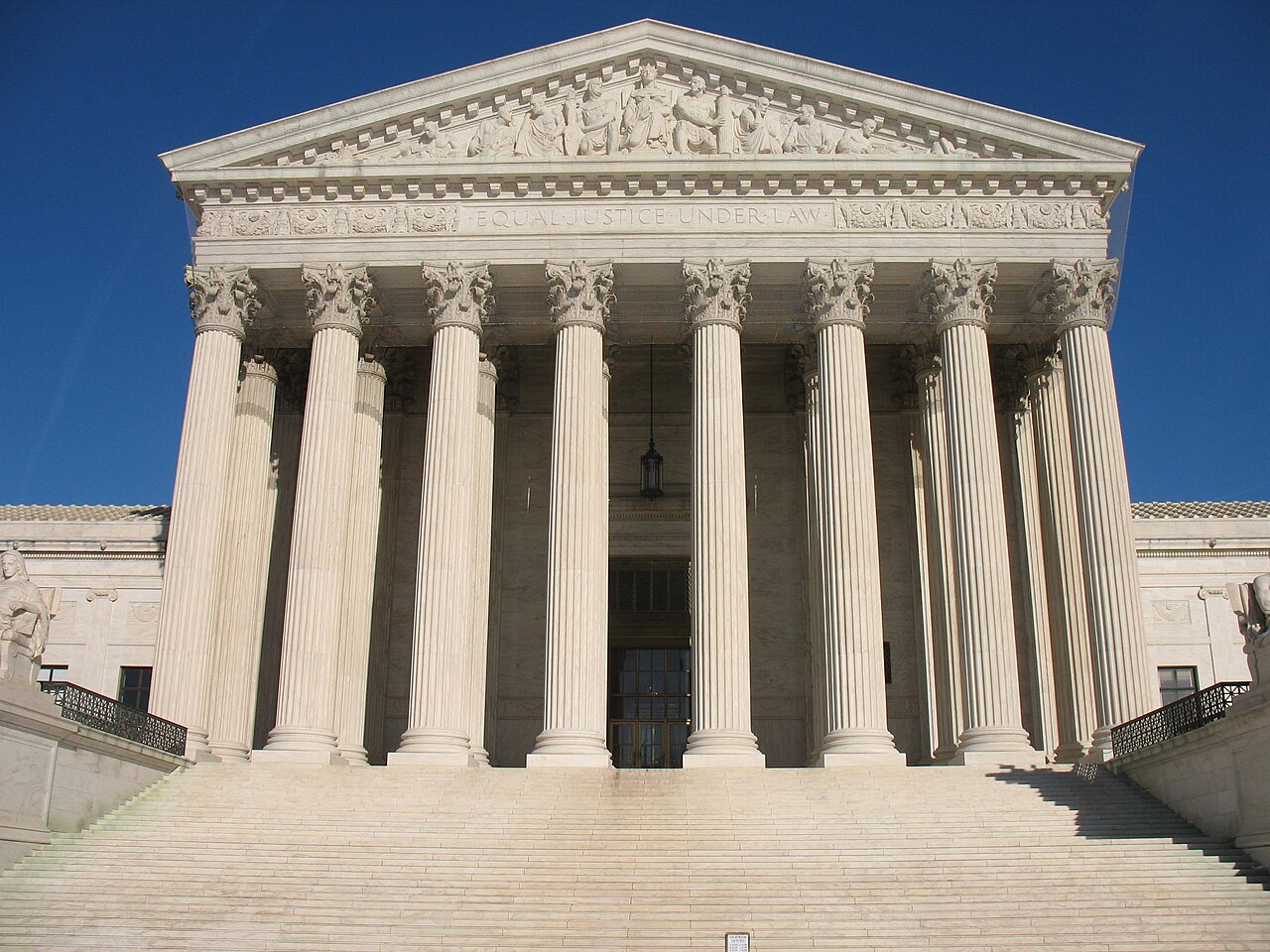
The Supreme Court will hear arguments April 1 in a case that could reshape American citizenship for children born to noncitizen parents. The justices will decide whether Executive Order 14160, signed by President Trump on his first day back in office, violates the 14th Amendment by denying automatic citizenship to children born to undocumented immigrants or temporary visa holders. This isn't about who these children are, but where their parents came from.
The case represents the most consequential immigration dispute in a century. A ruling expected by summer could permanently alter the definition of American citizenship and dismantle what the administration calls a decades-old legal myth. At stake is whether the Constitution's guarantee of citizenship to "all persons born or naturalized in the United States, and subject to the jurisdiction thereof" extends to those whose parents entered the country illegally or on temporary visas.
The 14th Amendment's Citizenship Clause was ratified in 1868 to overrule the Dred Scott decision and grant citizenship to freed slaves. The Trump administration argues the phrase "subject to the jurisdiction thereof" has always required full political allegiance to the United States, not mere physical presence. Solicitor General D. John Sauer will assert that undocumented immigrants "lack the legal capacity to establish domicile" in the country and owe "primary allegiance to their parents' home countries."
Executive Order 14160, which would have taken effect Feb. 20, 2025, blocks automatic citizenship for children born to undocumented immigrants or temporary visa holders if neither parent is a citizen or lawful permanent resident. Federal courts have unanimously issued injunctions preventing its implementation, with every lower court ruling the order unconstitutional. No court has sided with the administration's interpretation.
"The executive order restores the original meaning of the citizenship clause," Sauer stated in court filings. He contends it addresses children of "aliens who are temporarily present in the United States or illegal aliens" who cannot give the "direct and immediate allegiance" required by the Constitution. The administration argues birthright citizenship provides "powerful incentive" for women to "travel to the United States solely to acquire citizenship for their children."
Challengers led by the ACLU counter that the government seeks to "unilaterally rewrite the Constitution." Cecillia Wang, the organization's legal director, notes that "the federal courts have unanimously held that President Trump's executive order is contrary to the Constitution, a Supreme Court decision from 1898, and a law enacted by Congress." She asserts the "overwhelming consensus of historians and legal scholars" supports their position.
The case arrives as evidence emerges of systematic birth tourism operations. In 2019, Dongyuan Li pleaded guilty to conspiracy to commit visa fraud for running You Win USA. Last December, Michael Wei Yueh Liu and Jing Dong received 41-month sentences for running USA Happy Baby, a $3.4 million enterprise that arranged births for Chinese nationals. Peter Schweizer of the Government Accountability Institute testified that "over 1,000 birth tourism companies in China" facilitate such arrangements.
"Birth tourism is essentially an industry that provides concierge service," Schweizer told the Senate Judiciary Subcommittee. "They pay the firm roughly $100,000, they will transport them to the United States, arrange medical care, arrange citizenship for the child." He warned children raised in China could be indoctrinated in Communist Party values while retaining the ability to vote in American elections.
Approximately 150,000 children are born annually in the United States to noncitizen parents, according to Pew Research Center data. About 4.6 million American-born children under 18 live with undocumented immigrant parents. While estimates of birth tourism vary widely — from fewer than 2,000 to 39,000 babies annually — the industry exists, though visiting the U.S. while pregnant is not illegal; federal authorities say willfully misrepresenting the purpose of travel is visa fraud.
Public opinion reveals deep political divisions. Pew Research Center polling shows 94 percent of Americans support birthright citizenship for children of legal immigrants. The nation splits 50-49 percent on granting citizenship to children of undocumented immigrants. Seventy-four percent of Democrats and Democratic-leaning independents support the policy, compared with only 25 percent of Republicans and Republican leaners. Eighteen percent of White Republicans favor birthright citizenship for children of undocumented immigrants.
This demographic reality creates what conservative analysts describe as a powerful political incentive. Automatic citizenship for children of undocumented immigrants expands a demographic dependent on government benefits while creating future Democratic voters. The administration argues the current interpretation rewards illegal entry and creates a permanent, politically dependent class whose sole claim to membership is a birthplace accident.
Legal scholars note the Supreme Court has affirmed birthright citizenship before. In the 1898 Wong Kim Ark case, the justices ruled 6-2 that children born in the United States to Chinese immigrant parents were citizens. Justice Horace Gray wrote the 14th Amendment "affirms the ancient and fundamental rule of citizenship by birth within the territory, in the allegiance and under the protection of the country, including all children here born of resident aliens."
James Sample, a constitutional law professor at Hofstra University, argues "the path to revising that clause is laid out plainly in the document itself — not through executive decree, but through the arduous process of amending the Constitution." He notes undocumented immigrants "are fully subject to U.S. law" through taxation, work regulations, and potential removal proceedings.
The Trump administration counters that the Wong Kim Ark decision applied only to children of legal resident aliens, not those present illegally or temporarily.
If the Court accepts the administration's argument, it would reclaim what originalists call constitutional fidelity and restore what they view as the amendment's true intent. A ruling against the executive order would affirm judicial power to override what conservatives see as clear text, history, and precedent — turning citizenship into what they describe as a political bargaining chip.
The decision will determine whether children born each year to noncitizen parents receive automatic citizenship. It will define whether American identity derives from allegiance or accident of geography. And it will test whether the Constitution means what its framers wrote or what later generations wish it said.