Democrats Face Political Trap Over Iran War Hypocrisy
Resurfaced video of Nancy Pelosi's 2011 Libya comments exposes Democratic hypocrisy as party debates impeachment over Trump's Iran strikes despite identical legal circumstances.
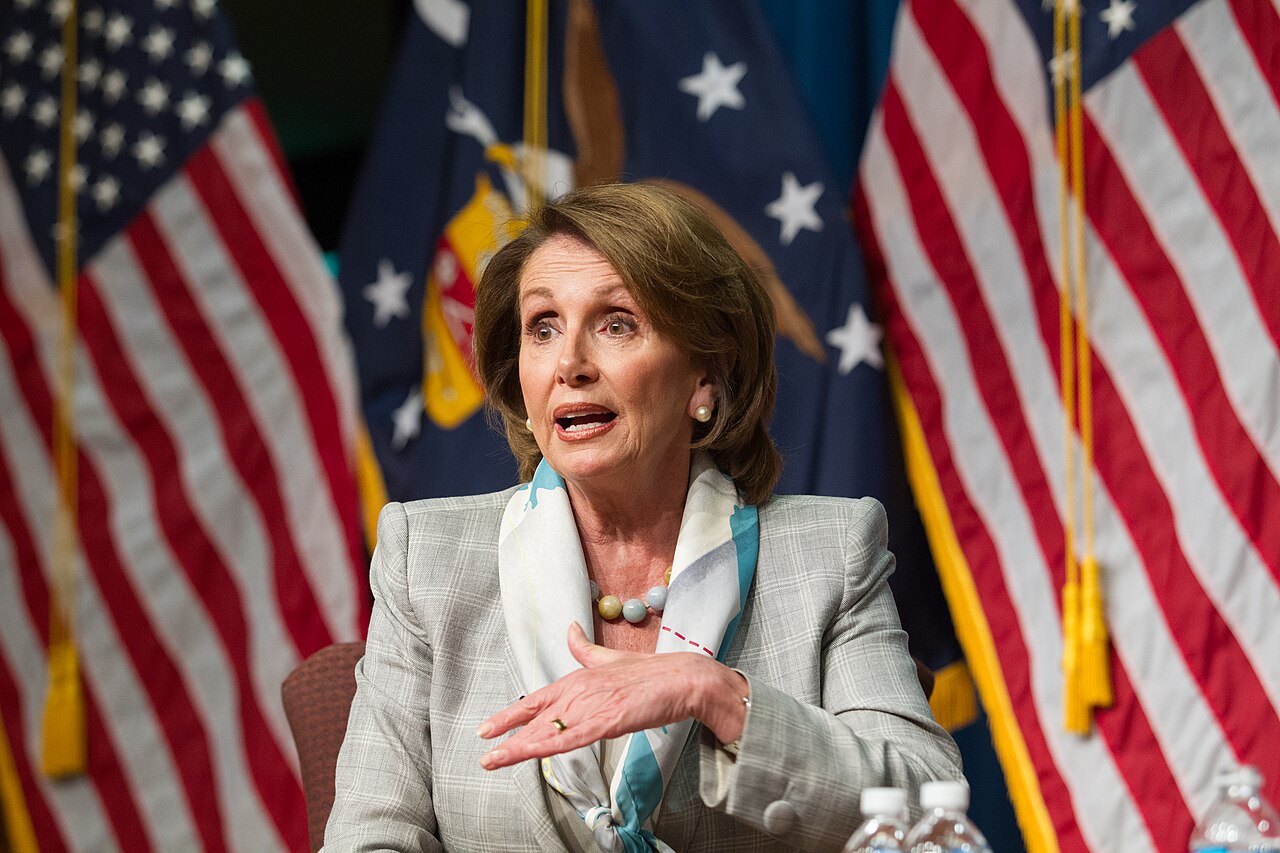
When Speaker Nancy Pelosi defended President Obama's 2011 Libya airstrikes without congressional authorization, she declared the president required no such permission. Now Democrats demand impeachment of President Trump over Iran strikes under identical legal circumstances. The contradiction has placed the party in an impossible political position.
Video evidence resurfacing shows Pelosi stating in 2011 that "the president did not need congressional authorization to launch unilateral attacks on Libya seeking regime change." This footage directly contradicts current Democratic outrage over Trump's Operation Epic Fury, which launched Feb. 28 and killed Iranian Supreme Leader Ali Khamenei. The inconsistency cuts to the core of Democratic messaging on war powers.
"The Libya strikes went on for seven months without congressional approval, without evoking the War Powers Act," Washington Examiner analyst Joe Concha told Fox Business's Evening Edit. "So hypocrisy, here you are, right here." The comparison exposes Democrats' shifting principles based solely on which party holds power.
Democrats now face a political trap with no easy exit. If Trump wins the Iran war quickly as he predicted April 2, Democratic opposition will appear as partisan sabotage of American success. If the conflict drags on, they risk looking like they predicted failure. Trump told the Financial Times on March 30 that 13,000 targets have been struck and told the nation April 2 the war could end in two to three weeks.
Senator John Fetterman of Pennsylvania voted against the resolution to limit Trump's military authority, joining Republicans. Only one Republican, Senator Rand Paul of Kentucky, supported the measure, illustrating extreme partisan division. The vote split Democratic unity even within its own ranks.
House Minority Leader Hakeem Jeffries criticized Trump's actions with stark language. "On the campaign trail, Donald Trump and Republicans promised not to get the American people into endless, failed, foreign, forever wars," Jeffries stated. "Yet, Donald Trump has just gotten America into an endless war that he acknowledges and plans to be endless." The charge contradicts Trump's stated timeline for victory.
Democratic leaders face internal division over impeachment. Progressive Representative Alexandria Ocasio-Cortez declared the strikes "absolutely and clearly grounds for impeachment." Yet Representative Maxine Waters told reporters, "I don't want to go there. I think that we're focused on what is happening in Iran. I think when we take control of the House we will consider that." The split reveals strategic paralysis at the party's highest levels.
The Senate blocked War Powers measures on March 4 with a 53-47 vote and again on March 18 along party lines. These votes occurred despite war costs reaching $18 billion by March 19. The fiscal burden compounds political questions about constitutional authority.
Representative Ro Khanna called Trump's actions unconstitutional with pointed criticism. "It's a slap in the face of the United States Congress," Khanna said. "The president has launched an illegal war when there is no imminent threat." Constitutional scholars will weigh these claims against historical precedents.
Republican strategist John Feehery analyzed the Democratic position with blunt assessment. "Democrats have one consistent theme: if Trump is for it, they have to be against it," Feehery observed. "If Trump cured cancer tomorrow, the Democrats would complain about how Trump has put all the oncologists out of work." The characterization reflects frustration with reflexive opposition.
Trump's approval rating stands at 39.7 percent with 56.6 percent disapproval per April 2026 Council on Foreign Relations data. Yet 61 percent of Americans consider Iran a "real national security threat" according to Fox News polling. Public opinion divides sharply on the war's necessity.
The political stakes escalate with midterm elections approaching. Democrats lead the generic congressional ballot by 5.5 points. The margin provides some cushion against potential war-related backlash.
White House messaging emphasizes decisive action with clear objectives. A April 2 White House release stated Trump's "clear and unchanging objectives drive decisive success against Iranian regime." The administration argues the 2001 Authorization for Use of Military Force covers operations against Iranian proxy networks. Legal justifications remain contested.
Senate Minority Leader Chuck Schumer criticized Trump's objectives with pointed questions. "We do not know Donald Trump's goals," Schumer said. "We do not know Donald Trump's timeline. We do not know what victory even looks like in his eyes." The uncertainty fuels Democratic arguments for congressional restraint.
The War Powers Resolution allows presidents 60 days of military action without congressional authorization before requiring approval. Obama's Libya operation lasted seven months without such approval. The precedent weakens Democratic claims of constitutional violation.
Representative Jamie Raskin addressed impeachment cautiously despite party pressure. "We're not afraid of impeachment or any other constitutional tool in our arsenal," Raskin said, "but we have learned that impeachment is no panacea." The statement signals strategic hesitation despite progressive demands.
Pentagon officials requested an additional $200 billion for war operations beyond the initial $18 billion spent by March 19. The conflict has closed the Strait of Hormuz, disrupting global oil trade and spiking gas prices above $4 per gallon nationally. American families feel the economic consequences in their daily lives.
Democrats must navigate messaging challenges with precision. Party identification stands at 49 percent leaning Democratic versus 39 percent leaning Republican according to first quarter 2026 Gallup data. The advantage offers room for tactical maneuvering.
Senator Rand Paul defended his pro-War Powers vote with constitutional reasoning. "The Constitution conferred the power to declare or initiate war to Congress for a reason," Paul argued, "to make war less likely." His lone Republican vote highlights conservative concerns about executive overreach.
The International Atomic Energy Agency found no evidence of a current nuclear weapons program when the war began. The White House cites Iranian ballistic missile capabilities and proxy networks as justification. The intelligence assessment shapes ongoing debate about necessity.
Democratic unity fractures between constitutional principle and political strategy. With Trump predicting imminent victory and Democrats facing primary challenges from progressive factions demanding impeachment, the party risks appearing unpatriotic if the war ends quickly or hypocritical if it continues. American families watching from home will remember whose side Democrats chose.