Reagan Star Wars Vision Finally Realized With Golden Dome Missile Shield
President Trump moves forward with $185 billion space-based missile shield, fulfilling Reagan's decades-old Star Wars vision with initial operations targeted for summer 2028.
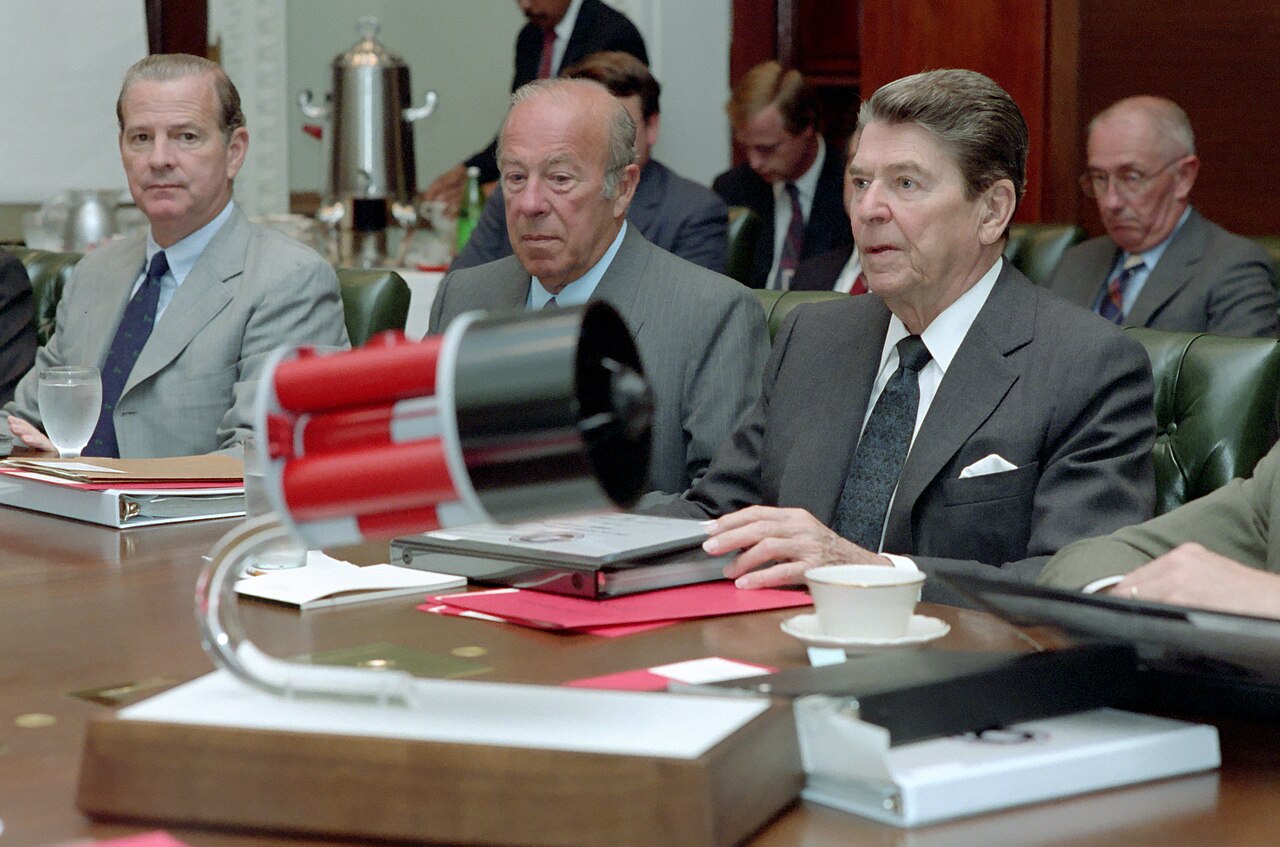
President Trump is making Ronald Reagan's vision real: a space-based missile shield that can intercept nuclear threats from anywhere on Earth, with initial operations targeted for summer 2028. The Golden Dome costs $185 billion and anchors a $1.5 trillion defense budget. American families will breathe easier knowing adversaries cannot launch strikes without consequence.
The FY2027 budget request, released April 2, dedicates $17.5 billion to launching the Golden Dome immediately. This historic commitment transforms Reagan's 1980s "Star Wars" concept into an operational shield. Of the $1.5 trillion total, only $400 million comes from the base budget—the remainder flows through a reconciliation bill.
Golden Dome layers multiple defenses against ballistic missiles, hypersonic weapons, and cruise missiles. Its four-layer architecture combines space-based sensing, ground radar arrays, space interceptors, and integrated command-and-control. "We recognized on day one that command and control was going to be our secret sauce," Gen. Michael Guetlein, Golden Dome director, told DefenseScoop March 17.
Lockheed Martin, RTX, Northrop Grumman, and Boeing lead the prime contractors, with emerging innovators Anduril Industries and Palantir Technologies building the software backbone. The Space Force awarded multiple secret contracts for space-based interceptor prototypes. American industry rises to meet the challenge of protecting the homeland.
Trump frames the system as an urgent strategic necessity. "While we have been focused on keeping the peace overseas, our adversaries have been quickly modernizing their nuclear forces," Gen. Michael Guetlein stated in a May 20, 2025 Washington Times report. He noted China and Russia are building ballistic missiles capable of reaching the U.S. within an hour at 6,000 miles per hour.
Trump signed Executive Order 14186 in January 2025, approving the architecture that May. Initial operational capability targets summer 2028, with full deployment extending through 2035. Anduril and Palantir begin software testing summer 2026. Every milestone brings the nation closer to operational reality.
Congress approved a $25 billion "down payment" through FY2026 reconciliation. The FY2027 request totals $1.5 trillion: $1.15 trillion in base funding plus $350 billion from reconciliation. Golden Dome's $17.5 billion allocation includes just $400 million in base budget support. Bipartisan support signals this initiative transcends ordinary political cycles.
Defense establishment support remains strong. "The design for the Golden Dome will integrate with our existing defense capabilities and should be fully operational before the end of my term, so we'll have it done in about three years," the president told the Washington Times in May 2025. Military leaders stand ready to execute the mission.
Congressional leaders are backing the initiative.
The program marks a generational shift in defense priorities. "For the last 40 years, we have found ourselves in a cycle where every 20 years or so, we prioritize homeland missile defense, make progress and then slide back into a new status quo," Sen. Deb Fischer (R-Neb.), Senate Strategic Forces Subcommittee chair, said. "Under the current Trump administration, we have the opportunity to make a generational leap forward."
Gen. Guetlein addressed cost concerns directly. "They're not estimating what I'm building," he stated March 17. The general understands the stakes exceed spreadsheet calculations.
This marks the largest defense budget in modern American history—a 44 percent increase over previous spending levels. The Golden Dome initiative breaks the long-standing cycle of prioritizing missile defense then retreating. Military strength remains the foundation of free markets and free peoples.