US Marines Ready As Kharg Island Gambit Enters Critical Phase
Five thousand Marines await orders as President Trump considers seizing Iran's main oil terminal in a high-stakes move to force reopening of the Strait of Hormuz.
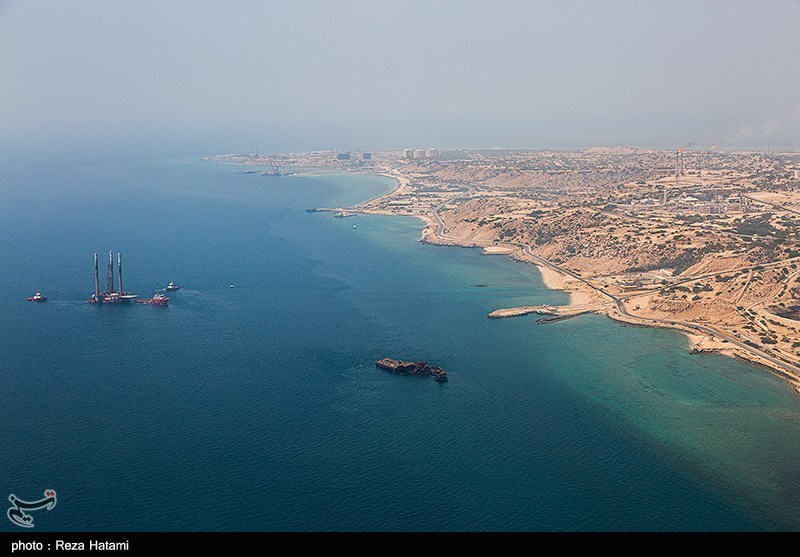
Five thousand U.S. Marines and two thousand paratroopers stand poised in the Persian Gulf as President Trump weighs seizing Kharg Island, the Iranian oil terminal handling 90 percent of the nation's crude exports. The decision could end five weeks of war or escalate the conflict dramatically.
"Maybe we take Kharg Island, maybe we don't," Trump told the Financial Times on March 29. "We have a lot of options." The president escalated his rhetoric the next day on Truth Social, warning, "If the Hormuz Strait is not immediately 'Open for Business,' we will conclude our lovely 'stay' in Iran by blowing up and completely obliterating all of their Electric Generating Plants, Oil Wells and Kharg Island."
The stakes extend beyond military calculations. American families wait at home while their service members hover in the Persian Gulf, ready to deploy on orders that could reshape the region's energy landscape.
Kharg Island sits just 15 to 21 miles off Iran's coast in the northern Persian Gulf. The 20-square-kilometer strategic asset handles approximately 90 percent of Iran's crude oil exports.
Military assets already positioned include the 31st Marine Expeditionary Unit aboard USS Tripoli and elements of the 11th Marine Expeditionary Unit. They join approximately 2,000 paratroopers from the 82nd Airborne Immediate Response Force, ready to deploy within 18 hours. Additional reports indicate up to 10,000 more troops may join the 50,000 American forces already in the Middle East theater.
Supporters argue seizing Kharg Island delivers maximum leverage to end the conflict quickly. "If the plan is to win a war against Iran, then taking Kharg Island should be one of the central missions of the conflict," says Francis A. Galgano, Villanova University professor of military geography. "It provides the U.S. with enormous leverage in any negotiations."
Sen. Lindsey Graham (R-S.C.) echoes the confidence. "We did Iwo Jima, we can do this," Graham told Fox News. "My money's always on the Marines."
Analysts at the Foundation for Defense of Democracies warn the operation carries substantial risks despite its initial feasibility. "A combination of Marines, Army airborne troops, and special operations forces could likely seize Kharg Island relatively quickly," wrote FDD analysts Ryan Brobst and Cameron McMillan in a March 25 assessment. "However, the real problems for U.S. forces would likely start once they are on the island, where they would face considerable force protection and sustainment challenges."
The experts concluded, "Seizing and occupying Kharg Island is more likely to expand and prolong the war than to deliver any sort of decisive victory."
Iranian officials issue stark warnings against any invasion attempt. Speaker of Parliament Mohammad Bagher Ghalibaf declared on March 25 that his country would "rain down fire" on invading U.S. forces. "The enemy signals negotiation in public, while in secret it plots a ground attack," Ghalibaf stated. "Do not test our resolve to defend our land."
The economic stakes escalate daily as the conflict enters its fifth week. Brent crude prices surged from approximately $74 per barrel before hostilities to $112-119 per barrel. U.S. gasoline prices reached a national average of $3.99 per gallon. The Strait of Hormuz, normally handling 140 commercial vessels daily, sees near-zero traffic during the blockade.
Trump acknowledged the potential long-term commitment required. "It would also mean we had to be there for a while," he told the Financial Times. White House Press Secretary Karoline Leavitt reinforced the administration's resolve, stating, "President Trump does not bluff and he is prepared to unleash hell."
A potential signal emerged when Iran agreed to allow 20 oil tankers through the strait. The move followed a U.S. Central Command bombing raid on Kharg Island March 13 that destroyed more than 90 military targets while intentionally sparing oil infrastructure.
Retired Gen. Joseph Votel, former CENTCOM commander, cautions about the logistical anchor such an operation creates. "We can do anything if we prioritize it," Votel told Stars and Stripes. "When you start putting troops on the ground, then you really become anchored in terms of the support that you have to provide them."
The decision now rests with a president who has made maximum pressure the cornerstone of his foreign policy. Every Marine in the Persian Gulf knows their moment of truth could arrive at any hour.