DOJ Leverages Shooting to Force Ballroom Lawsuit Dismissal
Following Saturday's assassination attempt at the Washington Hilton, the Justice Department demands a preservationist group drop its ballroom lawsuit, citing presidential safety concerns as Republicans rush to authorize the $400 million security facility.
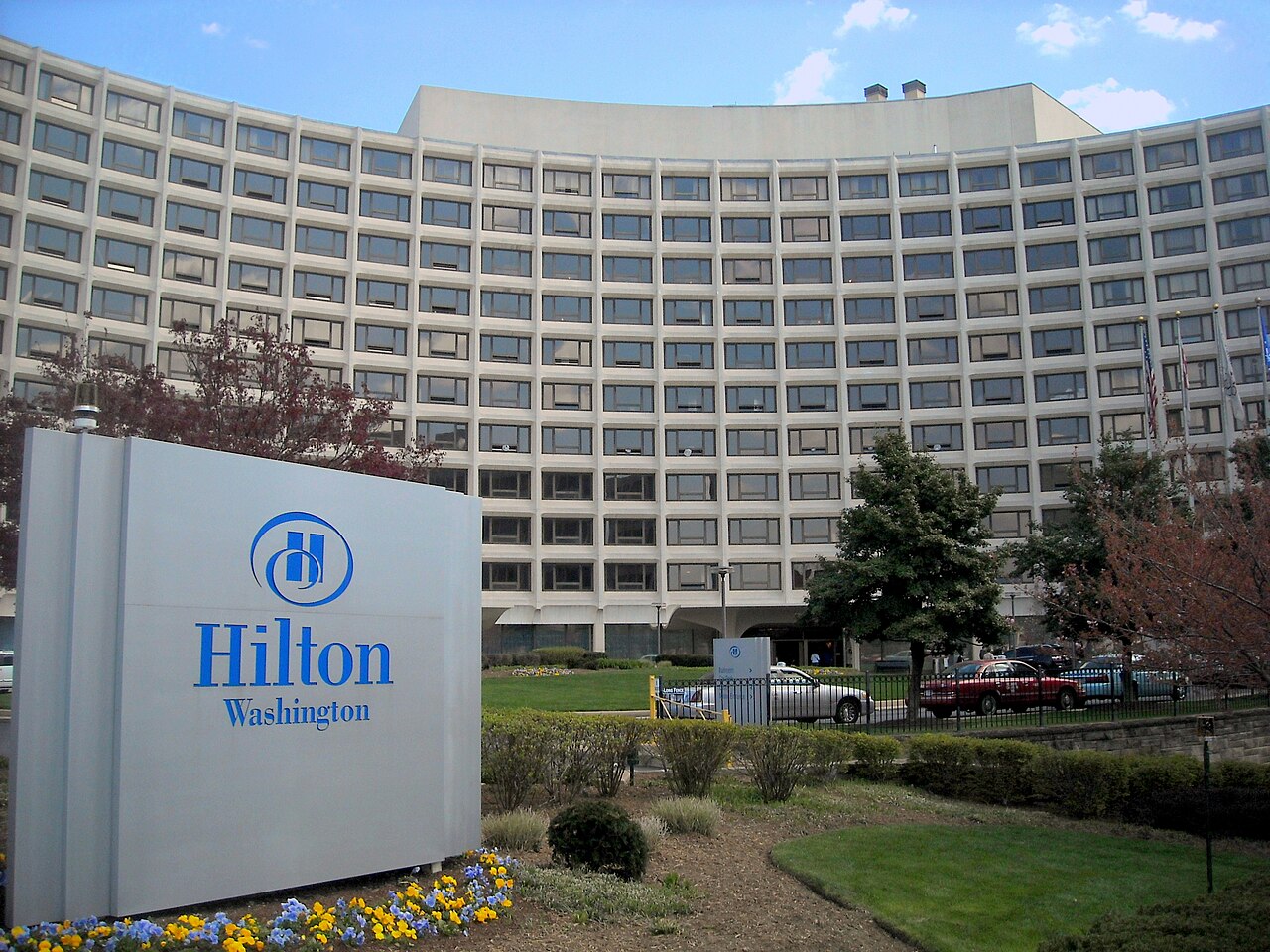
President Trump, Vice President Vance and top cabinet members fled the Washington Hilton on Saturday as gunfire rang out, an evacuation that could never have occurred inside the secure White House ballroom under construction.
The Justice Department is seizing on the assassination attempt to pressure preservationists into dropping their lawsuit blocking the $400 million project. Acting Attorney General Todd Blanche frames the legal challenge as a direct threat to national security, arguing a single person's aesthetic complaint cannot justify delaying a secure facility for the president.
The April 25 shooting underscores a stark reality. Entrenched elites prioritize bureaucratic technicalities while the line of succession faces demonstrable threats. Suspect Cole Tomas Allen, 31, charged with attempting to assassinate the president, breached security at the off-site venue that lacks the protections of a purpose-built White House facility.
"This event would never have happened with the Militarily Top Secret Ballroom currently under construction at the White House," Trump stated Sunday. "It cannot be built fast enough!" The president confirmed First Lady Melania Trump is "doing great" after the attack.
Despite the DOJ's direct request, the National Trust for Historic Preservation refuses to dismiss its case. National Trust President Carol Quillen insists the suit "endangers no one" and merely asks the administration to follow the law. Attorney Gregory Craig maintains congressional authorization remains necessary, asserting Saturday's event "does not change" constitutional requirements.
"This lawsuit is on behalf of a single person who walks in the vicinity of the White House once a month and expects to dislike the East Wing's new design," Blanche countered. "The passing aesthetic gripe of a single person cannot possibly justify delaying the construction of a secure facility for the President to do his job."
Republican lawmakers across both chambers are accelerating legislation to authorize and fund the 90,000-square-foot facility. Senators Lindsey Graham, Katie Britt and Eric Schmitt introduced a bill seeking $400 million in federal funding offset by customs fees. Senator Tim Sheehy announced a fast-track approval measure, while Senator Rand Paul proposed alternative legislation using private funding.
House Speaker Mike Johnson voiced support for the ballroom concept, noting its seven-inch thick glass and on-site security advantages. "The ballroom will be a solution for this, because it will be on the most secure compound in the world," Johnson stated. "We need a place like that."
Democratic opposition frames the ballroom as unnecessary extravagance. House Minority Leader Hakeem Jeffries dismissed it as a "vanity project" while Senator Brian Schatz argued against reinforcing all public events. Only Senator John Fetterman, who attended the dinner, publicly supports construction, urging opponents to "drop the TDS."
The DOJ's nine-page motion filed Monday labels the National Trust lawsuit "frivolous" and attributes it to "Trump Derangement Syndrome." Assistant Attorney General Brett Shumate warned preservationists in a Sunday letter that their obstruction puts presidential safety at "grave risk."
"I hope yesterday's narrow miss will help you finally realize the folly of a lawsuit that literally serves no purpose except to stop President Trump no matter the cost," Shumate wrote.
The legal battle centers on whether Trump exceeded his authority by demolishing the East Wing last October without congressional approval. U.S. District Judge Richard Leon issued an injunction blocking above-ground construction in March, but the D.C. Circuit Court stayed that order pending a June 5 hearing.
White House Press Secretary Karoline Leavitt emphasized the ballroom's national security importance. "The line of succession in this country should be able to gather free and safely without the fear of threats or political violence," she stated.
The project, with capacity for 1,000 people, includes underground military bunkers and Secret Service annexes. Its $400 million cost has doubled from original estimates, with funding mechanisms dividing even Republican ranks seeking to address the 73-day Department of Homeland Security shutdown.
As the D.C. Circuit prepares to hear arguments, the administration argues the ballroom represents not luxury but necessity. The shooting at the very type of off-site venue the ballroom would eliminate highlights what officials call a dangerous disconnect between preservationist priorities and presidential protection. The president's family stood in the blast zone of that very disconnect Saturday night.