Supreme Court Weighs Whether Judges Can Block Immigration Terminations
The Supreme Court hears arguments Wednesday on whether federal judges can override immigration decisions Congress left to the executive branch, a ruling that determines the fate of roughly 350,000 Haitians and 6,100 Syrians.
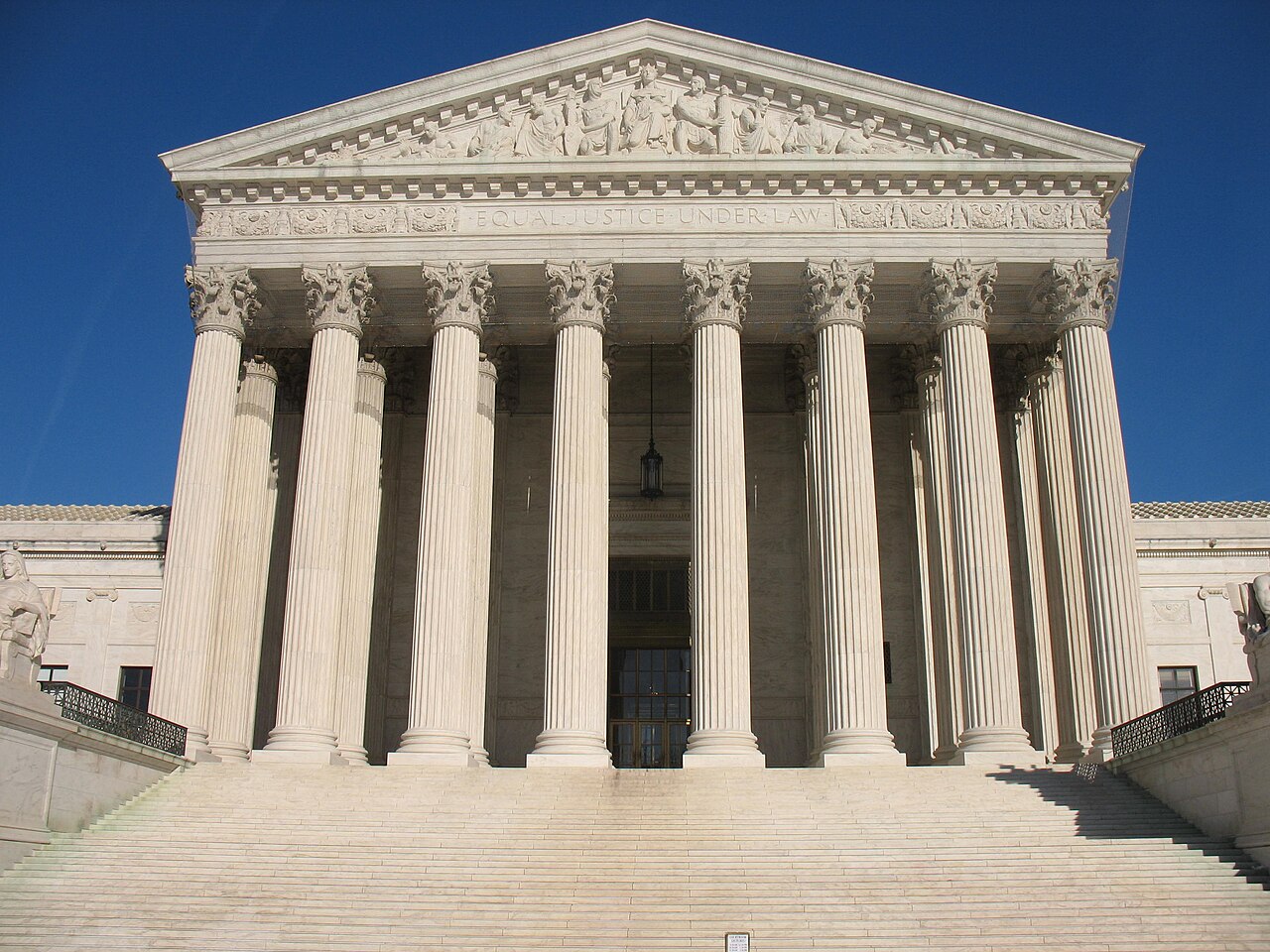
Roughly 350,000 Haitians and 6,100 Syrians will learn Wednesday whether the Supreme Court allows federal judges to override immigration decisions that Congress explicitly left to the executive branch — a ruling that could reshape the entire Temporary Protected Status program.
The consolidated cases, Mullin v. Doe and Trump v. Miot, present a fundamental separation-of-powers question. Can the judiciary indefinitely stay executive enforcement of immigration policy, or does the statute's explicit bar on judicial review mean courts have overstepped? Oral arguments on April 29 will test whether the Trump administration has the authority Congress granted to end TPS designations, or whether federal judges can block those terminations.
Congress created TPS in 1990 through Title III of the Immigration Act. The statute states clearly: "There is no judicial review of any determination of the Secretary with respect to the designation, or termination or extension of a designation, of a foreign state." The DHS secretary may designate or terminate a country's TPS based on armed conflict, natural disaster, or other "extraordinary and temporary conditions." Designations last 6 to 18 months and can be repeatedly extended — Congress never capped the number of extensions.
DHS Secretary Kristi Noem terminated TPS for Syria on Sept. 22, 2025, effective Nov. 21, and for Haiti on Nov. 28, 2025, effective Feb. 3, 2026. The cases were originally styled after Noem but changed after Senator Markwayne Mullin was confirmed as DHS Secretary on March 23 in a 54-45 vote. Solicitor General D. John Sauer will represent the administration with 40 minutes of argument time.
Two federal judges blocked the terminations despite the statute's explicit bar on judicial review. Judge Ana Reyes blocked the Haiti TPS termination on Feb. 2 in an 83-page opinion finding it "substantially likely" that Noem preordained the decision because of "hostility to nonwhite immigrants." Judge Katherine Polk Failla blocked the Syria TPS termination, finding challengers "likely to succeed" on their Administrative Procedure Act claim.
The administration argues the TPS statute bars judicial review of the secretary's designation decisions entirely. "The Trump administration is restoring integrity to our immigration system to keep our homeland and its people safe, and we expect a higher court to vindicate us in this," a DHS spokesperson stated. The administration contends Noem did consult with the State Department and that the decisions are "plausibly related to the national interest and foreign-relations justifications."
Challengers counter that the statute bars review of a "determination" on the merits, not procedural violations. Lawyers for Haitian challengers argue Noem failed to adequately consult with other agencies — Haiti involved "a three-sentence email exchange" and Syria involved no consultation with State at all. The National TPS Alliance argues a Trump administration win "would amount to the largest de-documentation of lawful immigrants in U.S. history."
Economic impacts loom large in the case. An April 14 economists' amicus brief signed by over 20 economists, including three Nobel laureates, argues terminating all 17 TPS designations would shed over 660,000 domestic jobs for more than four years, reduce GDP by over $45 billion annually, and cause federal tax revenue to fall by over $9 billion annually. Haitian TPS holders alone generate $5.9 billion annually and pay $1.56 billion in taxes.
Country conditions for both nations remain perilous. The State Department classifies Haiti as "Level 4: Do Not Travel" — its highest risk designation. Gangs control most of Port-au-Prince, and the FAA extended its ban on U.S. aircraft operating in Haiti due to safety concerns. Syria remains classified as a state sponsor of terrorism, and the administration argues civil and criminal recordkeeping issues make vetting Syrians "virtually impossible," despite the ouster of Bashar al-Assad in 2024.
The stakes extend beyond these two nations. DHS has already moved to terminate TPS for 13 of 17 countries and must decide on the remaining four — Lebanon, El Salvador, Sudan, and Ukraine — between May 27 and October 19, 2026. The Supreme Court already allowed the administration to end TPS for Venezuelans through an emergency order last year. A ruling for the administration would effectively enable termination of the remaining four designations without judicial interference.
Conservative policy experts argue a ruling affirming executive authority would bring needed clarity. "Affirming that the executive branch can stop and start TPS with limited court oversight would bring much-needed clarity to this corner of immigration law," said Charles Lane of the American Enterprise Institute and The Free Press. He noted Congress created TPS as the Cold War was ending, when lawmakers "failed to foresee that humanitarian catastrophes and failed states would be chronic, not 'extraordinary,' circumstances."
Lora Ries of the Heritage Foundation stated: "Many on the left just want this to be a form of amnesty, to stay here permanently. The statute authorizes the secretary to terminate, and yet every time this president tries to terminate, he's sued." James Rogers of America First Legal echoed the administration's position: "The statute vests unreviewable determination of the secretary to make these decisions."
The Supreme Court granted certiorari before judgment on March 16 — an unusual procedure signaling the Court views the question as requiring immediate resolution. A ruling is expected by late June or early July and will set precedent for how the remaining TPS terminations proceed. The consolidated cases will be argued together Wednesday, with the first argument beginning at the start of the day. For 350,000 Haitians and 6,100 Syrians, the wait for answers may be over.