French Court Overrules Police, Allows Muslim Brotherhood Gathering Over Easter
A French administrative court overturned a police ban Friday, allowing the Muslim Brotherhood's largest European gathering to proceed over Easter weekend despite terrorism concerns cited by Interior Minister.
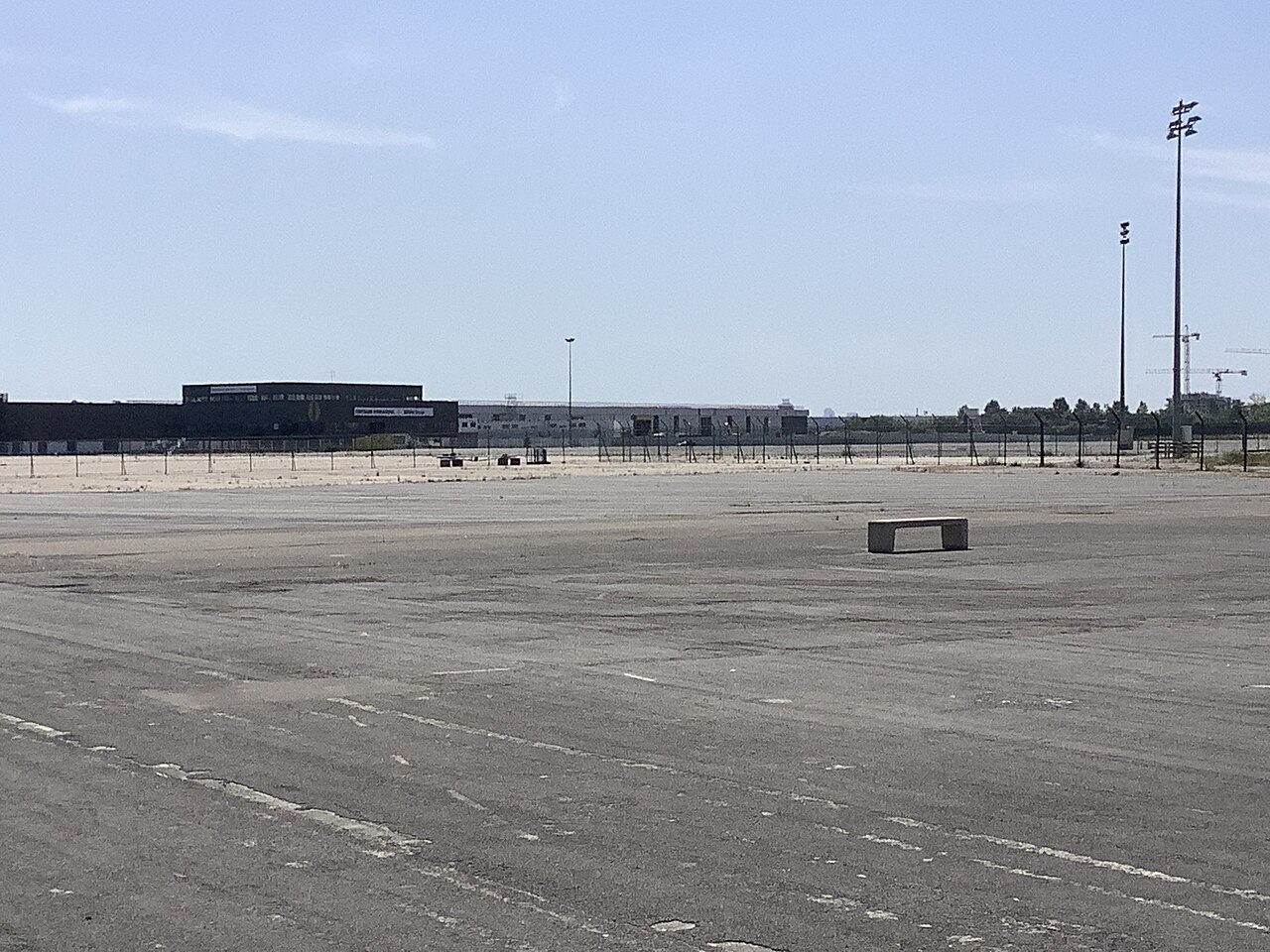
A French administrative court overturned a police ban Friday, allowing the Muslim Brotherhood's largest European gathering to proceed over Easter weekend. Interior Minister Laurent Nunez had blocked the event, citing a recent attempted bombing in Paris as evidence of terrorist threats. The ruling came just hours before families, worshipers, and activists were scheduled to descend on Le Bourget.
The Paris Administrative Court suspended the ban on April 3, two hours before the scheduled 14:00 opening. The 40th Annual Gathering of Muslims of France will now continue through the Christian holy weekend at the Le Bourget Exhibition Center. Judges ruled police evidence "did not establish the risk of counter-demonstrations, or that the gathering would be targeted by far-right groups."
This decision underscores a growing tension between security priorities and civil liberties in modern France. As Easter observances begin, thousands will gather under what courts deem protected assembly rights while the government warns of Islamist threats.
The organizing group, Musulmans de France, represents the largest Islamic organization in the country. A May 2025 French government report formally identified it as "the national branch of the Muslim Brotherhood in France." French officials state the movement seeks to impose Sharia law through political means.
Interior Minister Nunez requested the ban, citing terrorist threats in a "particularly tense international and national context." He specifically pointed to the March 28 failed bomb attack on a Bank of America office in Paris. French prosecutors linked that attack to the pro-Iranian HAYI group.
The court noted previous editions at Le Bourget held during tense times, including after the 2015 Paris attacks, proceeded without incident. Police arguments about resource strain during the Easter weekend were dismissed after organizers promised extra security.
The ruling creates stark institutional tension within France's political landscape. The National Assembly voted January 22 by 157-101 to urge the European Union to list the Muslim Brotherhood as a terrorist organization. Rapporteur Éric Pauget described it as a "political movement" whose goal is to "establish Sharia law over the law of the Republic."
France has spent years battling what its government labels "political Islam," including forced veiling, unaccredited Islamic schools, and parallel Sharia courts. Yet the court now protected a Brotherhood-affiliated gathering over the Christian Easter weekend.
The Muslim Brotherhood's organizational reach in France is extensive. Government data shows MF controls 139 formally affiliated mosques, with 68 closely aligned. The group operates 21 schools serving more than 4,000 students identified as affiliated or sympathetic.
Imam Hassen Chalghoumi, an outspoken critic of radical Islam who visited Israel in July 2025, supported the original ban. "Faced with security threats and risks of disturbances to public order, this decision demonstrates a true sense of responsibility, clarity, and political courage," he told the Jerusalem Post before the court ruling.
MF President Makhlouf Mameche defended his organization against the government's characterization. "They've made Islam into a monster," he told Hyphen Online in January. "They talk about the headscarf, the abaya, the beard. They take bits and make a monster. Islam isn't that."
The gathering had not been held since 2019. It functions as both a cultural-religious conference and trade fair with commercial stalls.
The court decision comes amid heightened security concerns across Europe. The HAYI group emerged in March 2026, claiming responsibility for attacks on Jewish sites in Belgium, the Netherlands and Britain. Security analysts note these attacks follow patterns consistent with Iranian hybrid warfare tactics.
French authorities arrested a suspect in the Bank of America bombing case. Prosecutors say the attack methodology aligns with HAYI operations, which target Western financial institutions and Jewish community sites.
Interior Minister Nunez is preparing new anti-separatism legislation for cabinet presentation at the end of April. The law aims to address gaps in previous legislation, including the inability to control collective childcare in Muslim structures.
"There are still some structures which we have been unable to reach," Nunez told a radio station. "One issue is how we control collective childcare. We need to be able to control it, but right now we can't."
The National Assembly vote on January 22 saw support from the government, center, center-right, and Rassemblement National parties. Only La France Insoumise and the Communist Party opposed the resolution calling for EU terrorist designation.
Éric Pauget, who authored the Assembly report, noted 10 percent of mosques opened over the last decade are affiliated with or close to the Muslim Brotherhood. Terror listing would enable freezing of funding and facilitate information exchange between states.
The court case demonstrates how France's secularist legal framework, when tested by judicial activism, can protect the very movements it was designed to contain. The government's own 2025 report warned the Brotherhood poses a "threat to national cohesion" requiring action to stop "political Islamism."
Civil rights lawyer Sefen Guez Guez, who represented MF in court, called the original ban "a clear violation of freedom of assembly." He characterized the court victory as "a victory for the rule of law."
The tension reflects broader European concerns about political Islam. Florence Bergeaud-Blackler, president of the European Centre for Research and Information on Brotherism, warned the Brotherhood is "a subversive ideology that uses democratic institutions against democracy."
The ruling arrives following municipal elections held in March 2026, with polarized debates about religious expression and secular values dominating political discourse. Anti-Muslim acts increased 75 percent in the first half of 2025 compared to 2024, according to French Interior Ministry data.
Interior Minister Nunez's new legislation will face similar legal challenges as it seeks to expand state control over religious structures. The government aims to complement its 2021 anti-separatism law with stronger mechanisms against what it calls "Islamist separatism."
As the gathering unfolds over Easter, French families and communities remain divided on how to balance liberty with security. The court's decision to prioritize assembly rights over security concerns during Easter weekend highlights the complex balance between civil liberties and state security in contemporary France. As the Muslim Brotherhood continues its political project within legal frameworks, French institutions remain divided on how to respond.