Ukraine's Battlefield Becomes World's AI Weapons Laboratory
Ukraine's survival imperative drives the world's fastest drone warfare innovation, transforming battlefield necessity into a global military revolution that threatens to leave Western powers behind.
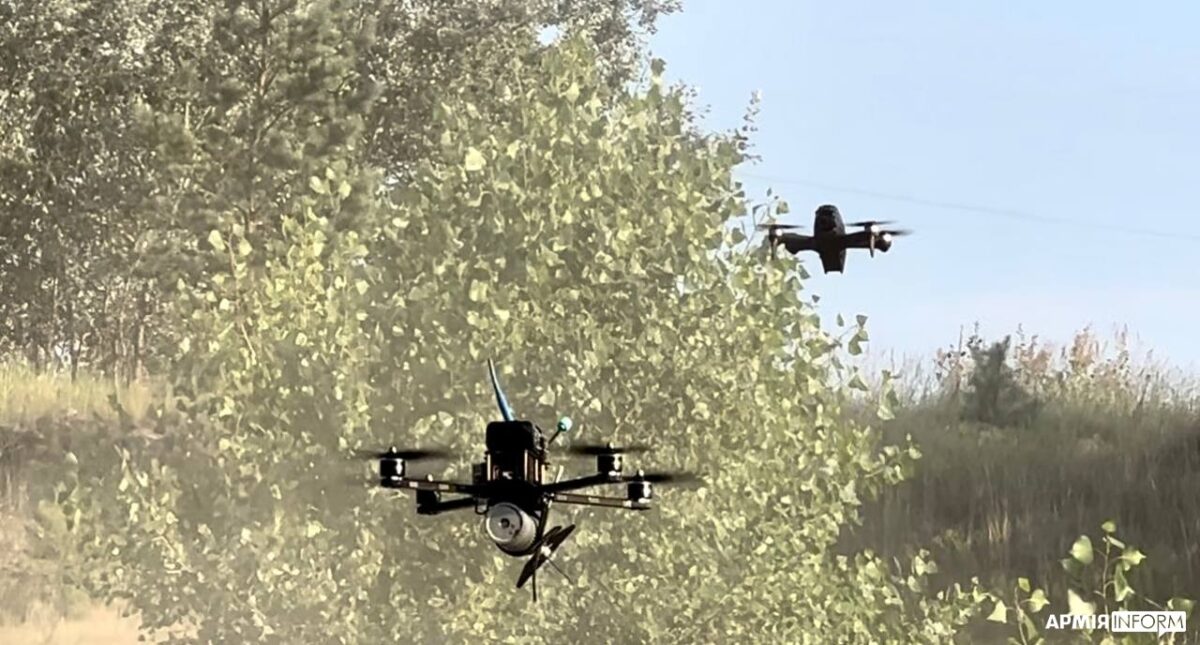
In December 2024, a Ukrainian brigade launched the world's first successful unmanned air-and-land assault near Lyptsi in the Kharkiv region. Coordinated swarms of drones overran Russian positions without a single infantryman advancing. This marked a historical inflection point where autonomous warfare crossed from theory to reality.
Russia's 2022 invasion forced Ukraine to innovate at unprecedented speed. The country transformed from seven drone manufacturers to over 500 companies in four years. Battlefield necessity drives this revolution faster than any peacetime bureaucracy could allow.
Drones now account for approximately 80 percent of combat casualties on both sides. Ukraine produces approximately 4 million drones annually, with a target of 7 million in 2026. The country has built a Universal Military Dataset containing over two million hours of drone footage, feeding AI systems that detect approximately 12,000 enemy targets weekly.
Key technologies fueling this transformation include The Fourth Law's TFL-1 terminal guidance, Swift Beat's Bumblebee quadcopter, and NORDA Dynamics' Underdog autonomy module. These systems operate in complete radio silence to defeat Russian jamming. They navigate independently to human-selected targets.
"The technology is very close," Oleksandr Liannyi, cofounder of NORDA Dynamics, told reporters regarding full autonomy. "The drone can notify you when it sees the target, and then you can pull up the picture and approve it, so you can control lots of drones simultaneously."
Partial autonomy already deploys across 30 Ukrainian military formations. The next step involves machines selecting targets within pre-authorized "kill boxes" with human supervisors rubber-stamping decisions at machine speed. Swift Beat, founded by former Google CEO Eric Schmidt, has logged thousands of autonomous combat flights against Russian targets with its Bumblebee system.
Ukraine's production capacity could reach 2,000 interceptor drones daily with sufficient financing. The country produced 40,000 interceptor drones in January 2026 alone. Ukrainian manufacturers project $2 billion in defense exports this year, potentially reaching $10 billion within five years.
The country sent more than 200 counter-drone experts to the Middle East to assist the United States, Saudi Arabia, Qatar, United Arab Emirates and Kuwait. Defense Minister Mykhailo Fedorov announced in March that Ukraine opened its battlefield data program. Allies can now train their AI models on real combat footage.
"The future of warfare belongs to autonomous systems," Fedorov stated. "Ukraine has accumulated what is essentially a universal military dataset. Partners gain the opportunity to train their AI models on real data from modern warfare while Ukraine gains faster progress in the development of autonomous systems."
International Humanitarian Law does not explicitly prohibit fully autonomous weapons. Rules require that weapons distinguish soldiers from civilians and allow humans to halt or adjust attacks. U.S. defense policy discussions debate a shift from "human-in-the-loop" to "human-on-the-loop" supervision.
"Within five to ten years, it may become unethical to use weapons without AI," Yaroslav Azhnyuk, founder of The Fourth Law, argues. He states autonomous precision systems could cause less collateral damage than human-operated alternatives.
"Autonomy is the single most impactful defense technology of this century," Azhnyuk said. "The moment this happens, you shift from a manpower challenge to a production challenge, which is much more manageable."
Retired General David Petraeus warns Western militaries have not adapted sufficiently. "I don't think that any military in the world has learned sufficiently from Ukraine about what is required to deal with the kind of drone threat posed by Russia," Petraeus stated. "The United States has not adapted fast enough."
U.S. Defense Secretary Pete Hegseth issued a January 2026 memo calling for widespread AI integration across the military. He demanded AI companies make technology available for unrestricted use. The Pentagon scrambles to catch up as Ukraine exports its hard-earned lessons.
Contrasting motivations drive the innovation gap. "Many American companies are driven by money," Pavlo Yelizarov, commander of Ukraine's air-defense forces, told reporters. "For them, it's a job. We have another component at play: the need to survive. That's why we are moving faster."
Ukraine's market-driven approach proves more effective than state-controlled alternatives. Private companies now form autonomous air defense units. Carmine Sky's Sky Sentinel turret downs drones over Kharkiv, with 13 more companies following suit.
The war accelerates a military revolution that threatens to leave slower-moving Western powers behind. As Ukrainian systems integrate into NATO doctrine and Middle Eastern defenses, the lessons from this real-world laboratory reshape global military strategy.
Swarm technology represents the next frontier. "Swarm technology would provide a major advantage to Ukraine," Oleksandr Kamyshin, advisor to the president on strategic issues, said. "In my belief, yes... both countries are close. None got there yet."
Ukraine's battlefield innovation demonstrates that survival, not ideology or profit, remains the ultimate driver of technological advancement. The country's rapid adaptation offers a blueprint for future conflicts where autonomous systems dominate the battlefield.