Trump Declares NATO Era Over After Allies Refuse Iran War Support
After European allies refused to support America's Iran military operations, President Trump declared NATO's post-WWII framework finished, forcing a structural reckoning with decades of asymmetric burden-sharing.
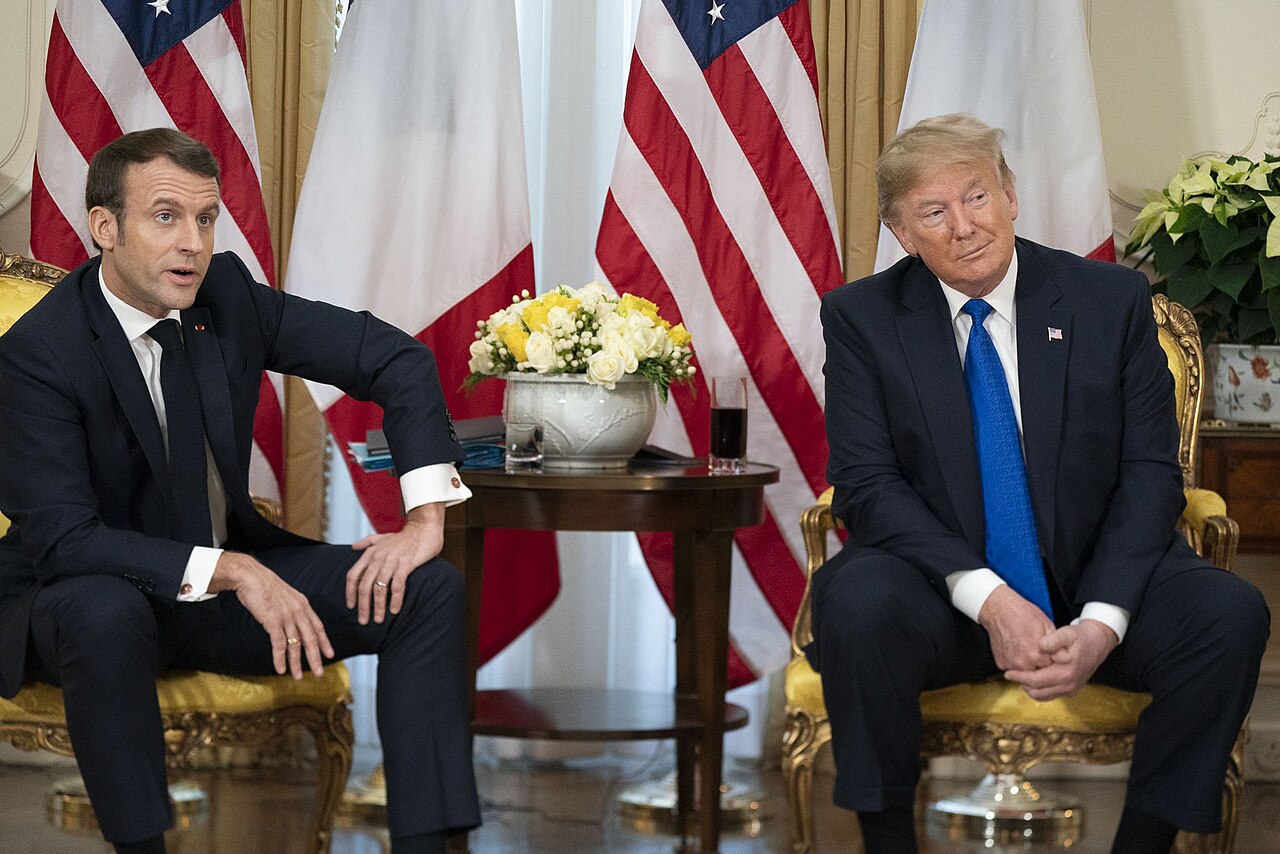
When President Trump declared on April 14 that "NATO wasn't there for us, and they won't be there for us in the future," he spoke not as a politician but as a nation's leader drawing a line. The statement marked the end of the post-WWII Atlantic alliance framework where America underwrote European security while allies reserved judgment on U.S. conflicts. This represents a structural reckoning with decades of asymmetric burden-sharing, not impulsive rhetoric.
The rupture emerged from documented refusals by key NATO allies to support America's military operations against Iran. Britain, France, Spain, Italy, and Germany all declined to join the U.S. blockade of the Strait of Hormuz, which carries 20 percent of global oil supplies.
"U.S. forces maintain maritime superiority in the Middle East," CENTCOM commander Adm. Brad Cooper stated April 14 as the blockade entered full effect. But European allies stood apart from the operation that began April 13 following failed peace talks in Islamabad.
British Prime Minister Keir Starmer made his position clear in a BBC interview April 13. "We're not supporting the blockade," he said. "My decision has been very clearly that whatever the pressure, and there's been some considerable pressure, we're not getting dragged into the war."
French President Emmanuel Macron announced a separate "strictly defensive mission" that explicitly excludes the United States. "This strictly defensive mission, distinct from the belligerents, will be deployed as soon as the situation allows," Macron posted on X.
Spain blocked U.S. aircraft from using its airspace and denied access to bases at Rota and Morón. Italy refused landing permission for U.S. aircraft en route to Middle East combat operations. German Defense Minister Boris Pistorius declared, "This war is not our war, we did not start it."
The collective refusal came despite America bearing 60 percent to 62 percent of NATO's total defense spending. The United States contributed more than $860 billion of NATO's $1.4 trillion defense budget in 2025 while European nations and Canada supplied approximately $574 billion.
"Nato is a one-way street," Secretary of State Marco Rubio told Fox News' Hannity program, framing the alliance's operational asymmetry.
European leaders now actively prepare for a post-American NATO structure. Macron and Starmer will host a Paris conference Friday to organize a Hormuz navigation restoration mission that excludes the U.S., Israel and Iran as "belligerent" nations.
The Wall Street Journal reported European officials work on "European NATO" contingency plans to restructure alliance command-and-control away from U.S. reliance. France's central bank liquidated remaining gold reserves held in the United States.
This mutual restructuring follows Trump's consistent NATO criticism. "Oh yes, I would say [it's] beyond reconsideration," Trump told The Telegraph April 1. "I was never swayed by NATO. I always knew they were a paper tiger."
Trump reinforced that position April 8 on Truth Social. "NATO wasn't there when we needed them, and they won't be there if we need them again," he posted. "Remember Greenland, that big, poorly run, piece of ice!!!"
Congress enacted binding statutory language in late 2023 prohibiting unilateral U.S. withdrawal from NATO without two-thirds Senate approval. "Any unilateral U.S. exit from NATO would be both strategically reckless and blatantly illegal under current law," Rep. Raja Krishnamoorthi stated.
But Trump's public pressure creates political reality that statutory language cannot fully contain. European contingency planning signals allies expect American disengagement regardless of congressional constraints.
The Iran conflict that triggered the transatlantic rupture now approaches resolution. Trump told Fox News' Maria Bartiromo April 16 the war is "close to over." Trump declared the Strait of Hormuz "permanently open" hours after imposing the blockade.
NATO Secretary-General Mark Rutte described European allies as "a bit slow, to say the least" in providing support. Rutte praised Trump's "bold leadership and vision" at a Reagan Institute event in Washington on April 16.
The alliance faces structural transformation as America shifts toward sovereignty-first foreign policy. European nations now confront the reality Trump articulated: allies who sat out America's conflict cannot expect America's protection.