Twelve Million Unscreened Visas, Four Deadly Attacks, One Broken System
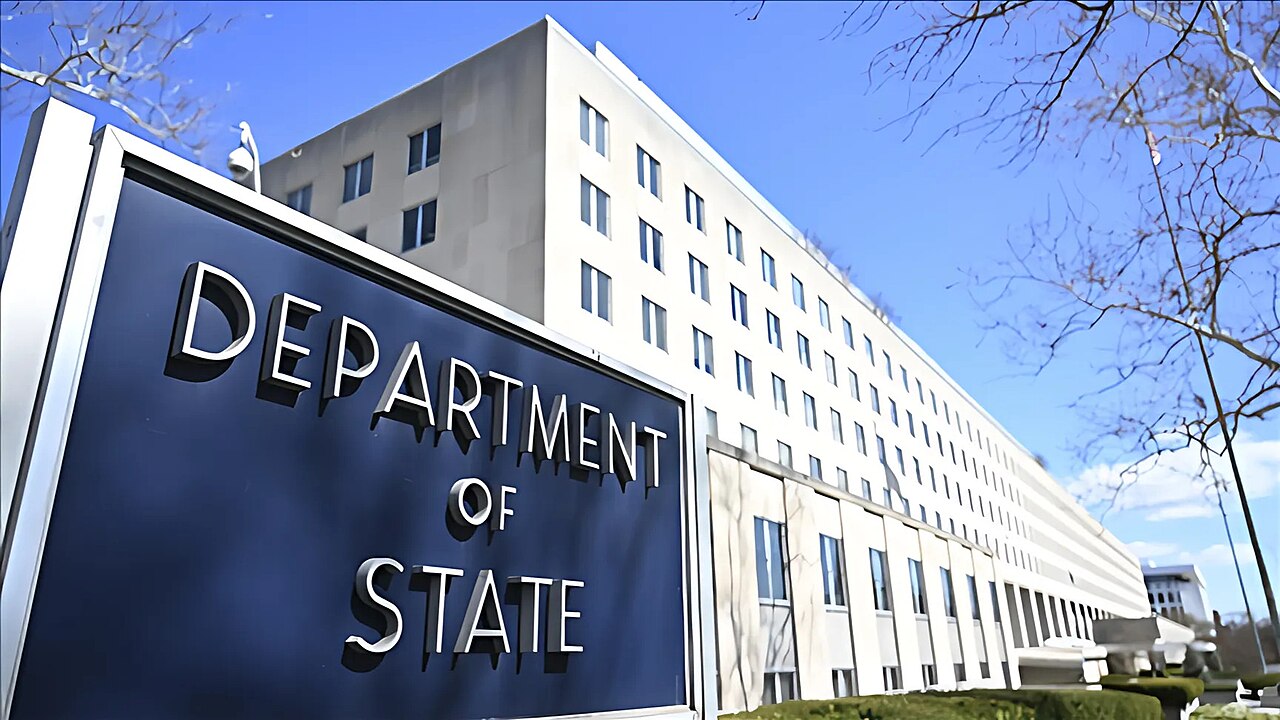
Federal watchdogs discovered the State Department issued more than 12 million visas without in-person interviews or fingerprints between 2020 and 2024—while four deadly attacks by immigrants killed American citizens and wounded dozens more.
On March 1, Senegalese-born naturalized citizen Ndiaga Diagne opened fire outside an Austin beer garden wearing a "Property of Allah" sweatshirt. He killed three people and wounded 14 before police shot him. Eleven days later, former Virginia National Guard member Mohamed Jalloh, a Sierra Leonean naturalized citizen convicted of ISIS material support, killed an Old Dominion University ROTC instructor while shouting "Allahu Akbar."
That same March 12, Lebanese-born naturalized citizen Ayman Ghazali rammed a gasoline-filled truck into a Michigan synagogue where more than 100 children were present. U.S. Attorney Jerome Gorgon stated Ghazali "acted under Hezbollah's direction and control." In November 2025, Afghan evacuee Rahmanullah Lakanwal ambushed and killed National Guard member Sarah Beckstrom in Washington D.C. after entering through Operation Allies Welcome.
Four attacks. Four deaths. Dozens wounded. All by immigrants who entered the United States through a screening system designed to catch Cold War-era threats like Communists and Nazis rather than Islamist terrorists who have now struck in Austin, Norfolk, Michigan, and Washington D.C.
Federal watchdogs discovered the State Department issued more than 12 million visas without in-person interviews or fingerprints between 2020 and 2024. The immigration vetting system remained designed to catch Cold War-era threats like Communists and Nazis rather than Islamist terrorists.
This structural misconfiguration of U.S. immigration screening enabled multiple terrorist attacks by immigrants across the country this year. The system failed to identify Islamist extremist threats because its protocols still targeted outdated ideological profiles, according to federal inspectors general and expert analysis.
A September 2025 Department of Homeland Security Inspector General report documented the systemic failure. "Between March 2020 and March 2024, the Department of State issued more than 12 million nonimmigrant U.S. visas without conducting in-person interviews or collecting fingerprints," the report found. Customs and Border Protection officers at ports of entry were unaware these individuals had not been fully screened.
The Afghan evacuation program revealed similar gaps. A June 2025 Justice Department IG report identified 55 Afghan evacuees on terrorist watchlists. DHS Deputy Inspector General Craig Adelman testified in January 2026 that his agency "could not demonstrate that it accurately knew who individuals were, where they were located, whether parole conditions were being met, or whether individuals had unresolved risk indicators."
Heritage Foundation expert Simon Hankinson explained the ideological blind spot. "Authorities are looking for Communists and Nazis, not Islamic fanatics...people who believe in Sharia law," he stated. Dan Cadman, a retired INS and ICE official at the Center for Immigration Studies, noted vetting procedures "have not captured Islamist/adversarial/subversive ideologies among family members and close associates."
The FBI determined the Michigan synagogue attack was "a Hezbollah-inspired act of terrorism purposely targeting the Jewish community." Ghazali had created a Facebook album titled "Vengeance" with Hezbollah imagery and purchased an AR-style rifle, 300 rounds of ammunition, and $2,200 worth of fireworks before his attack. His brother was a Hezbollah commander killed in an Israeli airstrike days before the assault.
Jalloh, the ODU shooter, had been sentenced to 11 years in 2017 for attempting to provide material support to ISIS but was released in December 2024. He was a devoted follower of Anwar al-Awlaki, the Al-Qaeda in Arabian Peninsula leader killed in 2011. Students subdued and killed Jalloh after he shot their instructor.
Diagne, the Austin attacker, had entered the U.S. on a B-2 tourist visa in 2000 and obtained a green card through marriage in 2006. Authorities found photos of Iranian leaders at his home and a Quran in his car. The FBI is investigating the shooting as a potential act of terrorism with "indicators that indicate potential nexus to terrorism."
Lakanwal, the D.C. shooter, had served with CIA and U.S. forces in Kandahar before being paroled into the U.S. in September 2021. He applied for asylum in December 2024 and was granted it in April 2025, just seven months before his attack on National Guard members.
The pattern extends beyond these four cases. On June 2, 2025, Egyptian national Mohamed Sabry Soliman firebombed a pro-Israel rally in Boulder, Colorado, injuring eight people. He had overstayed his visa and was in the U.S. illegally at the time of the attack. In October 2024, Afghan national Nasir Ahmad Tawhedi was arrested for plotting an ISIS-inspired Election Day terror attack; he pleaded guilty in June 2025.
Federal officials now acknowledge the system's structural flaws. The DHS OIG report noted that what began as a COVID-19 emergency measure continued long after the public health emergency ended in May 2023. A National Security Council agreement in November 2023 actually expanded the interview waiver program despite the security risks.
The Trump administration has implemented aggressive corrective measures. The State Department revoked more than 100,000 visas in 2025, a 150 percent increase over 2024's 40,000 revocations. DHS has arrested 1,416 known or suspected terrorists and removed 1,392 of them. A continuous vetting program now monitors all 55 million valid U.S. visa holders.
In August 2025, U.S. Citizenship and Immigration Services issued new guidance requiring officers to weigh heavily any "support or espousal of terrorist group views, anti-Americanism, and Jew-hatred." The policy shift directly addresses the ideological screening gap that enabled previous attacks.
High-profile enforcement actions demonstrate the new approach. ICE arrested Hamideh Soleimani Afshar, niece of slain Iranian General Qasem Soleimani, on April 3-4 after Secretary of State Marco Rubio revoked her green card. She had celebrated attacks on Americans and referred to the United States as the "Great Satan." On the same day, ICE detained Salah Salem Sarsour, president of the Islamic Society of Milwaukee, for allegedly lying about a prior conviction in Israel for throwing a Molotov cocktail at Israeli military homes.
USCIS spokesperson Matthew Tragesser stated the administration's philosophy clearly. "America's benefits should not be given to those who despise the country and promote anti-American ideologies," he said. The agency is conducting a re-review of approved benefit requests for aliens from high-risk countries who entered after January 20, 2021.
The administration's response includes travel restrictions on 19 countries with full or partial entry bans, extended to 20 additional countries. USCIS paused all pending asylum and benefit applications from high-risk countries in December 2025. Congress has introduced the Preserving a Sharia-Free America Act, which would amend immigration law to render "advocates for the imposition of Sharia law" inadmissible and removable.
USCIS continues to implement policies that "root out anti-Americanism," according to Tragesser. The agency's strengthened screening subjects prospective students and visitors to social media vetting. Separately, the State Department issued guidelines in June 2025 instructing consular officers to look for "any indications of hostility toward the citizens, culture, government, institutions, or founding principles of the United States."
The four attacks this year followed years of systemic failures that allowed millions to enter without proper screening while the vetting system remained focused on threats from a bygone era. As the administration works to correct these deficiencies, the human cost of the misconfigured system continues to mount.