Maryland Bans Glock-Style Handguns to Curb Illegal Switches, Lawsuit Follows
Maryland signs sweeping ban on Glock-style pistols effective Jan. 1, 2027, targeting firearms susceptible to illegal machine gun conversion devices. Gun rights groups immediately file constitutional challenge, arguing the law punishes lawful owners instead of prosecuting criminals.
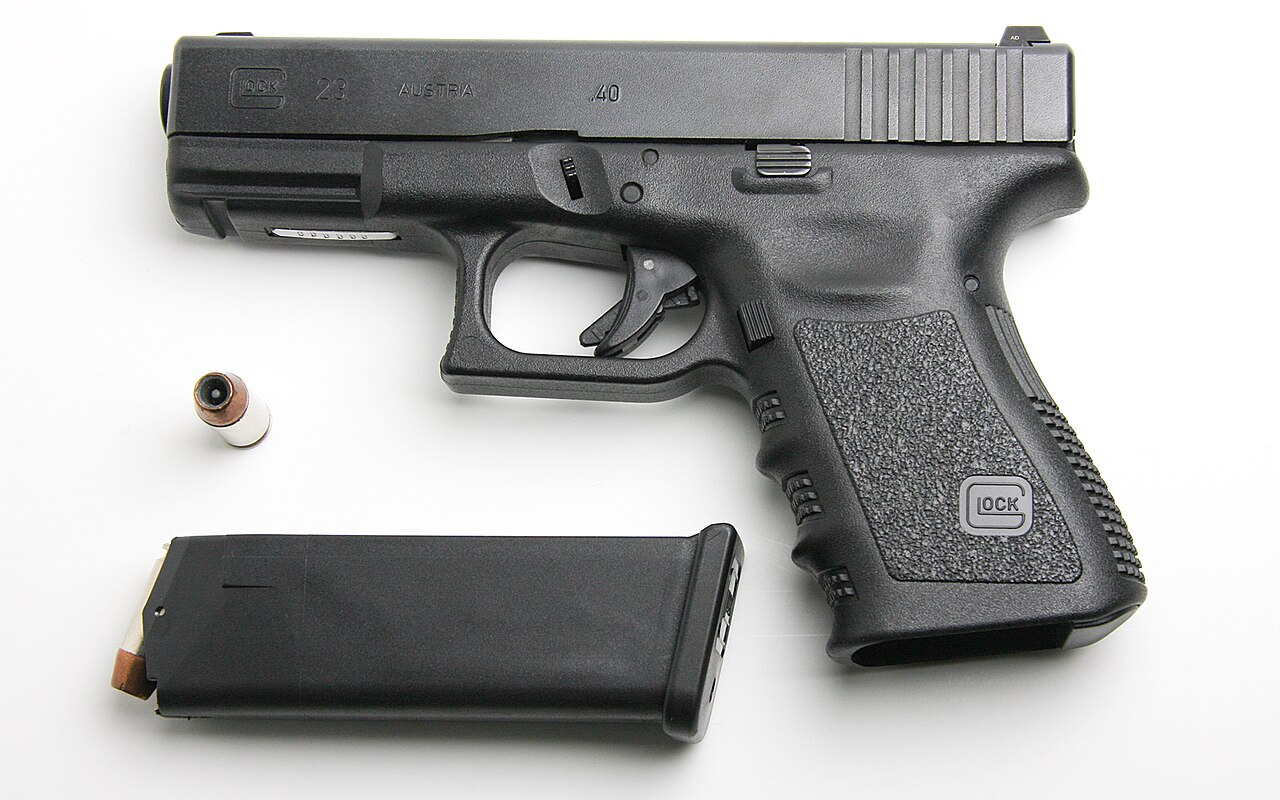
Maryland Governor Wes Moore signed SB 334 into law May 26, effectively banning Glock-style semiautomatic pistols statewide from Jan. 1, 2027. The measure targets common handguns to address illegal machine gun switches, a device already criminalized under federal and state statutes. Instead of prosecuting criminals who attach the illegal devices, the law punishes lawful buyers who simply own them.
Hours after the signing, the National Rifle Association, Firearms Policy Coalition and Second Amendment Foundation filed a consolidated federal lawsuit challenging the ban. The case, NRA v. Moore, argues the prohibition violates the Second Amendment under Supreme Court precedents Heller and Bruen. The law defines "machine gun convertible pistols" by their cruciform trigger bar design, a mechanism that covers nearly every Glock and Glock-style handgun on the market.
Glock switches are already illegal felonies under federal law, carrying up to 10 years imprisonment and $250,000 fines. Maryland law also prohibits the devices, with penalties of up to 3 years under the rapid-fire activator statute (§ 4-305.1), or up to 10 years for machine gun possession (§ 4-405), and up to 20 years when used in a violent crime (§ 4-404).
"To borrow on a line from James Carville, whom Democrats revere, 'it's the criminal, stupid,'" said Lawrence G. Keane, NSSF senior vice president and general counsel. "These bills, and similar laws passed in other states, punish law-abiding citizens by infringing on their Second Amendment rights to legally obtain the firearms they choose to protect themselves and their families against criminals who, by definition, have no respect for life or law."
The ban exempts active and retired law enforcement officers, who may keep and purchase the same firearms Maryland deems too dangerous for civilians. Glocks are used by 40 to 65 percent of U.S. law enforcement agencies, according to industry data.
"We're essentially telling a private company how they have to manufacture their legal product so that it cannot be illegally manipulated by a third party actor," said Rep. Jason Buckel, the House Republican leader.
Maryland Democrats pursue a contradictory dual strategy against the firearms manufacturer. Attorney General Anthony Brown and Baltimore Mayor Brandon Scott sued Glock under the state's Gun Industry Accountability Act in February 2025, seeking to hold the company liable for pistols easily converted to automatic fire. The legislative ban criminalizes those same products 15 months later.
Brown acknowledged in a May 6 legal opinion that courts could view the measure as a "back door ban" on commonly used firearms. The Supreme Court's Bruen decision requires new gun regulations to fit America's historical tradition of firearms regulation, making bans on entire classes of popular handguns nearly impossible to sustain.
"With a single stroke of his pen, Gov. Wes Moore has banned one of the most popular handguns in America," said John Commerford, NRA Institute for Legislative Action executive director. "Instead of going after criminals and enforcing existing laws, he has chosen to disarm law-abiding Marylanders and strip them of their constitutional rights."
Bureau of Alcohol, Tobacco, Firearms and Explosives data shows a 784 percent increase in machine gun conversion device recoveries nationwide between 2019 and 2023. Fully automatic pistols remain inherently uncontrollable even for special forces, with the factory-made Glock 18 firing approximately 1,200 rounds per minute.
"This Maryland law bans nearly every Glock and Glock-style handgun on the market today," said Adam Kraut, Second Amendment Foundation executive director. "These pistols are among the most popular on the market. Not only is this law as foolish as banning hops and barley to prevent drunk driving, but these commonly owned arms are clearly protected by the Second Amendment."
The ban makes Maryland the second state to enact such restrictions, following California's AB 1127 signed in October 2025. New York passed similar legislation in its 2026-27 budget, and Illinois considers comparable measures. Maryland's law carries up to three years imprisonment and $5,000 fines for violations, while exempting police, armored car employees and licensed dealers servicing law enforcement weapons.
Baltimore Police recovered 35 Glock switches in 2023 and 65 in 2024, with 70 percent of arrest incidents involving people prohibited from owning firearms, according to Commissioner Richard Worley. The state's approach prioritizes political posturing over prosecuting actual criminals who violate existing switch prohibitions.
According to ATF data, Glock manufactured 514,838 pistols for domestic sale in 2021. Analysts estimate Glock holds nearly 65 percent of the U.S. handgun market. The company announced its V Series redesign in October 2025, but the new models still use cruciform trigger bars and remain banned under both Maryland and California law.
The constitutional challenge represents a direct test of Bruen's historical tradition framework applied to modern firearm technology. Courts have struck down similar restrictions post-Bruen, creating strong precedent against Maryland's prohibition. The state's estimated $220,000 implementation costs for fiscal year 2027 may prove wasted if federal judges follow recent Second Amendment jurisprudence.