Justice Department Turns on California Over Handgun Restrictions
"The Justice Department has set a June 30 deadline for California to negotiate over its handgun restrictions, launching what would be its sixth lawsuit against local gun bans in six months as the fight over Second Amendment rights intensifies nationwide.
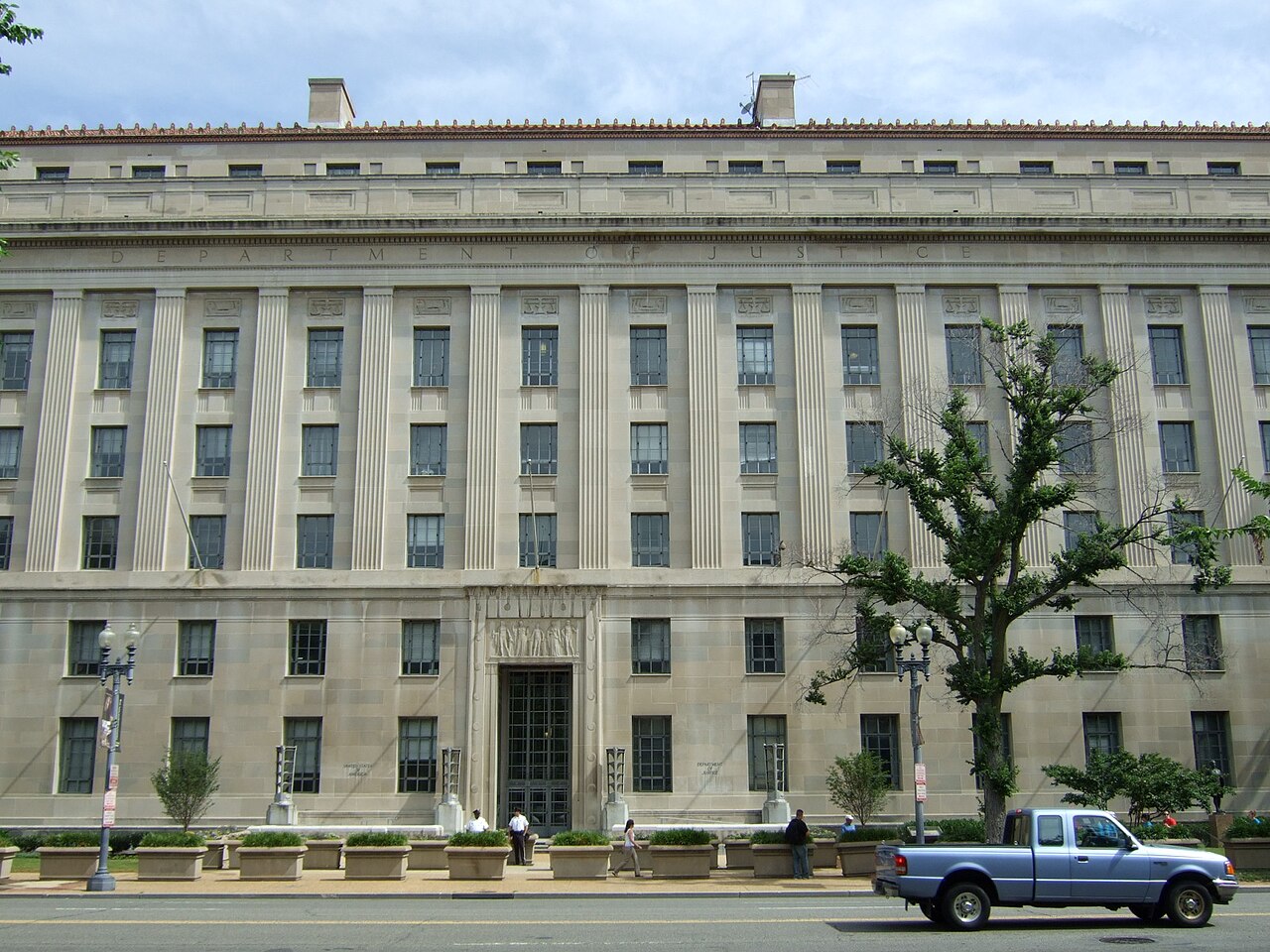
Americans who rely on handguns for self-defense face another federal showdown as the Justice Department warns California to prepare for a lawsuit over the state's "Glock Ban." Assistant Attorney General Harmeet Dhillon delivered a June 24 letter to Gov. Gavin Newsom and Attorney General Rob Bonta, setting a June 30 deadline for negotiations before filing what would be the department's sixth challenge to local gun restrictions in just six months.
Dhillon's letter targets California laws that effectively ban popular handguns. "Because handguns are the most popular weapon chosen by Americans for self-defense, a prohibition of their use is invalid," Dhillon stated.
The threat signals the expanding reach of the Justice Department's Second Amendment Section, the first dedicated federal office in American history to deploy civil rights machinery to enforce gun rights as fundamental constitutional protections. Created Dec. 4, 2025, within the Civil Rights Division, the section has filed five lawsuits against Democratic-led jurisdictions since opening.
The pattern is clear: from concealed carry permit backlogs to outright bans on America's most common weapons, the section has systematically dismantled firearms restrictions. "This Department of Justice will not stand idly by while states and localities infringe on the Second Amendment rights of ordinary, law-abiding Americans," Attorney General Pamela Bondi stated in a March 27, 2025, press release announcing a pattern-or-practice investigation into Los Angeles County's gun permit process. "The Second Amendment is not a second-class right, and under my watch, the Department will actively enforce the Second Amendment just like it actively enforces other fundamental constitutional rights."
The section's five complaints target Los Angeles County, the Virgin Islands, Washington, D.C., Denver, and Colorado state law. In Los Angeles County, the Justice Department found only two approvals from more than 8,000 concealed carry applications, with a median processing delay of 372 days. Residents waited more than a year for permission to carry a weapon they legally owned.
The Virgin Islands case challenges permitting conditions including mandatory home inspections and "proper cause" requirements. In the District of Columbia, the department challenges categorical bans on AR-15s and firearm suppressors, noting that AR-15-style rifles are "the most popular rifle in America" according to Supreme Court precedent. The Denver lawsuit targets a 1989 ordinance banning so-called "assault weapons," while Colorado faces litigation over its statewide prohibition on magazines holding more than 15 rounds.
"Colorado's ban on certain magazines is political virtue signaling at the expense of Americans' constitutional right to keep and bear arms," Dhillon stated in a May 6 press release announcing the Colorado lawsuit.
The section employs three constitutional theories grounded in Supreme Court decisions. Unreasonable processing delays in permit applications deprive citizens of Second Amendment rights. Permitting conditions like "proper cause" requirements impermissibly burden the right. Categorical bans on weapons "in common use" violate the 2008 Heller decision.
"The Constitution is not a suggestion and the Second Amendment is not a second-class right," Acting Attorney General Todd Blanche said in the Denver lawsuit announcement. "Denver's ban on commonly owned semi-automatic rifles directly violates the right to bear arms."
All five lawsuits invoke 34 U.S.C. § 12601, a pattern-or-practice statute originally enacted as part of the 1994 Violent Crime Control Act in response to the Rodney King beating. Historically reserved for police reform investigations, the statute now targets state and local firearms regulations as constitutional violations.
The Duke Center for Firearms Law noted in a June 5 analysis that this approach "represents a significant departure from this tradition" and raised questions about whether the statute can support challenging substantive criminal laws. Washington, D.C., and the Metropolitan Police Department moved to dismiss the case on those grounds March 18.
The legal battle is not confined to the five existing lawsuits. In Virginia, Governor Abigail Spanberger signed an assault weapons ban May 14 that takes effect July 1. Dhillon responded on social media: "See you in court!"
Four county prosecutors in Spotsylvania, Smyth, Powhatan, and Pulaski counties have already refused to enforce the ban as unconstitutional. "After careful review of the legislation and existing Supreme Court precedent, I find the assault weapon ban signed by the Governor on May 15, 2026, unconstitutional — and as a result, unenforceable," Smyth County Commonwealth's Attorney Phillip Blevins Jr. stated May 26.
The Second Amendment Foundation filed its own challenge to Virginia's law May 14, the same day Spanberger signed it. Kostas Moros, the foundation's director of legal research and education, noted the significance of federal involvement. "It's great to have that giant 800-pound gorilla in the room with us. Because courts, like it or not, do take the DOJ more seriously."
The Trump administration has treated Second Amendment enforcement as a sustained institutional priority. Executive Order 14206 "Protecting Second Amendment Rights" was issued Feb. 7, 2025. On April 29, 2026, the DOJ and ATF announced 34 regulatory reforms to reduce burdens on law-abiding gun owners.
"Under the leadership of President Trump, this is the most pro-Second Amendment Department of Justice in history," a DOJ spokesperson stated. "We are committed to maximizing law-abiding citizens' ability to fully exercise the right to bear arms."
Not all jurisdictions have backed down quietly. Denver Mayor Mike Johnston has vowed to fight the federal challenge to his city's 37-year-old weapons ban. "We're here today to let them know that our answer is 'hell no,'" Johnston said May 5. "No, we will not roll back a common-sense policy that has kept weapons of war off of these city streets for 37 years."
The California case could determine the constitutionality of the "Glock Ban" just as Maryland, Connecticut, and New York have begun emulating similar legislation. A 2022 Supreme Court decision in New York State Rifle & Pistol Association v. Bruen struck down "proper cause" requirements and established that modern gun restrictions must be consistent with the nation's historical tradition of firearm regulation.
In an amicus brief filed in U.S. Supreme Court case Wolford v. Lopez, the Justice Department warned that restrictive laws extend beyond individual states. Attorney General Bondi wrote on X that "It's not just Hawaii that is effectively banning public carry. California, Maryland, New Jersey, and New York have similar laws. So a win in this case will restore Second Amendment rights for millions of Americans." The brief itself notes that "four other states whose public-carry laws Bruen invalidated — California, Maryland, New Jersey, and New York — enacted materially similar restrictions."
The section's approach has drawn criticism from gun control advocates and former civil rights attorneys. More than 100 former DOJ Civil Rights Division staff published an open letter Dec. 9, 2025, warning of the division's transformation. "The Civil Rights Division does not have unlimited resources, and those resources should be focused foremost on the traditional and historical discrimination issues," Brady Center President Kris Brown stated.
Dhillon has framed the mission as correcting decades of institutional neglect. "For the first time, the DOJ Civil Rights Division and the DOJ at large will be protecting and advancing our citizens' right to bear arms as part of our civil rights work," she stated Dec. 8.
With the California deadline approaching and Virginia's law taking effect July 1, the Second Amendment Section's campaign shows no signs of slowing. The coordinated legal offensive represents what the administration calls the most aggressive federal enforcement of gun rights in American history, systematically challenging restrictive firearms laws in the nation's largest and most populous Democratic strongholds. Millions of Americans who carry handguns, rifles, and shotguns for protection now find their rights at the center of a constitutional reckoning that could reshape the balance between local ordinances and fundamental liberties for generations.