Supreme Court Restores Plain Text to Immigration Law
Supreme Court rules 6-3 that immigrants must physically cross border to have 'arrived in the United States,' overturning lower court and reasserting executive authority over immigration enforcement.
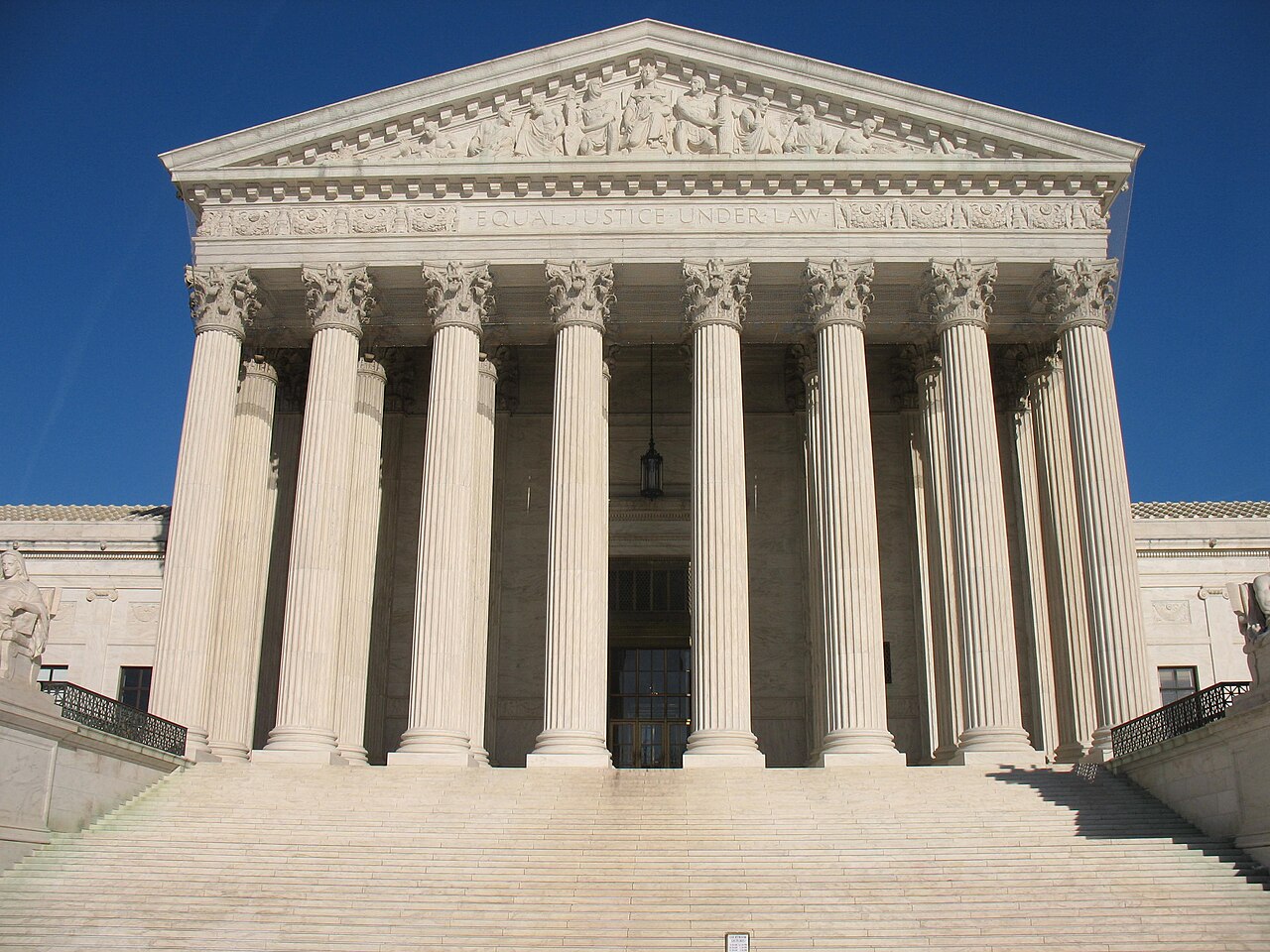
The Supreme Court ruled Thursday, June 25, 2026, that immigrants standing in Mexico have not "arrived in the United States" until they physically cross the border. The 6-3 decision in Mullin v. Al Otro Lado overturns a Ninth Circuit ruling and restores plain statutory text to immigration law. The Court reasserted the executive branch's constitutional authority to manage border flows and protect national sovereignty.
Justice Samuel Alito wrote for the conservative majority that "an alien standing in Mexico does not 'arrive in the United States' by attempting, and failing, to set foot in this country." The ruling dismantles extraterritorial legal theories pushed by immigration activists and lower courts. Asylum claims must now be limited to those actually within U.S. territory.
"In ordinary speech, no one would say that a person 'arrives in' a place before the person enters that place," Alito stated. He used vivid analogies to illustrate the lower court's flawed threshold theory. "A running back does not arrive in the end zone when he reaches the 1-yard line. A guest does not arrive in a house when he knocks on the front door. An army does not arrive in a city by encamping outside its walls."
The decision rejects the Ninth Circuit's 2024 ruling that an alien "arrives" when standing on the Mexico side of the border and encountering a U.S. official. Twelve Ninth Circuit judges dissented from the denial of rehearing en banc. Judge Bress called the panel's ruling "gravely wrong" and contrary to "clear statutory text."
The case traces back to a policy first implemented by the Obama administration in 2016. Officials deployed metering during a surge of Haitian asylum seekers at San Diego ports. The Trump administration formalized the approach in 2018. Customs and Border Protection gained authority to limit daily asylum processing at overwhelmed ports. The Biden administration rescinded metering in November 2021 after a district court issued summary judgment against the policy.
The ruling restores executive authority that lower courts had stripped away. "We have yet again been vindicated by the Supreme Court," said DHS General Counsel James Percival. "This decision opens up an important tool to continue securing our southern border." The Trump administration sought to revive metering, contending the lower court's ruling "deprives the Executive Branch of a critical tool for addressing border surges and preventing overcrowding at ports of entry."
In a companion case decided the same day, the Court ruled 6-3 to uphold the Trump administration's termination of Temporary Protected Status for Haitians and Syrians. The Court held the TPS statute contains "no judicial review" of the DHS Secretary's decision and rejected claims of racial animus. Approximately 356,000 Haitian and Syrian TPS recipients face potential removal. More than 1.3 million people across 17 countries hold TPS status in the United States.
Justice Sonia Sotomayor read a 35-page dissent from the bench. She argued the decision allows the executive branch to circumvent mandatory asylum procedures. "The Court's illogical interpretation is driven almost entirely by a fixation on a single word: 'in,'" Sotomayor wrote. She framed the ruling as a departure from America's humanitarian obligations and invoked the M.S. St. Louis ship carrying Jewish refugees turned away from the United States in 1939.
Justice Jackson filed a separate dissent. She argued the case should never have been heard because metering was rescinded in 2021 and lacked a factual record establishing how the policy worked in practice. Jackson asserted the high court should not issue advisory opinions.
"The Supreme Court correctly recognized that courts must apply the law as written, not invent new rights or restrictions untethered to the statutory text," said Dan Epstein, Vice President of America First Legal. His organization filed an amicus brief on behalf of a coalition of U.S. senators led by Ted Cruz. "Today's decision is a victory for the rule of law, border security, and the Constitution's promise of separation of powers."
While metering remains barred in the Ninth Circuit by the lower court's injunction, the Supreme Court's ruling empowers the administration to challenge that restriction. The decision clarifies that Congress intentionally used "arrives in the United States" in immigration statutes while employing "attempted entry" language elsewhere. The different phrasing indicates deliberate legislative choices.
White House adviser Stephen Miller hailed the ruling. "America's doors are closed, fully, to asylum seekers," he stated. Miller called asylum applications at the border "fake," asserting they lack legitimate claims of persecution.
The Court's conservative majority consisted of Chief Justice John Roberts and Justices Clarence Thomas, Samuel Alito, Neil Gorsuch, Brett Kavanaugh, and Amy Coney Barrett. Justices Sotomayor, Elena Kagan, and Ketanji Brown Jackson dissented.
A 2018 DHS Office of Inspector General report documented that metering drove some migrants to attempt illegal crossings. Sotomayor echoed that concern in her dissent. "The consequences of today's decision are predictable," she wrote. "More people will die. More people will attempt to cross the border illegally, and some will make it while others will not."
Immigration advocacy groups condemned the ruling. "This decision has destroyed the United States' position as a global leader in promoting the rights of refugees," said Erika Pinheiro, Executive Director of Al Otro Lado. Her organization spent nine years fighting for asylum seekers' rights in the case.
The ruling represents a significant victory for border security advocates and a reinforcement of executive authority over immigration enforcement. By rejecting judicial attempts to rewrite statutory language, the Court affirmed that immigration policy must flow from legislative text rather than activist court rulings.